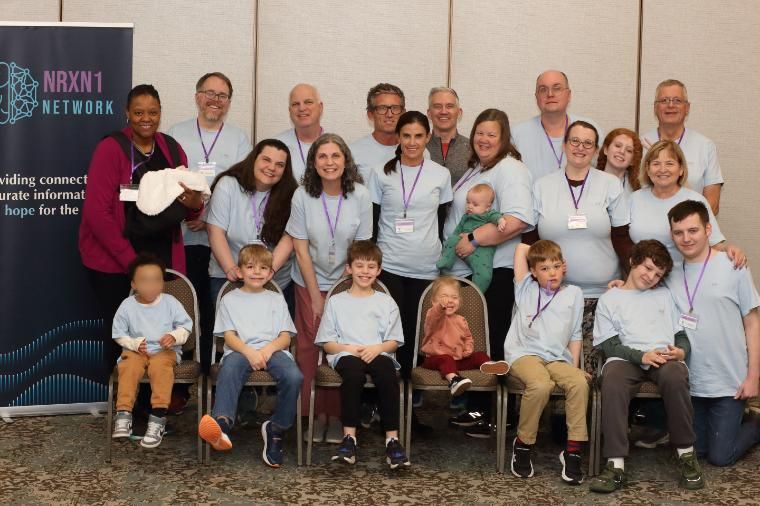
PHILADELPHIA – As the international community observes Rare Disease Day 2026 on February 28th, 2026, a significant milestone has been reached in the effort to support families navigating the complex "diagnostic odyssey" associated with NRXN1 deletions. This journey, often defined by years of uncertainty and clinical ambiguity, was the focal point of the first in-person NRXN1 Research & Family Conference, held in Philadelphia from February 20-22, 2026.
The event brought together a unique coalition of international scientists, clinicians, and families to bridge the gap between laboratory research and the lived experience of rare genetic conditions. At the forefront of this movement is the Autism and Rare Neurodevelopmental Condition Research Group from Trinity College Dublin (TCD), led by Professor Louise Gallagher and Dr. Ciara Molloy.
Understanding the Genetic Blueprint
NRXN1 deletions are rare genetic changes that impact the NRXN1 gene, which is responsible for providing the instructions to produce neurexin-1. This protein is vital for the brain’s infrastructure, supporting the formation and function of synapses—the essential junctions that allow neurons to communicate with one another. When these deletions occur, they are frequently associated with a broad spectrum of neurodevelopmental outcomes, including autism, intellectual disability, and speech and language delays.
However, the "odyssey" for families often begins after the initial genetic test. While modern medicine can identify the presence of a deletion, clinicians currently find it difficult to predict how that deletion will affect an individual child’s long-term development. This gap in knowledge frequently leads to profound feelings of worry, isolation, and a lack of belonging among parents who find themselves in a territory with few roadmaps.
Forging a Network of Discovery
To address this uncertainty, the TCD research team is leading the Relative Diversity associated with Neurexin Trajectories (RaDiaNT) study. This initiative is part of the larger, Horizon-funded R2D2-MH consortium, a multi-disciplinary international effort that unites geneticists, psychiatrists, neuroscientists, and psychologists. Their collective goal is to examine the intricate links between genetic variation, brain development, and clinical outcomes to provide families with a clearer prognosis.
The TCD group has already made significant strides in uncovering the biological underpinnings of the condition. A recent landmark publication co-authored by Dr. Molloy provided the first research evidence that individuals with NRXN1 deletions possess distinct neural connectivity and cognitive profiles. These findings are critical because they lay the groundwork for "biologically informed markers"—tools that could one day help doctors predict a child’s specific needs based on their unique brain signature.
Breakthroughs from Skin to Synapse
Beyond cognitive profiling, the team is using cutting-edge technology to observe the condition at a cellular level. By using skin samples from individuals with NRXN1 deletions, Professor Gallagher and her collaborators have successfully created "induced pluripotent stem cells," which are then grown into living neurons.
Their research revealed that these lab-grown neurons are hyper-excitable, meaning they function differently than typical cells. This discovery offers a tangible look at the "tangible, real-world impact" of the deletion on brain chemistry, providing a potential target for future treatments and interventions.
Empowering Families Through Knowledge
The TCD team believes that research must be "meaningful" to the families it serves. This commitment led Dr. Molloy and Prof. Gallagher to collaborate with an artist and affected families to create an illustrated educational short storybook. Funded by the Trinity Equality Fund, the book is designed to help parents and children learn about NRXN1 deletions together in an accessible, easy-to-understand format.
This spirit of co-design was a central theme in Philadelphia, where the researchers shared their storybook and other new resources with the community. The conference was hosted by the NRXN1 Network, a nonprofit advocacy group founded in 2024 by Dr. Marissa Mitchell—a parent, speech pathologist, and researcher.
A New Chapter for the Rare Community
The Philadelphia meeting has set the stage for a more structured joint research and community network, which experts believe will enhance advocacy and long-term continuity in rare disease research. By linking families directly with clinical studies, the conference has also bolstered ongoing recruitment efforts for research that will define care for the next generation.
Reflecting on the progress, Dr. Marissa Mitchell noted that many scientists who study cellular models have never met the individuals their work impacts. "The NRXN1 meeting will provide us with the opportunity to strengthen our support network and move the science forward in a meaningful way," she said.
Dr. Ciara Molloy, Senior Research Fellow, Discipline of Psychiatry, Trinity College, echoed this sentiment, stating: "Our NRXN1 deletion research hopes to transform uncertainty into greater understanding, by expanding knowledge to support clinical care and developing research-informed resources for families".
For families seeking more information, resources are available through the NRXN1 Network and the R2D2-MH consortium webpages https://www.nrxn1network.org/