The New Frontier: A Symposium on Balancing Risks and Rewards of AI in Medical Education
Date: Monday, 02nd March 2026, 09:00 – 12:00 p.m.
Venue: Trinity College Dublin – Regent House
To Register, please visit: 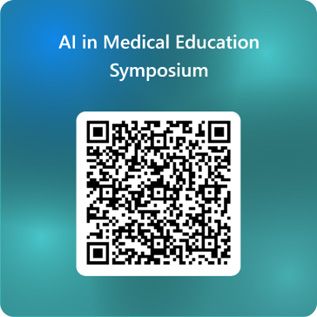
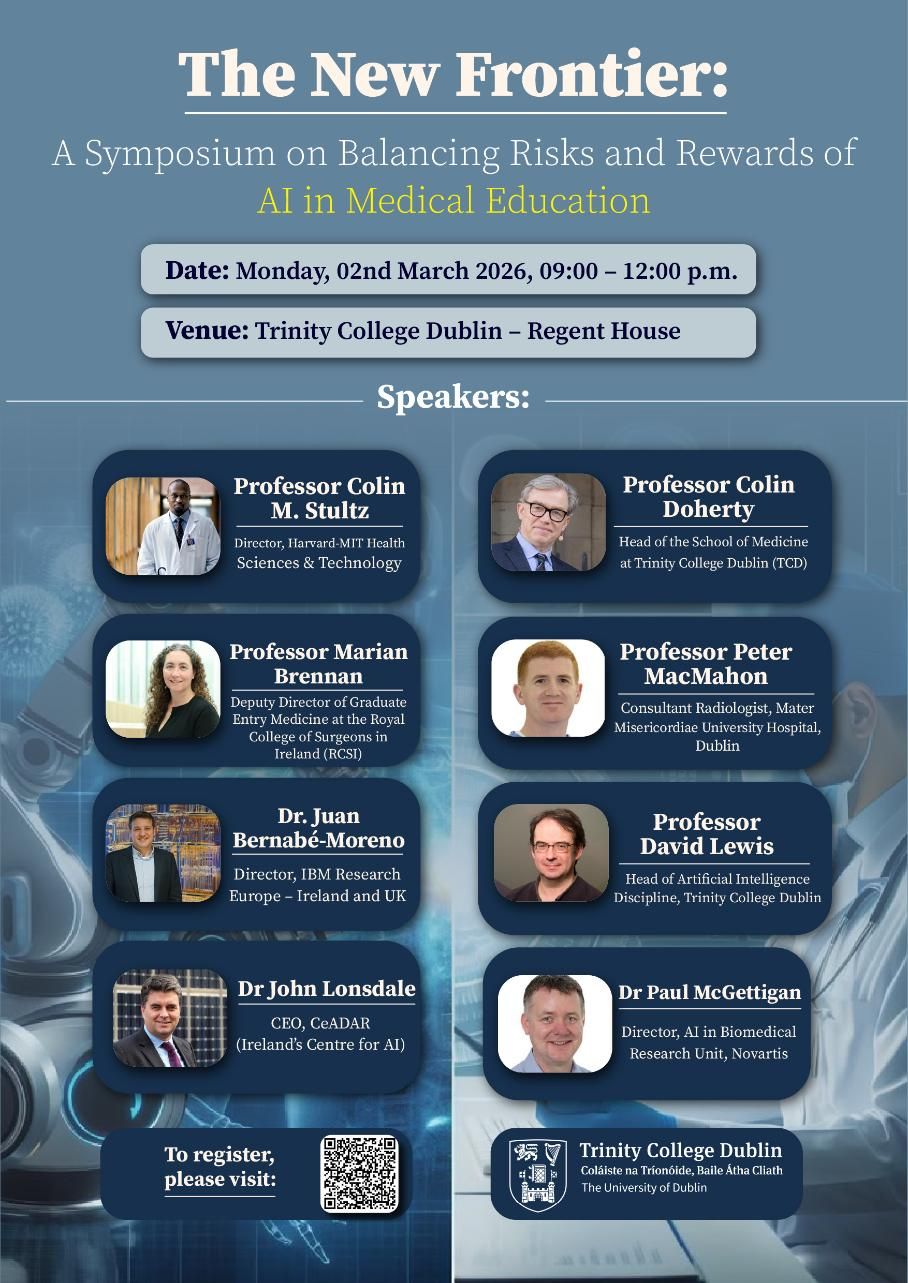
Speakers:
Director, Harvard-MIT Health Sciences & Technology
Bio: 
Dr. Collin M. Stultz is a Professor of Electrical Engineering and Computer Science at the Massachusetts Institute of Technology (MIT), a faculty member in the Harvard-MIT Division of Health Sciences and Technology, a Professor in the Institute of Medical Engineering and Sciences at MIT, a member of the Research Laboratory of Electronics (RLE), and an associate member of the Computer Science and Artificial Intelligence Laboratory (CSAIL). He is also a practicing cardiologist at the Massachusetts General Hospital (MGH). Dr. Stultz received his undergraduate degree in Mathematics and Philosophy from Harvard University; a PhD in Biophysics from Harvard University; and a MD from Harvard Medical School. He did his internship, residency, and fellowship at the Brigham and Women’s Hospital in Boston. His scientific contributions have spanned multiple fields including computational chemistry, biophysics, and machine learning for cardiovascular risk stratification. He is a member of the American Society for Biochemistry and Molecular Biology and the Federation of American Societies for Experimental Biology and he is a past recipient of a National Science Foundation CAREER Award and a Burroughs Wellcome Fund Career Award in the Biomedical Sciences. Currently, research in his group is focused on the development of machine learning tools that can guide clinical decision making.
Title of the Talk:
Deep Learning and Generative AI, Friend, Foe or Something in Between?
Synopsis of the talk:
Patient-specific digital twins represent a class of generative models that can, in principle, predict a patient's future health trajectory as a function of their past. A robust digital twin model is a holy grail of clinical medicine as it would enable clinicians to predict a patient’s future health trajectory and, more importantly, understand how one’s future health may change in response to a potential therapy. The design of performant generative models, however, is uniquely challenging given the irregular sampling of clinical time series data and the complex interdependencies that characterize patient data. Moreover, the inherent heterogeneity of clinical datasets, which are used to train such models, makes the design of generalizable and performant models difficult. In this talk, I will outline the challenges associated with creating successful digital twins and discuss novel approaches for surmounting these barriers. More generally, I will discuss the challenges that make the creation of clinically useful machine learning tools particularly difficult, and outline ways in which they can be addressed using illustrations from our work.
Head of the School of Medicine at Trinity College Dublin (TCD)
Bio: 
Colin Doherty holds the Ellen Mayston Bates Chair in Epileptology at Trinity College Dublin School of Health Sciences. He is a Consultant Neurologist and Director of the Epilepsy Service at St James's Hospital, Dublin and the Ellen Mayston Bates, Professor of Epileptology at TCD. His undergraduate degree was awarded by UCD (1991) and he trained in Medicine and Neurology at St Vincent's and Beaumont Hospitals an later at the Partners Neurology Residency Programme at Harvard Medical School, Boston (Brigham and Women's Hospital and Massachusetts General Hospital) where he was Chief Resident in my final year (1998-2001). He has completed Fellowships in Epilepsy and Cognition at MGH (2001-2003). He has published widely in the areas of brain imaging in epilepsy, the genetics of epilepsy, functional imaging of language, dementia, clinical neurology and epileptology and traumatic brain injury. In the last few years he has become interested in the challenges of population health, health services research and care delivery in epilepsy. He published recently on national issues regarding epilepsy care including; evidence based pathways, national mortality estimates, hospital access restrictions and national prescribing rates. He has 105 peer reviewed publications, 4211 citations, a H-index of 35 and i10index of 78. Between co-applicant, Co-PI and PI grant applications he has been collaboratively responsible for >7 Million Eu in funding I has authored chapters in three textbooks and co-edited one. He was a member of the Irish government's expert group on resource allocation in the health sector (2011). He was a member of the National Clinical Effectiveness Committee in Ireland since its inception in 2011 to 2015 and represented the RCPI on The Irish Patient Safety Steering Group 2012-2016. He was a board member of the Health Research Board (2010-15) and is a founder member and Medical Director of Epilepsy Research Ireland (ERI). He is the Irish representative to the International League Against Epilepsy (ILAE) committee for the Global Campaign Against Epilepsy and a co-applicant on a large EU funded study on the epidemiology of epilepsy in Europe (ESBASE). He was National Clinical Lead for the Epilepsy Care Programme in Ireland from 2010-2018, with a charge to develop epilepsy services nationally to improve quality of care and access for patients. He has recently moved from that role to take up a specific remit around Women's Health in Epilepsy with the evolution of the Valproate in Pregnancy story. he states that he has learned a lot in the last five years about the urgent issue of healthcare reform and see medical education, both postgraduate and undergraduate in urgent need of firstly protection of its core mission and values but also innovation and development to meet the challenges of 21st century medical care: Amongst the challenges are underpinning the funding of basic, translation and clinical research; Teamwork and its effect of professionalism, the role of the patient in the design and delivery of healthcare, and the rise of technology.
Deputy Director of Graduate Entry Medicine at the Royal College of Surgeons in Ireland (RCSI).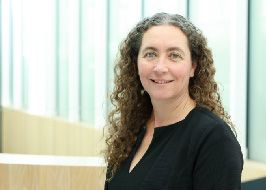
Bio:
Marian Brennan is Deputy Director of Graduate Entry Medicine at the Royal College of Surgeons in Ireland (RCSI) University of Medicine and Health Sciences. Marian is Associate Professor of Biochemistry with a research interest in computational biology, specifically chemoinformatics and drug discovery. Prof. Brennan has implemented multiple technology enhanced learning innovations in medical education including AI initiatives. Prof. Brennan is also an advocate for equity in medicine.
Title of the talk:
AI to support Medical Education: opportunities, challenges and threats.
Synopsis of the talk:
This talk will include a discussion about the opportunities AI provides to enhance medical education, the challenges and threats to assessment as well as the importance of explicit AI content in the curriculum so that future healthcare professionals are aware of the power and limitations of AI.
Director, IBM Research Europe – Ireland and UK
Bio: 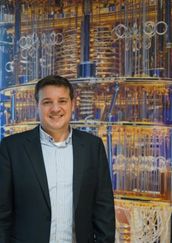
Dr. Juan Bernabé-Moreno is the Director of IBM Research Europe for Ireland and UK, leading a world-class team of researcher professionals across three labs in Dublin -Ireland-, Hursley and Daresbury -UK- to create what's next in Artificial Intelligence, Quantum Computing, Multi Cloud, Semiconductors and other cutting-edge science and technologies.
In addition, Dr. Bernabé-Moreno is responsible for the Accelerated Discovery Strategy for Climate and Sustainability leading a team of researchers across 7 global research labs to explore how the convergence of AI, Quantum Computing and Hybrid Cloud can accelerate the discovery of sustainability and climate solutions.
Dr. Bernabé-Moreno is a highly recognized leader in data and AI in both academia and industry. Prior to joining IBM, he was the Chief Data Officer and Global Head of Analytics and AI at E.ON, the world’s largest investor-owned energy service provider, leveraging data and algorithms to support the energy transition. Overall, he has more than 20 years of experience in the field of data and AI, and has delivered large data transformation programs for top companies in Spain and Germany. He has maintained his profile as an active researcher, including ongoing collaborations with the Mathematical Institute at the University of Oxford, the AI department at the University of Granada, and as a lecturer on quantum applications and intelligent systems at the Ludwig Maximilian University of Munich.
Dr. Bernabé-Moreno holds a PhD in Computer Science from the University of Granada. He has over 40 publications and is the recipient of several patents.
Consultant Radiologist, Mater Misericordiae University Hospital, Dublin
Bio:
Prof Peter MacMahon is a Consultant Radiologist in the Mater Misericordiae University Hospital and Mater Private Hospital. He has sub-speciality training in Emergency Radiology, Musculoskeletal Imaging and Musculoskeletal Intervention.
Peter is a UCD medical school graduate, who completed his Radiology training as a Specialist Registrar in the Mater Hospital. Subsequently Peter completed clinical fellowships in Musculoskeletal Imaging and Intervention and Emergency Radiology at Massachusetts General Hospital, Harvard Medical School, Boston USA. Peter returned to the Mater as a Consultant Radiologist in 2012.
Prof MacMahon is the clinical lead for Emergency Radiology at the Mater and has particular interest in imaging appropriateness, imaging techniques, artificial intelligence and imaging findings as pertain to the Emergency Department. In addition Peter has broad interest in musculoskeletal imaging, in particular as pertains to trauma, including spinal and radiocarpal injuries. Peter has published on techniques and safety with regards to corticosteroid injections in musculoskeletal pathology such as neck or back pain.
Peter was the Clinical Director of Radiology at the Mater Misericordiae University Hospital from 2018 to 2021.
Title of the talk:
Preparing Doctors for the Age of AI
Synopsis of the talk:
Preparing Doctors for the Age of AI will explore how AI is already changing day-to-day clinical practice, using real examples from radiology to highlight both benefits and common failure modes. The talk will focus on what this means for medical education, particularly for current and future trainees, by outlining the practical skills needed to use AI safely and effectively, including critical appraisal and avoiding automation bias.
CEO, CeADAR (Ireland’s Centre for AI)
Bio: 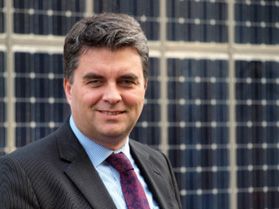
John has combined experience of working in industry in technical and commercial roles and extensive commercial experience in a university environment. Consequently, he has a deep understanding of the differences between commercial and academic environments and how to bridge them.
John has extensive senior leadership experience in university innovation and enterprise, in roles including Director of Innovation and Enterprise at the University of Central Lancashire (2007-2018), and most recently as Head of Enterprise at the University of Edinburgh (2019-2024). Before moving into the Higher Education Sector he worked in commercial roles for Rolls Royce Power Group and the National Nuclear Laboratory. He holds a Doctorate of Business Administration based on his research into academic entrepreneurship.
CeADAR is an Enterprise Ireland and IDA funded technology centre established to support businesses and other organisations to understand, adopt and leverage the benefits and value of AI and Machine Learning (ML).
Title of the talk:
Applications of AI in Medicine: Realising the benefits of innovative AI tools
Synopsis of the talk:
Adoption of AI can prove challenging in any sector or application. This talk will provide an overview of many opportunities for AI applications in medicine and medical education, but also consider the underlying challenges around AI system development, governance trust and responsible deployment, as well as the skills needed by clinicians, educators and medical students.
Head of Artificial Intelligence Discipline, Trinity College Dublin
Bio: 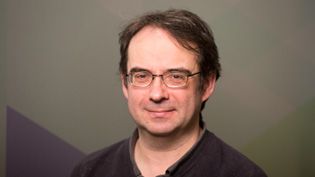
Dave Lewis is an Associate Professor at the School of Computer Science and Statistics at Trinity College Dublin where he served as the head of its Artificial Intelligence Discipline. He is the Acting Director of Ireland's ADAPT Centre for human centric AI and digital content technology research. He investigates open semantic models for trustworthy AI and data governance and contributes to international standards in digital content processing and trustworthy AI. His research focuses on the use of open semantic models to manage the Data Protection and Data Ethics issues associated with digital content processing. He has led the development of international standards in AI-based linguistic processing of digital content at the W3C and OASIS and is currently active in international standardisation of Trustworthy AI at ISO/IEC JTC1/SC42 and CEN/CENELEC JTC21.
Title of the talk:
Regulatory Learning for the AI Act
Synopsis of the talk:
I'll cover a brief introduction to the Eu Act and how it is enforced. I'll cover some of the legal uncertainties involved, especially in relation to the protection of fundamental rights and the role of regulatory learning and stakeholder participation in that.
Director, AI in Biomedical Research Unit, Novartis

Title of the Talk
AI in biomedical research - how will we know if it's helping?