
An undergraduate physics experiment at Trinity College Dublin may begin with a set of instructions, but it is these questions that take learning beyond the “recipe lab”.
Dr. Pınar Arpaçay knows Trinity’s undergraduate physics laboratories well. From 2014 to 2018, she was a PhD student in Professor Werner Blau’s research group at the School of Physics. Alongside her doctoral research, she worked as a Physics Teaching Assistant, supporting undergraduate students in conducting experiments and interpreting their results.
During those same years, Arpaçay also worked with much younger learners. Through STEAM Education Ltd., she delivered lessons in Irish primary classrooms, where children explored science through inquiry, creativity and hands-on learning.
Years later, Arpaçay brought these experiences to the inaugural webinar of UNESCO’s International Institute for STEM Education (IISTEM) on 26 October 2026.
Entitled “STEM Education Policies of Finland, Ireland and Europe,” the webinar brought together UNESCO leadership, a European Commission policy officer and Finnish experts. As the sole invited speaker addressing the Irish context, Arpaçay presented an independent analysis.
Her presentation, “Bridging Macro Policies with Grassroots Practice: A STEM Learning Journey from Ireland to Europe,” connected her experiences in Ireland with her work at Karlsruhe Institute of Technology (KIT) on interdisciplinary researcher development across Europe through an EU-funded energy project.
For Arpaçay, undergraduate physics is where students develop scientific reasoning within a discipline. Reflecting on her experience at Trinity, she explained:
“The aim is to move beyond simply following procedures and recording results, towards thinking critically about the evidence.”
A result that does not match expectations need not mark the end of an experiment. It can be the beginning of an investigation into the measurements, the assumptions behind them and the conclusions they support.
“Integrated STEM doesn’t mean leaving disciplinary knowledge behind,” Arpaçay emphasised. “It means broadening where knowledge is applied, while deepening disciplinary reasoning grounded in evidence.”
Further reading
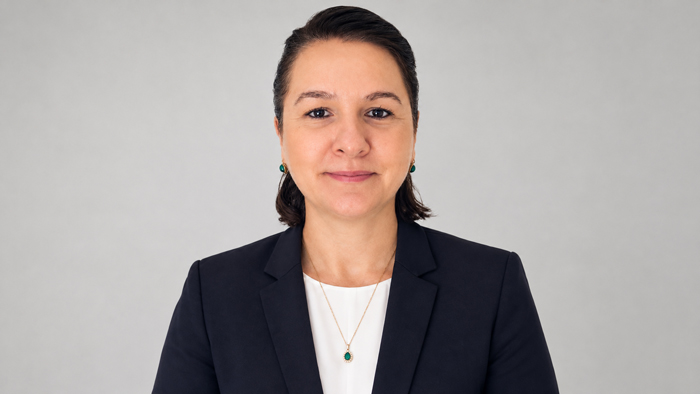
Dr. Pınar Arpaçay
SOCIAL MEDIA
What are we actually measuring? How reliable are our data? Do our conclusions follow from the evidence?
At Trinity College Dublin’s School of Physics, these questions take undergraduate laboratory learning beyond the “recipe lab”.
Trinity Physics PhD alumna Dr. Pınar Arpaçay brought insights from her time as a Physics Teaching Assistant to a wider conversation on STEM education at the inaugural webinar of UNESCO’s International Institute for STEM Education (IISTEM) on 26 October 2026.
Entitled “STEM Education Policies of Finland, Ireland and Europe,” the webinar brought together UNESCO leadership, a European Commission policy officer and Finnish experts. Arpaçay was the sole invited speaker addressing the Irish context.
Her presentation, “Bridging Macro Policies with Grassroots Practice: A STEM Learning Journey from Ireland to Europe,” connected early STEAM learning in Ireland with interdisciplinary researcher development in Europe, highlighting how undergraduate physics teaching at Trinity deepens disciplinary reasoning.
Explore more:
🔹 UNESCO-IISTEM webinar programme:
https://articles.unesco.org/sites/default/files/medias/fichiers/2026/10/IISTEM-webinar-01_1.pdf
🔹 Dr. Arpaçay’s presentation:
https://drive.google.com/drive/folders/16_thVs0sGu5MlS2-rD-5pA5-Fozt2Q3J