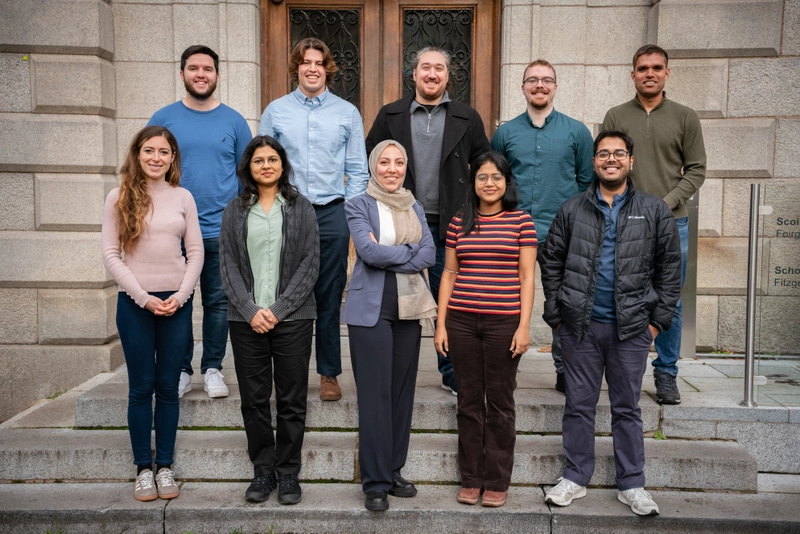
Group Members
Group Leader
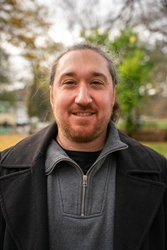
Professor Alessandro Lunghi holds a Ph.D. in computational inorganic chemistry, received in 2016 from the University of Florence. His Ph.D. dissertation focused on the computational and theoretical investigation of molecular magnets and their interaction with typical solid-state environments. In 2016 he joined the School of Physics at Trinity College Dublin as a research fellow and started working on designing machine-learning methods for accelerating molecular dynamics simulations of solid-state materials. In 2020 he was awarded a European Research Council Starting Grant and in 2021 he was appointed as Assistant Professor in Physics at Trinity College Dublin, where is now leading a growing research group. Alessandro’s interests lie at the boundary between open quantum systems theory, ab initio modelling, materials design and machine learning and his group is leaveraging this highly multidisciplinary set of techniques to discover novel magnetic molecules with long coherence times for quantum technologies.
Current members
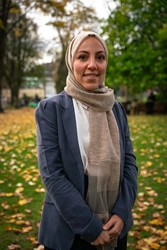
Dr. Khaitibi is currently the senior research fellow of the group, spearheading the machine-learning-driven design of novel and record-breaking single-molecule magnets for spintronics and quantum computing applications. She joined the group in 2023 and has since developed generative models based on evolutionary algorithms and variational autoencoders, delivering unprecedented results in the design of Co and Dy compounds. Coming from a condensed matter physics background, Zahra has extensive expertise in topological and exotic properties, as well as in the electronic, spintronic, valleytronics, and optoelectronic behavior of layered materials, studied using both ab initio and fully analytical models. She has been awarded the Government of Ireland Postdoctoral (GOIPD) Fellowship, the Iran National Elites Foundation Postdoctoral Fellowship, multiple student grants, and a PhD thesis award.
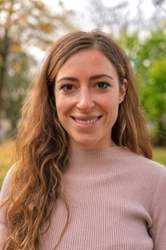
Dr. Gimenez-Santamarina holds a Bachelor’s degree in Biotechnology and two Master’s degrees in Computer Science and Nanotechnology. She obtained her PhD in March 2024 from the University of Valencia (Spain) in the field of molecular nanomagnets, with the objective of modelling the magnetic and electronic properties of rare-earth (Ln³⁺) and transition-metal complexes for applications in spintronics and neuromorphic technologies. Her research interests focus on modelling the magnetic properties of molecules, including their interaction with bio-macromolecular complexes, by combining classical and quantum mechanics approaches. She was a Government of Ireland Postdoctoral Fellowship and an MSCA Fellowship founded by the European Commission, which support her current research at School of Physics in Trinity College Dublin.
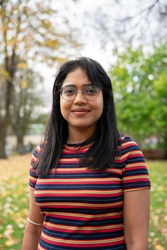
Dr. Asmita Sen earned her B.Sc. in Chemistry from JK College, University of Burdwan, India, in 2013. She subsequently completed her M.Sc. in Chemistry at Sidho-Kanho-Birsha University in 2015, where her research centred on elucidating the spectral and adsorption behaviour of nano-composite materials. She pursued her PhD in Theoretical and Computational Chemistry at the Indian Institute of Technology Bombay between 2016 and 2023 under the supervision of Prof. Gopalan Rajaraman. Her doctoral research involved advanced multiscale modeling of small-molecule activation mediated by high-valent Mn, Fe, and Co transition-metal complexes. In 2023, Dr. Sen commenced her first postdoctoral appointment as an Institute Postdoctoral Fellow at IIT Bombay, contributing to computational investigations of enzymatic catalysis. She subsequently joined the State University of New York at Buffalo as a Postdoctoral Fellow (2023–2025), where she worked under the supervision of Prof. Jochen Autschbach on the electronic structure and spectroscopic properties of f-elements. Since 2025, she has been a Marie Skłodowska-Curie Postdoctoral Fellow at Trinity College Dublin with Prof. Alessandro Lunghi. Her current research integrates machine-learning methodologies with advanced electronic-structure theory to probe and predict the reactivity of metalloenzymes with enhanced accuracy and chemical insight.
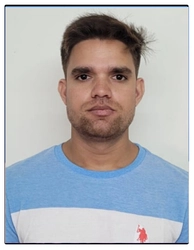
Dr. Rupesh Kumar Tiwari joined Trinity College Dublin as a Marie Skłodowska-Curie Postdoctoral Fellow in July 2025, working with Prof. Alessandro Lunghi and Prof. Stefano Sanvito. He received his Bachelor’s degree in Chemistry from Vinoba Bhave University in 2016 and his Master’s degree in Chemistry from IIT Guwahati in 2018, specialising in Inorganic Chemistry. He subsequently joined IIT Bombay for his PhD under the supervision of Prof. Gopalan Rajaraman, where his research focused on the theoretical and computational investigation of molecular nanomagnets and molecular spintronic systems using density functional theory, ab initio methods, and non-equilibrium Green’s function approaches. His doctoral research explored magnetic anisotropy, spin–electric coupling, molecular spin transport, and molecular nanomagnets at surfaces. At Trinity College Dublin, his current research focuses on understanding spin relaxation and spin–phonon interactions in molecular spin systems, particularly under realistic environments such as molecular crystals and surface-supported systems. His Marie Skłodowska-Curie project, STARDAM, combines periodic DFT, multireference ab initio calculations, vibronic coupling, and open quantum dynamics to investigate spin relaxation in molecular nanomagnets and molecular nanomagnets at surfaces.
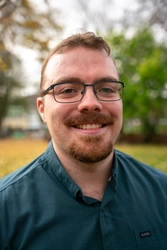
After working with the group on-and-off throughout his undergraduate in Theoretical Physics and MSc in Quantum Science and Technology in TCD, Conor officially joined the group in 2024. Conor's research focuses on the simulation of interacting spin systems in order to find ways of extending the lifetime of their quantum behaviour. Conor also enjoys contributing to physics beyond his research, having been Chair of the Organising Committee for the PLANCKS 2024 finals in Dublin and part of the student effort for Ireland to join CERN as a member state.
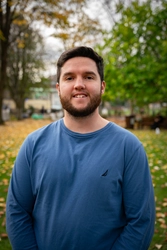
Cathal began working with the group as a undergraduate summer intern. Then upon completing his undergraduate in physics with astrophysics in 2024, he joined the group as a P.h.D student studying "Optical Initialisation of Molecular Spin Sensors".
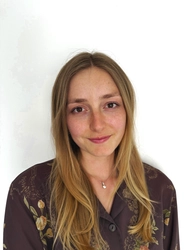
Isabella Perry earned her BSc in Theoretical Physics from the University of Groningen, Netherlands, in 2024. She began working with the group during her MSc in Quantum Science & Technology at TCD, and officially joined the group in September 2026 as a PhD student. Isabella's research focuses on optical addressability of nuclear spins.
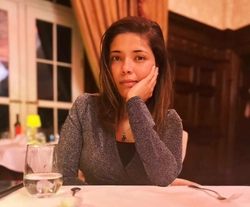
PhD Student
Email jadhavp@tcd.iePJ holds a Bachelor's degree in Information Technology Engineering from the University of Mumbai, India, an MSc in Business Analytics from Galway, and an MSc in Quantum Science and Technology from Trinity College Dublin. Prior to pursuing a PhD, PJ spent eight years as an ERP Database Developer, followed by 1.5 years as an Automation and Integrations Engineer and seven months as a Senior Quantum Scientist at Horizon Quantum Computing. With a background spanning mathematics, programming, software engineering, and computational science, PJ is particularly interested in connecting mathematical concepts with physical problems through computational methods. Her interests include geometry, geodesics, computer graphics, and scientific computing, alongside a strong enthusiasm for teaching, knowledge sharing, and developing accessible scientific tools.
Former members
Postdoctoral researchers
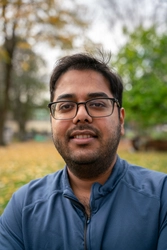
Dr. Arup Sakar began his role as a Marie Curie Postdoctoral Fellow in the Quantum Materials Dynamics group at Trinity College Dublin in October 2024. He holds a Bachelor’s degree in Chemistry (2012) and a Master’s degree in Chemistry (2014) from the University of Calcutta. In 2015, he joined IIT Bombay to pursue his Ph.D. under Prof. Gopalan Rajaraman, focusing on spin-Hamiltonian parameters in single-molecule magnets using ab initio and DFT methods. In 2021, he moved to the University of Chicago for a postdoctoral position with Prof. Laura Gagliardi, where he investigated spin transitions in binuclear metal complexes, excited states of actinide systems using MC-PDFT, and band structures of redox-active MOFs via periodic DFT. He later spent a year at the Max Planck Institute for Polymer Research (2023–2024) working with Prof. Denis Andrienko on photoluminescent and hole-transport properties of perovskite systems using DFT.
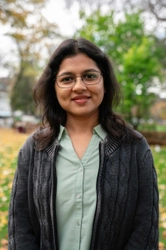
Dr. Nilanjana Chanda joined the group as a Postdoctoral Researcher in June 2024. She received Ph.D. in Quantum Physics from Indian Institute of Science Education and Research Kolkata, India in 2024, with the doctoral thesis titled “Effect of Drive-induced Dissipation in Quantum Dynamics: Applications in Quantum Control and Measurement”. Prior to that, she obtained her Master of Science degree in Physics from Indian Institute of Science Education and Research Kolkata, India in 2019 and Bachelor of Science degree in Physics from St. Xavier’s College Kolkata, University of Calcutta, India in 2016. Dr. Chanda’s research interests broadly lie in the study of open quantum systems dynamics, foundations of quantum mechanics, and quantum control. Her current research project focuses on developing a higher-order spin-phonon relaxation theory along with temperature-dependent studies in coordination compounds. This project is funded by European Research Council (ERC) under the European Union's Horizon 2020 research and innovation programme.
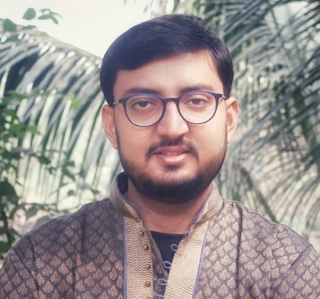
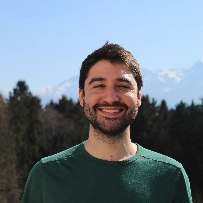
Post-doctoral Researcher Dr. A. Lorenzo Mariano
MSCA Fellow Post-doctoral Researcher Physics
Postgraduate students
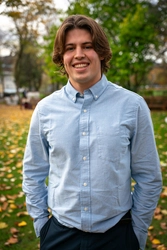
Luke joined the group in September 2025, and is studying for a research MSc co-supervised by Professor Lunghi and Dr. Khatibi. He is studying the use of graph neural networks to simulate magnetic coordination compounds. Luke graduated with a B.A. in Theoretical Physics from TCD in 2025, writing his thesis on quantum information transfer. He has completed research internships in Met Eirean and the Dublin Institute of Advanced Studies. In 2024, he was part of the team that won the National PLANCKS physics competition, and participated in the world finals.
Within his hobbies, Luke is also a sailing and windsurfing instructor, and has taught in centres in Italy, Greece, Spain, the USA and Ireland.