Drama is both an art form in its own right and also a highly effective teaching and learning methodology, which has been shown to operate successfully in formal and non-formal educational settings. Students will be introduced to the philosophies underpinning this creative educational approach, to its history, and to a wide range of drama and theatre in education techniques and to their use in diverse educational context.
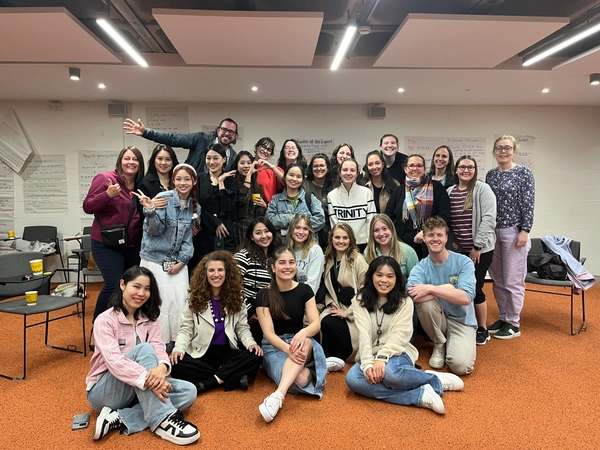
Drama is both an art form in its own right and also a highly effective teaching and learning methodology, which has been shown to operate successfully in formal and non-formal educational settings. Students will be introduced to the philosophies underpinning this creative educational approach, to its history, and to a wide range of drama and theatre in education techniques and to their use in diverse educational context.
The course has been running for almost twenty years and attracts an international audience. It is provided for teachers in primary, secondary and tertiary education, youth leaders, early childhood educators, theatre in education practitioners and others with a professional interest in the arts in education.
Drama is both an art form in its own right and also a highly effective teaching and learning methodology, which has been shown to operate successfully in formal and non-formal educational settings. Students will be introduced to the philosophies underpinning this creative educational approach, to its history, and to a wide range of drama and theatre in education techniques and to their use in diverse educational contexts.
Pathway Co-ordinators: Dr Susan Kennedy-Killian Email: susan.kennedykillian@tcd.ie
Course Consultants: Professor David Davis, Professor Cecily O'Neill, Mr Chris Cooper, Ms Chrissie Poulter and Dr Linda Krakaur.
Teaching Team: Dr Susan Kennedy-Killian, Dr Susanne Colleary, Mr Chris Cooper, Professor Carmel O'Sullivan and Dr Erika Piazzoli.
Module 1 - Introduction to Drama in Education (10 ECTS)
When: Summer School
Drama in Education is both an art form in its own right, and also a highly effective teaching and learning methodology, which has been shown to operate successfully in formal and non-formal educational settings. Students will be introduced to the philosophies underpinning this educational approach, to its history, and to basic drama in education techniques and their use in educational contexts.
Topics covered in this module include: The nature of the art form and key components in drama in education; drama games and movement exercises; role playing and improvisation; teacher-in-role; depiction; fictional framing; distancing; questioning; drama conventions (such as hot seating, voices in the head, angels and devils, conscience alley, questioning in role, role on the wall); dramatic storytelling; facilitating group and whole class work; pioneers in drama in education; historical overview of drama in schools and current approaches to drama in schools; process drama; the work of Dorothy Heathcote and Gavin Bolton.
Learning outcomes:
On successful completion of the module students should be able to:
- have experienced practical drama work and have explored a range of active learning strategies
- be able to implement and evaluate a dramatic approach in their teaching, employing appropriate strategies; have gained experience of planning sustained drama episodes
- have developed practical strategies to explore civic, social, political, personal and health issues through drama
- have gained a deeper understanding of the use of drama across the curriculum; be able to employ interdisciplinary approaches in their teaching
- be able to develop, share, and discuss creative responses to their learning
Module 2 - Drama and Theatre in Education (10 ECTS)
When: Summer School
Topics covered in this module include:
Key figures and influences in Drama and Theatre in Education e.g. Brecht, Stanislavski, Bond, Boal and Freire; TIE, devising in drama and theatre in education; working with text; teaching artistically and teacher as artist.
Learning Outcomes:
On successful completion of the module students should be able to:
- engage in a critical and analytical discussion about the role and value of arts education
- discuss key concepts and debates in drama and theatre in education
- understand the process of devising and staging theatre, and the process of planning, devising, implementing and evaluating a community theatre project; demonstrate practical skills in making and creating, appreciating and appraising theatre
- compare and contrast the work and ideas of key theorists and practitioners in the field of drama and theatre in education
- enact a self-reflective approach to their own teaching and learning
Module 3 – Advanced Issues in Drama in Education (10 ECTS)
When: Summer School
Topics covered in this module include: Heathcote’s Mantle of the Expert; structuring drama sequences for learning; using drama across the curriculum; dealing with social, political, and value issues in drama; drama and early childhood education; drama and students with special educational needs; drama and language learning, puppet/mask work; assessing and evaluating drama.
Learning Outcomes:
On successful completion of the module students should be able to:
- have developed an increased mastery of a range of advanced educational drama techniques
- be able to place learning experiences in context for their participants
- MLO 3: be familiar with the contribution to the field of Dorthy Heathcote and Gavin Bolton
- be able to structure drama sequences for learning; be able to monitor, assess and evaluate the effectiveness of the drama intervention and strategies used
- have developed strategies for encouraging reflective practice; enact a self-reflective approach to their own teaching and learning
Module 4 – Critical Reading in Drama in Education (10 ECTS)
When: Summer School and Semester 1
This on-line reading module is designed to allow students to formulate an overview and assessment of varying methods and approaches to drama in education. In-depth reading is organised around a structured theme, which requires critical evaluation of the readings. Students are encouraged to establish contact with other students on the programme with whom they will share and critically discuss their responses to the texts (peer-buddies).
Learning Outcomes:
On successful completion of the module students should be able to:
- have developed critical awareness of key literature in the field
- formulate an overview and assessment of varying methods and approaches to drama in education
- explore and discuss theoretical concepts relevant to the field
- relate theory to their own practice and the practice of others in the field
- engage in their own learning and the learning of others
- through sharing and critically discussing responses to the texts
Students participate in online and face to face practice focused workshops/seminars exploring drama in formal and non-formal educational settings. Each module is individually assessed through projects, case studies, portfolios, reports and essays. Integration of theory and practice is stressed in the content of modules and in assessments. Arts based, experiential and active teaching and learning strategies are used in the presentation of modules.
The Summer School (two weeks in July) is for incoming students starting the MEd in Drama in Education in 2027. The next Summer School takes place from Monday, 5th July to Saturday, 17th July 2027.