
On Thursday 22 October 2026, Dr. Dan Fitzpatrick, accompanied by Professor Louise Doyle and Professor Brian Keogh, appeared before the Oireachtas Joint Committee on Defence and National Security to discuss mental health supports and wellness in the Defence Forces.
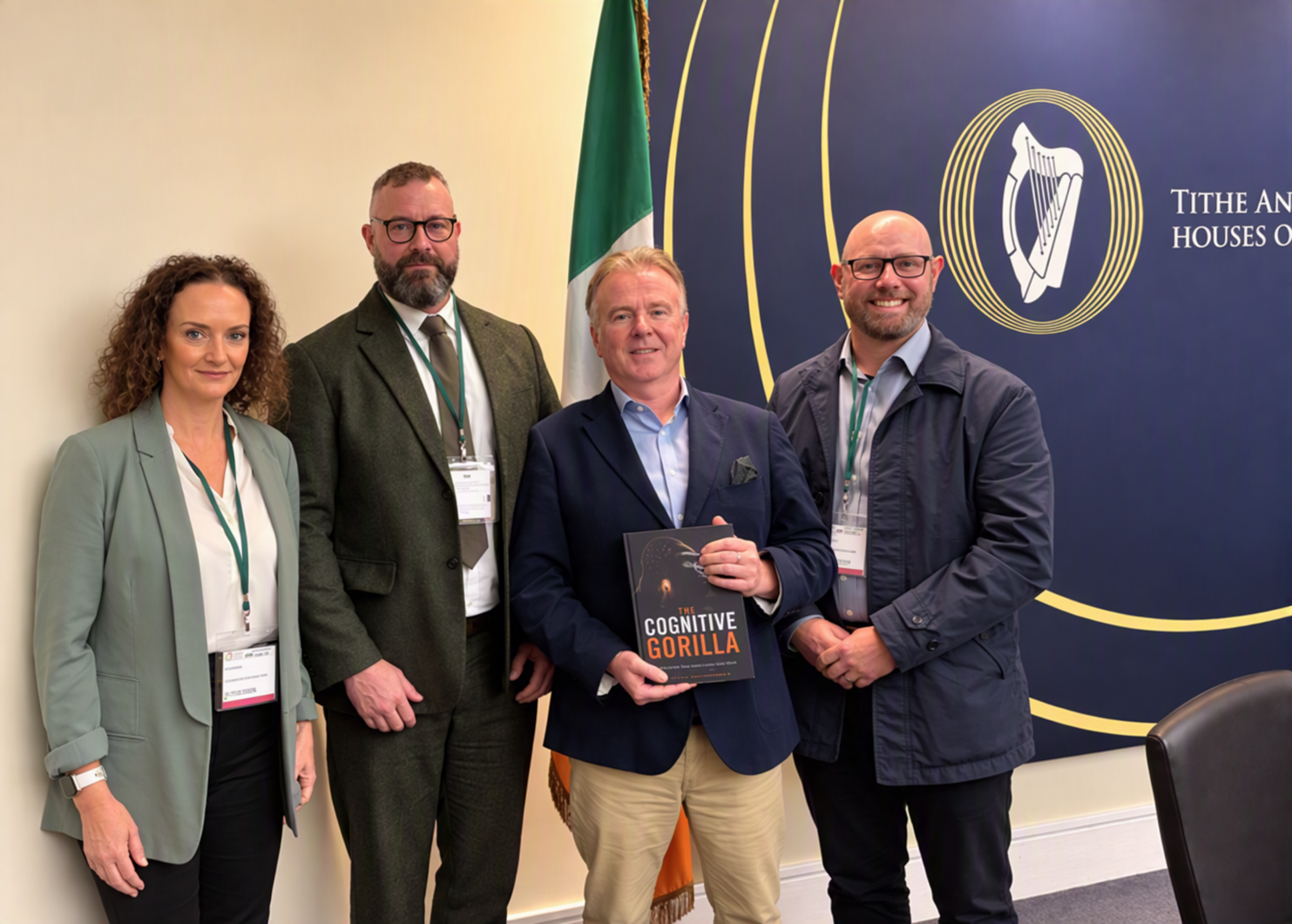
Pictured: Professor Louise Doyle, Dr. Dan Fitzpatrick, Senator Tom Clonan and Professor Brian Keogh with Dr. Fitzpatrick's new book 'The Cognitive Gorilla.' (AI was used to crop this image).
Dr. Fitzpatrick is a veteran of the Defence Forces, who undertook his doctoral research into mental health and help-seeking among serving Defence Forces personnel at the School of Nursing & Midwifery, Trinity College Dublin.
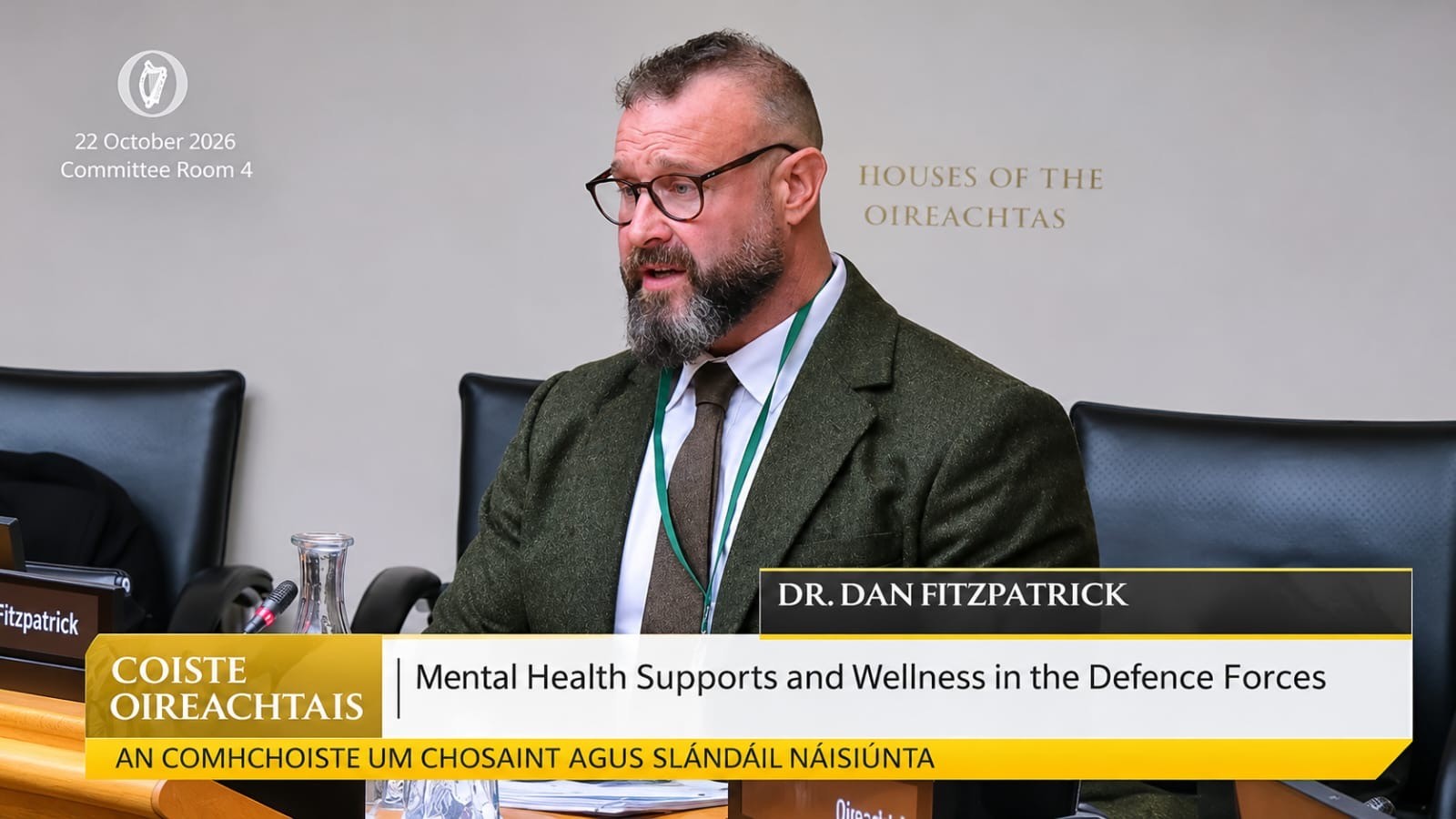
Pictured: Dr. Dan Fitzpatrick presents to the Committee.
Important issues highlighted by Dr. Fitzpatrick from his research include:
- Significant levels of psychological distress experienced by serving members of the military, including PTSD, suicidal thoughts, self-harm and attempted suicide.
- Lack of trust in seeking mental health support through the Defence Forces medical system. Only 22% of participants reported they would disclose a mental health difficulty through this system, while 94% believed disclosure to a military doctor could negatively affect their career.
- A structured, accountable system of mental health governance is required within the Defence Forces.
Drawing on his PhD research Dr. Fitzpatrick developed the Defence Forces Integrated Mental Health Governance Framework (DF-IMHGF) providing a mechanism for the translation of research findings into practice. The framework addresses the issues identified though proposals for clearer accountability, confidentiality standards, accessible care pathways and measurement of whether support is trusted and effective. It positions mental health as a strategic pillar of military readiness and provides a structured basis for considering reform. The framework has been sent to the Minister for Defence for consideration and Dr. Fitpaztrick is also meeting with senior members of the Defence Forces to discuss his research findings and framework.
Committee members welcomed the discussion and engaged with the findings on stigma, the need to ensure mental health support for both serving members of the Defence Forces and veterans, the need to build trust in a governance system, and ensuring there is a balanced focus on the physical as well as mental health of members.
Dr. Dan Fitzpatrick, said in his opening statement:
"... Mental health is not peripheral to military capability. It is part of the human foundation upon which operational effectiveness depends. The question is no longer simply whether mental health support exists. It is whether the Defence Forces can demonstrate that the systems surrounding that support are trusted, effective and accountable. That is the purpose of the Defence Forces integrated mental health governance framework and I respectfully ask the committee to give its recommendations formal consideration."
Members Present: Rose Conway-Walsh (Chair), Tom Brabazon, Tom Clonan, Michael Cahill, Gerard P. Craughwell, Catherine Callaghan, Robbie Gallagher, Maeve O'Connell, Ryan O'Meara, Donnchadh Ó Laoghaire, Duncan Smith and Brian Stanley.