
/filters:format(webp)/filters:quality(100)/prod01/channel_3/media/tcd/nursing-midwifery/images/news-images/Mooc-Substance-Use-and-Neurodiversity---Medium---1027-x-450-px.png)
Vital new training - Substance Use and Neurodiversity - was launched on Thursday, 28 May 2026, by Trinity College Dublin's School of Nursing and Midwifery. The groundbreaking training, commissioned by Citywide Drugs Crisis Campaign with support from ADHD Ireland, is being offered in response to research showing that 21% of people accessing drug and alcohol services have ADHD, with many more affected by autism, dyslexia, or other neurodevelopmental conditions.
Until now, frontline staff in Ireland had no formal training to support them.
The course was developed in collaboration with national and international experts and co-produced with Community Drugs Projects. Crucially, it incorporates the lived experience of neurodivergent people who have accessed substance use services and ensures the content reflects real-world challenges.
Senator Lynn Ruane, said the findings reflected what she had seen first-hand and called for future training to be funded by the government.
“The journeys to diagnosis, treatment and understanding were tortuous for people, their families, and for services. It is essential that the recommendations on the need for a neurodiverse informed approach and the subsequent training are supported and funded within the new national drug strategy.”
Tony Geoghegan, Chair of Citywide Drugs Crisis Campaign, said the course fills a gap that has long been felt in communities across Ireland.
“We know from our network of community drugs projects that staff have been doing their best without the tools they need. Neurodivergent people deserve services that understand them. This course gives workers the knowledge and confidence to make that a reality.
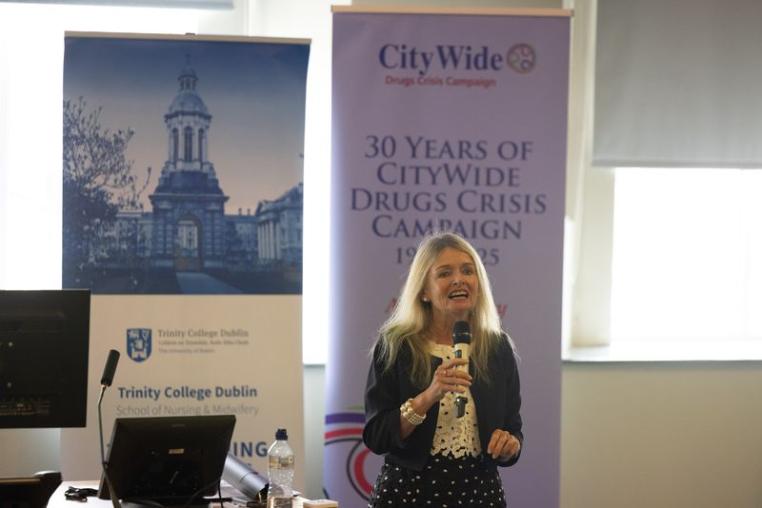
Pictured: Professor Catherine Comiskey speaking at the launch.
Professor Catherine Comiskey, who led the Trinity team alongside Assistant Professor Philip James, said the course reflects both the urgency of the need and a commitment to human rights in healthcare.
“Dissemination of best practice is urgently required if healthcare practitioners and related services are to uphold human rights-based approaches for both people who use services and people who provide them.”
The course is self-paced, accessible on any device, and free to complete. A certificate of completion is available for a small fee. There are no prerequisites.
/filters:quality(100)/prod01/channel_3/media/tcd/nursing-midwifery/images/news-images/images-9.jpeg)