The PME is a 2 year, 120 credits, Level 9 programme. Professional accreditation is provided by The Teaching Council.
The PME is a 2-year full time programme.
Students commence the programme in September with an in-depth Orientation programme. From that point onwards, until the students begin their first School Placement in December, we work with the students to ensure that they are as prepared as possible for their first School Placement.
The PME programme in Trinity College provides a high level of integration between theory and practice. This is achieved through the four main components which work in a spiral, iterative manner
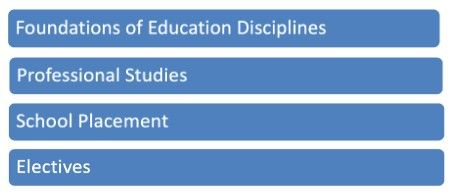
Figure 3: Components of the Trinity College, PME
Full details of Foundation Disciplines, Professional Studies, School Placement and Electives can be viewed HERE.
Year 1
During their first semester in Year 1, students are expected to attend lectures, tutorials and preparatory sessions in Trinity College. In the second semester, students will participate in a twelve-week block School Placement, prioritising Junior Cycle classes, with responsibility for planning, implementing, assessing and evaluating allocated classes. During their block School Placement, students will attend pedagogical support sessions in College on week day late afternoons (after school). These sessions are designed to maximise student learning and opportunities for reflection during School Placement and to facilitate the integration of theory with practice. Opportunities for collaborative reflective activity are supported by our e-learning platform.
When students return from School Placement, they will participate in placement review and evaluation activities, and complete a Research Methods programme in order to prepare them to write a detailed research proposal for their thesis in Year 2. The research proposal is designed to draw on the material included in students’ teaching and learning Portfolio which includes all Units of Learning, Lesson Plans, Observations, Reflections, Action Plans and Placement Feedback from the beginning of the programme.
Year 2
During their first semester of Year 2, students participate in a twelve-week Advanced School Placement module, in a different school to where they completed their first School Placement, covering both Junior and Senior Cycle classes. Student teachers must have full responsibility to plan, deliver and evaluate all aspects of the classes they teach and engage fully in the day-to-day life of a school. Student teachers will attend evening pedagogical support sessions in College every two weeks in their second year.
During their second semester, students will attend lectures, workshops and seminars in College, and undertake Advanced Pedagogical Studies and Research. This is designed to equip students with the relevant knowledge and skills to reflect on their periods of School Placement and academic studies in education and to complete a substantial research project (10,000 word minor thesis).
The PME is offered in the School of Education with specialisms in ten post primary curriculum subjects. Applicants select one at the time of application as their Major subject:
- Business Studies (including Accounting and Economics)
- Computer Science
- English
- Geography
- History
- An Ghaeilge
- Mathematics (including Applied Mathematics)
- Modern Languages (including Chinese, French, German, Italian, Spanish and other Curricular Languages)
- Music
- Science (including Biology, Chemistry and Physics)
Students must also choose a Minor subject from the subjects listed above. Additional minors offered include Climate, Sustainability &Action, Drama, Film & Theatre studies and Politics &Society. Please note minors running are subject to demand/timetabling.
As a responsive, holistic, research informed programme, the PME aims to prepare students for a dynamic and evolving teaching profession by developing critical and analytical skills, integrating research and practice across school and college contexts and facilitating a reflective, inclusive research informed approach to teaching, learning and assessment. We aim to encourage students to take responsibility for their own learning and support their development as inclusive, reflective practitioners who are committed to continuous improvement of their practice. Our aims are informed by a dialogical, constructivist teaching and learning philosophy which promotes a high level of in active and creative class engagement by students. We model best practice in active, creative and inclusive teaching, learning and assessment on the programme with the aim that our student teachers, will, in turn, use these methods in their classes. This approach in turn, facilitates students in developing safe, inclusive and welcoming learning environments for their pupils. The programme recognises the importance of student agency within a structured professional programme and encourages student teachers in turn to appreciate the role of their pupils as agents of own learning. As well as focusing on how we teach, the programme aims to develop the student teacher’s subject mastery and subject competence. Partnership with education stakeholders is an essential part of our programme and conceptual framework; working with our education partners we ensure that our programme remains relevant and responsive to national priorities and allows for opportunities to forge links between the sites of practice of the school and the university.
Our programme aims to develop in our students:
- a critical knowledge and understanding of their subject matter and the discipline of education underpinned by research and integration of new knowledge within their practice
- a sense of the broad context of Irish education as part of society as a whole and ability to evaluate the place of teachers and schools within this context through a variety of disciplinary and research-based approaches
- an appreciation and understanding of the complicated and holistic nature of the teacher’s role as professional in a school and wider societal context; the importance of professional relationships, and of the function[s] of schools in society
- a commitment to act responsibly in line with the professional values outlined in the Graduate Standards and the Code of Professional Conduct for Teachers, and the ability to reflect on the implications of these values for their practice
- knowledge and critical understanding of a range of models of active, creative and inclusive teaching, learning and assessment methods, to facilitate the development of coherent, inclusive and integrated teaching and learning experiences
- the ability and willingness to act as a responsive, inclusive, holistic practitioner
- the ability to think independently informed by reflective, research-informed practice; adopting critical insights into practice as appropriate
In keeping with the Teaching Council’s Céim: Standards for Initial Teacher Education (2020), our PME places heightened emphasis on seven core areas which are embedded in our PME programme:
- Inclusive Education: This includes the fostering of appropriate learning environments, including digital ones, that support the development of student teachers’ ability to provide for the learning needs of all pupils by utilising, for example, a Universal Design for Learning framework.
- Global Citizenship Education: To include Education for Sustainable Development; Wellbeing (personal and community); Social Justice, Interculturalism. There should be demonstrable integration between Inclusive Education and Global Citizenship Education rooted in the principle of care for others.
- Professional Relationships and Working with Parents: To include working with parents, pupils, peers, external agencies and others; preparing for school placement; the school as a learning community; and legislation relevant to the school and classroom.
- Professional Identity and Agency: To include support for the development of the teacher as a self-reflective autonomous professional who demonstrates the four values outlined in the Code of Professional Conduct for Teachers, and the teacher as a lifelong learner (and Treoraí) in relation to the continuum of teacher education.
- Creativity and Reflective Practice: To include fostering a creative mindset among student teachers, teachers as reflective practitioners; teachers as innovators; teachers as researchers; teachers’ relationship with the school as a learning community and the development of Taisce to support the process of portfolio-based learning.
- Literacy and Numeracy: Programme design shall ensure that student teachers are afforded opportunities to enhance their own literacy and numeracy and are required to demonstrate an acceptable level of proficiency in literacy and numeracy. Students shall be required to demonstrate their competence in teaching and assessing literacy and numeracy appropriate to their curricular/subject area(s).
- Digital Skills: To include Digital Literacy; the use of digital technologies to support teaching, learning and assessment for all learners; the integration of digital skills across the programme including opportunities for student teachers to explore new and emerging technologies.
Please refer to Céim: Standards for Initial Teacher Education (The Teaching Council, 2020).