

CL7046 Passages to Late Antiquity
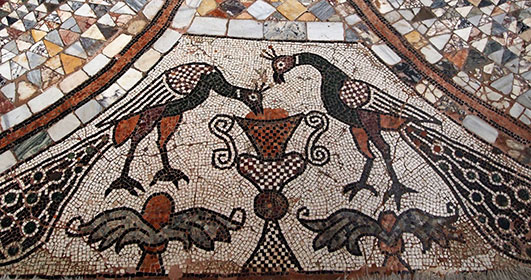
‘Late Antiquity’ is a name now used for the period that bridges the gap between classical antiquity and the Middle Ages. The chronological range of Late Antiquity is debated; at its widest, it encompasses the third to the eighth centuries CE. It also has an expansive geographical scope, moving beyond the traditional focus on the fragmentation and collapse of the Roman Empire to embrace interconnectivity in the Mediterranean basin and beyond. This module explores profound late antique transitions in overarching themes, such as ethnicity, gender, religion, and literary culture. Its structure and content are dynamic, dictated by the research interests of students. Students will be challenged to devise, and then reflect on, in-class discussions on their chosen topic, as well as design their own final research project.
- Module Organiser:
- Dr Rebecca Usherwood
- Duration:
- Semester 1
- Contact Hours:
- 22 (1 x 2-hour seminar per week)
- Weighting:
- 10 ECTS
- Assessment:
- 100% Continuous Assessment
Introductory Reading
- Gillian Clark (2011) Late Antiquity: A Very Short Introduction. Oxford.
- Peter Brown (1971) The World of Late Antiquity. London.
- Averil Cameron (2011) The Mediterranean World in Late Antiquity, AD 395-600. London.
- Douglas Boin (2018) A Social and Cultural History of Late Antiquity. London.
- Michael Maas (2000) Reading in Late Antiquity, A Sourcebook. (2nd ed). London.
Learning Outcomes
On successful conclusion of this module, students will be able to:
- Discuss and analyse the transformation of the ancient to medieval worlds in relation to the themes studied
- Analyse and discuss a wide range of ancient and medieval evidence, both literary and material
- Comment critically on major historiographical trends in the study of the later Roman empire
- Devise and lead class discussions, in collaboration with classmates and in discussion with the module leader, and reflect on these processes
- Conduct independent research on a chosen topic related to the themes of the module, responding to and integrating feedback, and presenting research results with clarity and professionalism, both orally and in writing