/filters:format(webp)/filters:quality(100)/prod01/channel_3/media/tcd/engineering/images/Biomass-Ash-Concrete-Team.png)
Main Image: Dr Zehao Lei (Co-lead), Yingzheng Pan (PhD Student), Prof Sara Pavia (Co-Lead), Emriye Çınar Resuloğulları (Postdoctoral Researcher)
The event marked a major step for Irish construction. For the first time, Portland-cement-free, geopolymer concrete developed at Trinity moved from laboratory trials into full site placement, proving that a circular, lower‑carbon material made from an Irish waste stream can be used in real project conditions.
This work directly supports the ambitions set out in Trinity’s Sustainability Strategy 2023 - 2030, which calls for practical, research‑driven solutions that cut emissions, support circular resource use and influence sustainable practices across Ireland.
A collaborative approach with national relevance
The project is led by Prof Sara Pavia and Dr Zehao Lei (Department of Civil Engineering, Trinity College Dublin) through a 20‑month seed programme funded by Construct Innovate. The funding enabled the team to progress beyond laboratory research and work directly with industry to validate the material at scale.
The collaboration brought together:
- Trinity College Dublin - Research
- FLI Precast Solutions - Precast production
- Roadstone - Ready‑mix supply, batching and transport
- SISK - Site demonstration and construction workflows
This joined‑up approach ensured that the material was evaluated in the settings where it will ultimately be used. As Ireland’s construction sector faces increasing pressure to cut emissions, coordinated work of this kind is essential.
Demonstration results: industrial placement with standard equipment
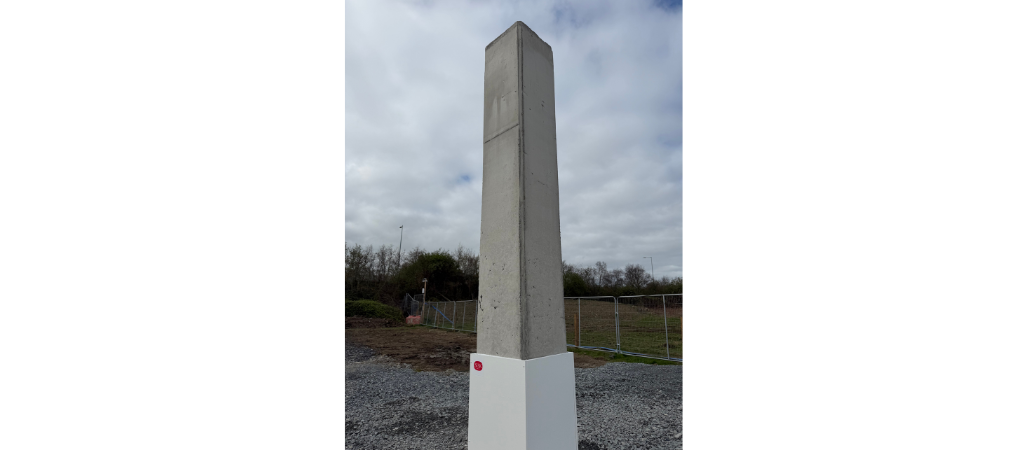
Biomass ash concrete column poured on site by Roadstone
At the workshop, FLI Precast produced and displayed precast beams and Kelly blocks made with biomass ash geopolymer, demonstrating compatibility with factory production processes. Roadstone demonstrated that biomass ash-Portland cement concrete can be mixed, transported and poured on site like normal concrete, while SISK validated the handling and placement in a real construction site.
Key outcomes included:
- Cement‑free, biomass ash geopolymer (with c.70% lower Carbon footprint than CEM II) performs reliably
- No major changes required to batching, transport or placement
- Consistent workability and strength comparable to traditional mixes
- Full‑scale precast beams and Kelly blocks produced in standard factory conditions
- Ready-mix elements (wall and column) made on site
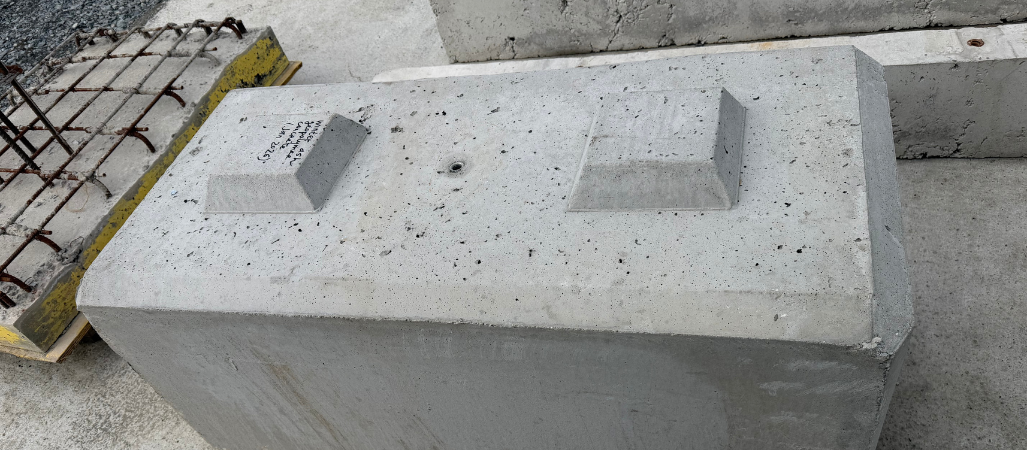
Kelly Block made by FLI precast with biomass ash geopolymer developed by Trinity
Turning a national waste challenge into a construction resource
Ireland produces more than 20,000 tonnes of biomass ash every year. At present, this ash is landfilled. The Trinity‑led approach shows that the material can instead form the basis of both blended and cement‑free binders.
The research team developed two patented systems that support wide adoption:
- A biomass‑ash geopolymer formulation capable of replacing Portland cement entirely and cut carbon emissions by up to 70 percent.
- A retarding system that provides workable setting times, ensuring the mixes remain controllable during mixing, delivery and placement.
Crucially, these technologies are designed to fit into existing industrial processes. For industry, this means minimal disruption and a clear route to adoption at scale.
Supporting Ireland’s climate and circular economy goals
Replacing cement with biomass ash has the potential to avoid at least 20,000 tonnes of CO₂ each year. This aligns strongly with Trinity’s Sustainability Strategy 2023–2030, which emphasises:
- Advancing circular approaches across Irish supply chains
- Supporting national climate ambitions through applied research
- Creating partnerships that deliver measurable environmental benefits
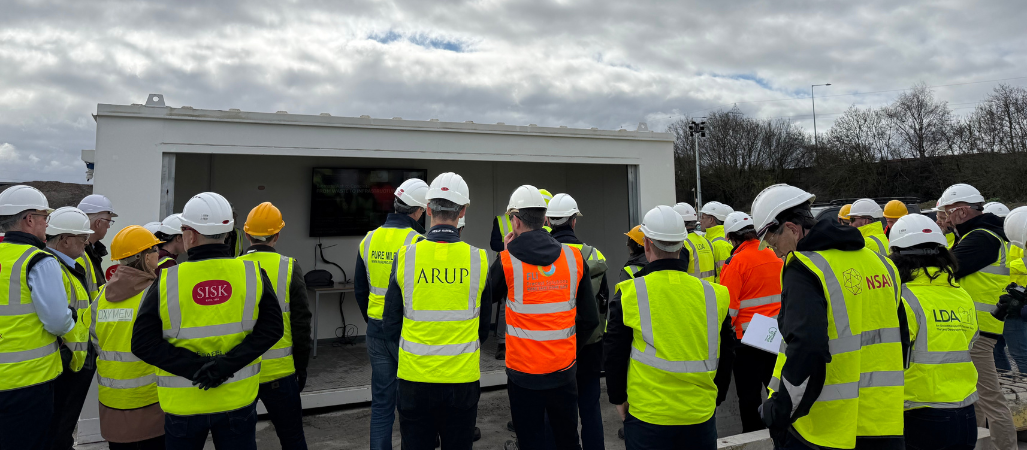
Attendees participating in the workshop
The workshop brought together representatives from Enterprise Ireland, the Land Development Agency, the National Standards Authority of Ireland, Transport Infrastructure Ireland and Irish Concrete, reflecting keen interest in solutions that can be deployed without radical changes to industry practice.
Acknowledgement of partners
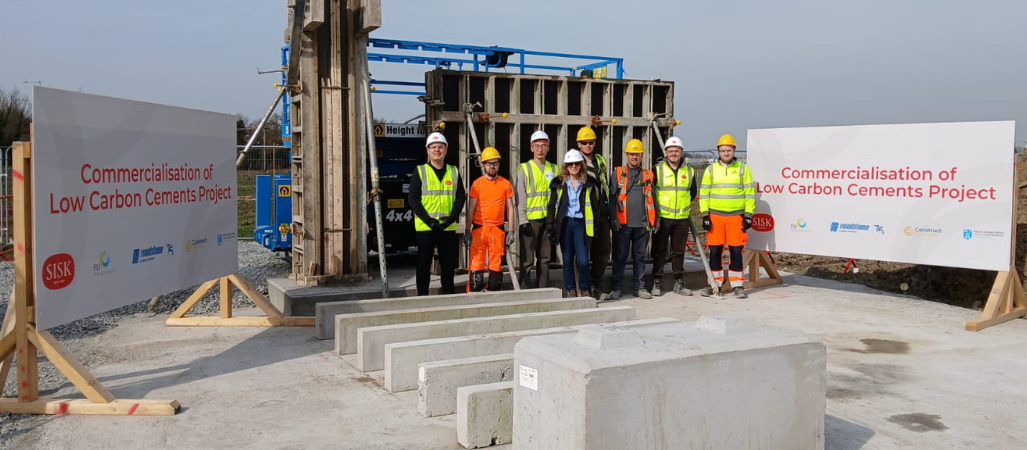 Trinity Engineering, SISK, FLI and Roadstone personnel at the SISK’s site with a display of precast beams, Kelly blocks and ready-mixed concrete column and wall
The School of Engineering extends sincere thanks to SISK, FLI Precast Solutions, Roadstone and Bord na Mona, as well as Construct Innovate for supporting the project from concept through to on‑site demonstration. Their collaboration was essential in turning research findings into a real‑world construction event.
Reflecting on the milestone, Prof Sara Pavia said:
“Seeing this material placed on a live construction site was a strong moment for everyone involved. Our goal has always been to create something that industry can use today, without major disruption. This approach gives Ireland a practical route to lower‑carbon construction while making real use of an Irish waste resource.”
Trinity and its partners will continue working together to explore wider adoption across Ireland’s built environment.