Creative Futures Forum explores future of creativity, AI and digital transformation
Posted on: 21 May 2026
Participants collectively explored how artificial intelligence (AI), immersive technologies, and digital transformation are reshaping creativity, authorship, education, innovation, and the future of creative work.
On 14 May 2026, Trinity hosted the Creative Futures Forum: Shaping the Future of Creative Work in the Digital/AI Era, at Trinity Business School.
The interdisciplinary forum attracted a full-house audience with over 100 participants from more than 35 institutions and organisations across academia, industry, policy, education, technology, arts associations, independent creative practice, and the wider creative community.
Participants collectively explored how artificial intelligence (AI), immersive technologies, and digital transformation are reshaping creativity, authorship, education, innovation, and the future of creative work.
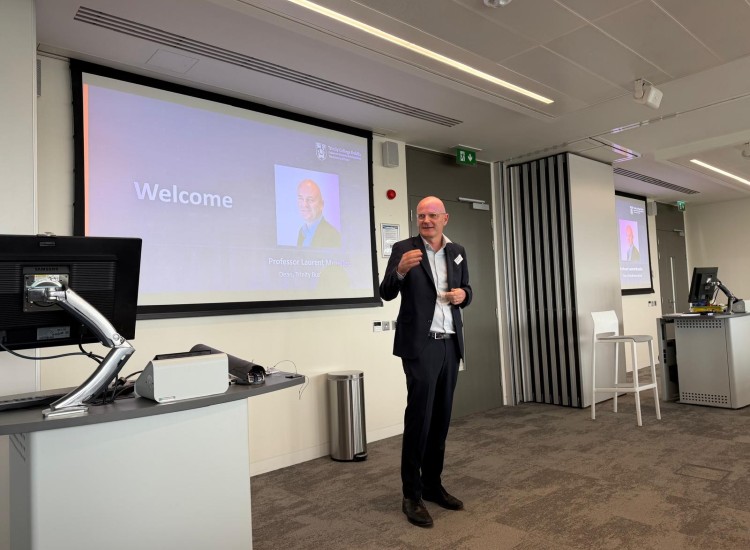
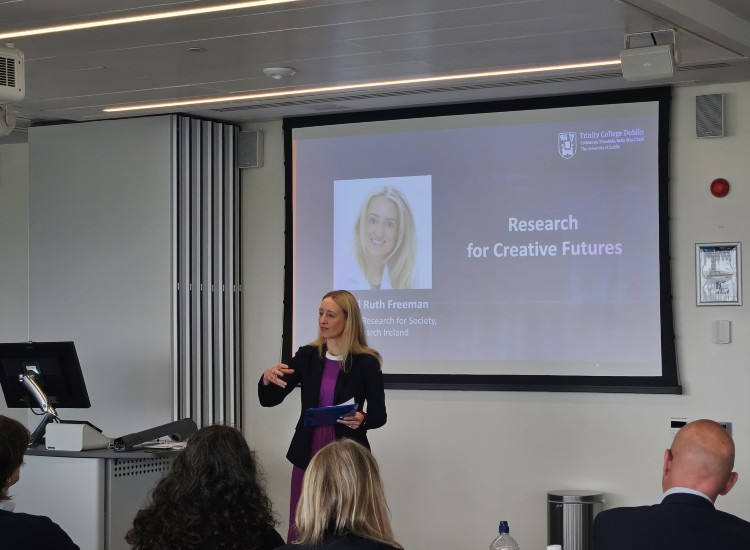
After the very warm welcome by Professor Laurent Muzellec, Dean of Trinity Business School (pictured above), Abigail Ruth Freeman, Director of Research for Society at Research Ireland (below) provided the opening keynote, highlighting the importance of interdisciplinary collaboration in responding to rapid societal and technological transformation:
“The future of innovation and creativity depends increasingly on our ability to connect disciplines, sectors, and perspectives. Forums like this are essential for creating the conversations and collaborations needed to shape responsible and human-centred futures.”
The programme featured the industry keynote contributions from Elliot Masie, Founder and Chair of and the MASIE Learning Foundation. Elliot shared perspectives on the impact of AI on creativity, creative work and jobs, and the emerging trends shaping global creative industries and evolving value chains in the digital era.
“AI is like weather – you can’t control it and need to adapt to it.”
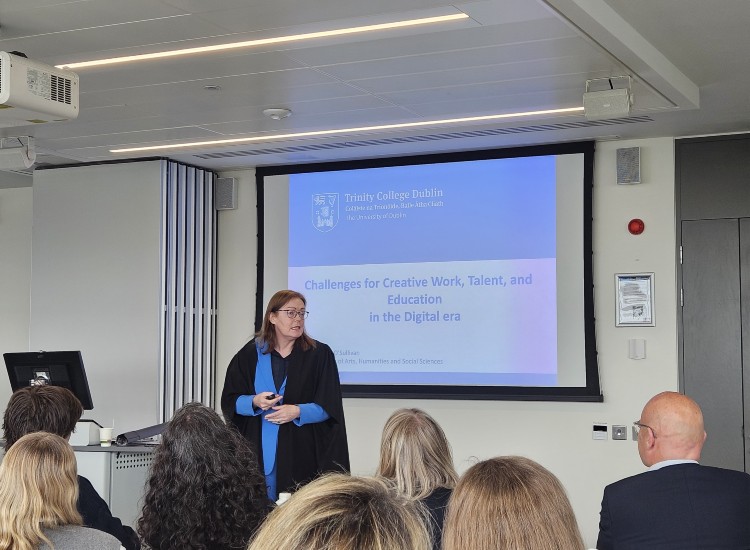
From a research perspective, Professor Carmel O’Sullivan (above) delivered a highly interactive and immersive keynote, exploring the evolving relationship between humans and AI, and reflecting on the implications for creativity, education, artistic practice, and future talent development.
Speaking during the event, Professor O’Sullivan noted:
“The creative industries are entering a period of profound transformation. It is vital that education, research, and creative practice evolve together to ensure future generations of creative talent can thrive while preserving artistic integrity, critical thinking, and human expression.”
A central feature of the event was the interactive World Café workshop led by Frank O’Reilly, where participants engaged in structured discussions around artistic integrity and fair value creation, AI and authorship, policy and regulation, future skills and education, and infrastructure and funding support for the creative sector.
The workshop encouraged dialogue across disciplines and sectors, creating space for researchers, educators, policymakers, industry representatives, artists, and creative practitioners to share perspectives and identify future priorities and opportunities for collaboration.
One of the most meaningful moments of the event was the special recognition of the late Michèle Burke. Born in Dublin and raised in Kildare, Michèle Burke built an internationally recognised career spanning Canada, USA, and the global film industry, becoming a two-time Academy Award winner with six Oscar nominations and numerous BAFTA and Emmy recognitions.
The recognition ceremony reflected on Burke’s remarkable creative legacy and the enduring importance of human imagination, craftsmanship, resilience, and artistic vision in an era of rapid technological change. Members of the Burke family attended the event to receive a commemorative plaque in her honour. The tribute was accompanied by a special performance from the Trinity FAHSS Staff Choir.
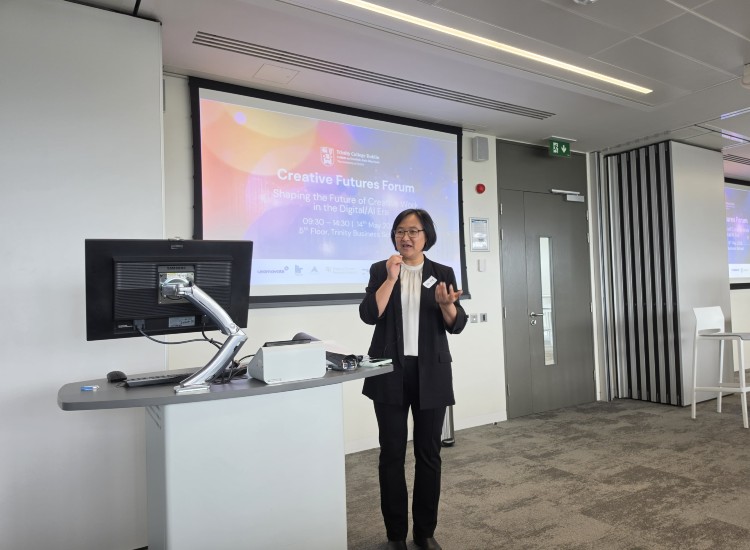
Reflecting on the forum, Professor Na Fu, Professor of Responsible Leadership (above), one of the organisers for this event, highlighted the importance of maintaining a human-centred perspective in conversations around AI and creativity:
“While technology continues to advance rapidly, human creativity, imagination, judgement, storytelling, and artistic expression matter more than ever. The future of creativity will still depend on people, relationships, values, and collaboration.”
Throughout the day, discussions repeatedly returned to the importance of collaboration across research, education, policy, industry, and the creative community in shaping a responsible, sustainable, and innovative future for creativity in the AI era.
The event was organised by Professor Carmel O’Sullivan from the Faculty of Arts, Humanities and Social Sciences, Frank O’Reilly from Learnovate, Blú Hanley from The Lir Academy, and Professor Na Fu from Trinity Business School. The forum was supported by CHARM-EU, Trinity Business School and the Trinity AI XR Hub.
A follow-up report capturing key reflections, priorities, and recommendations emerging from the forum discussions will be developed following the event.
ENDS