
The 100-year life: TILDA marks 20 years of research into ageing
Posted on: 09 June 2026
At a public event, leading voices in research, policy and public life reflected on how Ireland is ageing, what TILDA has revealed over two decades, and how this evidence can help shape healthier, longer and more connected futures for generations to come.
What does it mean to live longer - and live well?
How do we prepare for living into our 80s, 90s and beyond?
Can our healthcare systems, housing, workplaces, transport and communities adapt to support longer, healthier and more connected lives?
How do we ensure that everyone has the chance to thrive into old age?
These questions were explored at a special public event marking 20 years of The Irish Longitudinal Study on Ageing (TILDA), which took place at Trinity on Monday, 8 June 2026.
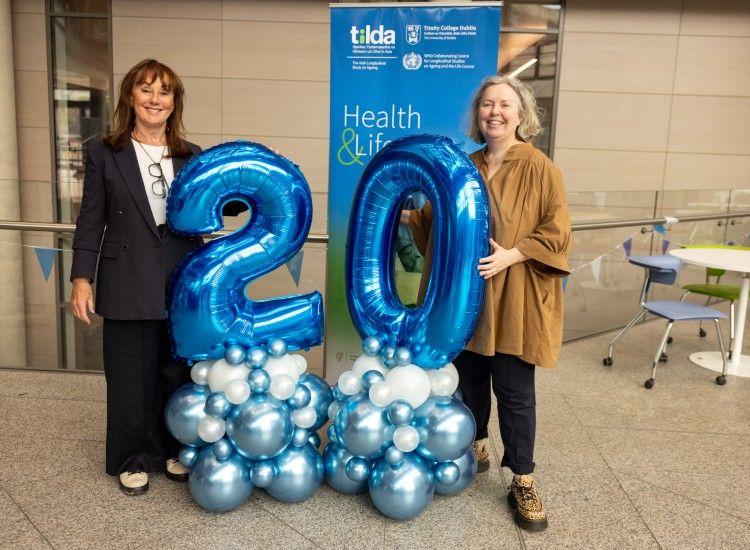
Titled “The 100-Year Life: What 20 Years of TILDA Tells Us About Our Future Selves”, the event brought together leading voices in research, policy and public life to reflect on how Ireland is ageing, what TILDA has revealed over two decades, and how this evidence can help shape healthier, longer and more connected futures for generations to come.
It was open to anyone interested in ageing, health, longevity and the future of Irish society.

Established at Trinity in 2006, TILDA has become one of Europe’s leading longitudinal studies of ageing and a globally recognised source of evidence on health, social and economic ageing.
* Some 10,000 older adults have contributed to the study over the years, sharing their health data and the details of their lives to deepen our understanding of ageing and inform policy.
* TILDA’s findings have informed healthcare policy, age-friendly planning, public health initiatives, and national conversations about ageing in Ireland. Today, TILDA is recognised internationally as one of the world's leading longitudinal studies of ageing, with its findings helping to shape policy and practice in Ireland and contributing to global understanding of how populations can age healthily and successfully.
* Over the past two decades, TILDA has generated insights that have informed healthcare policy, age-friendly planning, public health initiatives and national conversations about ageing. Its research has influenced areas as diverse as falls prevention, cardiovascular health, vitamin D supplementation, caregiving, social participation and the design of age-friendly communities.
* One example is TILDA's contribution to evidence that helped inform changes to pedestrian crossing timings in Dublin to better reflect walking speeds and support safer, more inclusive public spaces.
* TILDA findings have been cited in more than 500 international policy and advocacy documents globally. In 2024, TILDA became a WHO Collaborating Centre for Longitudinal Studies on Ageing and the Life Course, supporting the WHO by advancing knowledge and data on ageing and life course research to advance healthy ageing worldwide.
Regius Professor Rose Anne Kenny, founding Principal Investigator of TILDA (pictured in top image on left), said “For the past 20 years, TILDA participants across Ireland have made an extraordinary contribution to research and to our understanding of ageing. Their generosity and commitment have helped create a unique national resource that continues to shape policy, healthcare, public understanding, and even aspects of the built environment, both nationally and internationally.
“TILDA’s findings have helped demonstrate how relatively small interventions, from falls prevention to more age-friendly public spaces, can support healthier, safer, and more connected lives as people age.
“This event is an opportunity not only to celebrate that contribution, but also to look ahead. As we live longer lives, the challenge is not simply longevity, but how we create healthier, more connected, and more fulfilling lives across the life course.”
The event was opened by the Provost of Trinty College Dublin, Dr Linda Doyle (above on right), and featured a keynote lecture by Sarah Harper, Professor of Gerontology at the University of Oxford.
"It is no small feat for a research project to reach 20 years," said Dr Linda Doyle, who praised the rigour that TILDA has brought to Trinity's engagement with the public. "TILDA is a real benchmark for Trinity's research ... We are here to do research that makes a difference to people's lives."
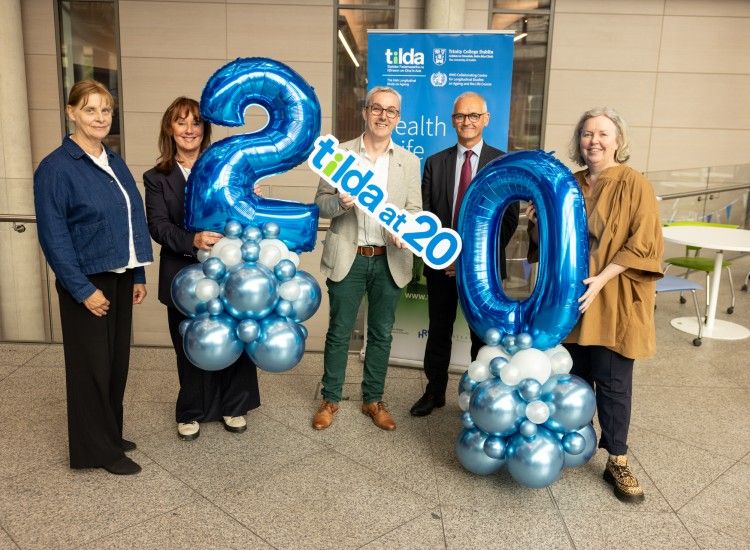
Professor Harper (above on far left) explored how individuals, institutions and societies adapt to increasing longevity and population ageing. Her lecture “Preparing Together: Rethinking Ageing in the Modern World” examined whether healthcare systems, working patterns, education, housing, and transport can evolve alongside longer lives — and how societies can ensure everyone can live long, healthy and fulfilled lives.
Professor Harper is internationally recognised, having contributed to the development of some of the world’s most influential longitudinal ageing studies.
A moderated conversation chaired by science broadcaster Jonathan McCrea brought together:
· Regius Professor Rose Anne Kenny, Founding PI of TILDA, Trinity College Dublin.
· Professor Sarah Harper CBE, University of Oxford.
· Professor Alan Barrett, Economic and Social Research Institute (ESRI) (above, sebond from right).
· Professor Cathal McCrory, Co-PI of TILDA, Trinity College Dublin (above, centre).
ENDS
Media Contact:
Catherine O’Mahony | Media Relations | catherine.omahony@tcd.ie