Optogenetics – a link between the Nobel Prize, Trinity neuroscience, and understanding memory
Posted on: 08 October 2026
Trinity's Prof. Tomás Ryan and his team were among the many neuroscientists around the world celebrating the success of Karl Deisseroth, who along with Peter Hegemann and Georg Nagel was awarded the 2026 Nobel Prize in Physiology or Medicine.
Hegemann and Nagel discovered channelrhodopsin, a light-sensitive ion channel in a single-celled alga. Deisseroth showed that it could be put into brain cells to “remote control” them with light. Within a few years, labs around the world were using the method to test what individual groups of brain cells actually do to contribute to cognitive processes such as movement, memory, attention, emotion, and decision-making.
Among those lauding this event was Prof. Tomás Ryan, who is an Irish expert in this field, having developed optogenetic methods for identifying and manipulating memory engrams, which are the physical traces that memories leave in the brain, while working as a Postdoctoral Researcher at Massachusetts Institute of Technology (MIT).
That work was done in the lab of the late Susumu Tonegawa, himself a Nobel laureate for his work on solving the mystery of antibody diversity in the immune system (Physiology or Medicine, 1987), and who passed away this year.
Such was the impact of the Tonegawa Lab work that two of their published papers were even cited in this year’s Nobel press release, including experiments where false memories were implanted into the mouse brain.
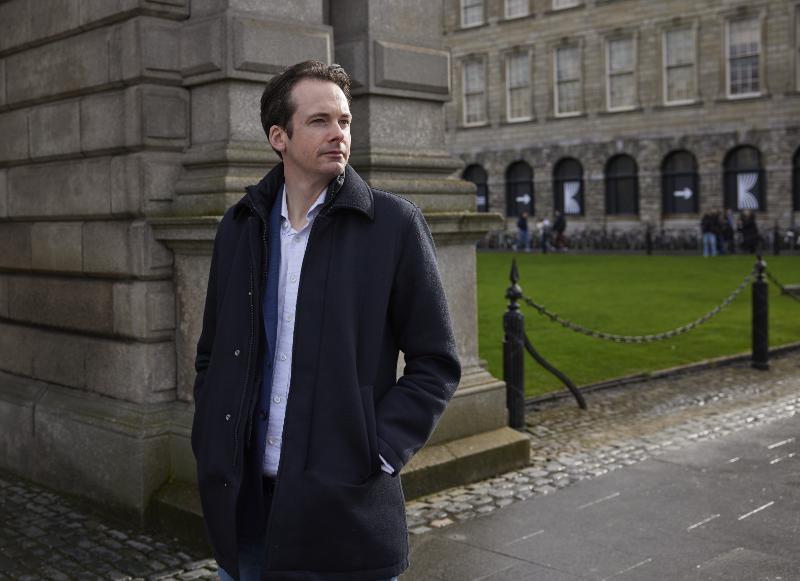
Prof. Ryan (pictured in Trinity above) and his lab established optogenetics and engram labelling in Ireland in 2017 with the support of Science Foundation Ireland (now Research Ireland) and the European Research Council. His lab at Trinity uses the approach to study how memories are stored, lost and recovered.
“Optogenetics approaches have opened countless doors for scientists to answer an incredible suite of questions across a range of fields," said Prof. Ryan.
"Before it, we could mostly observe the brain and look for correlations. But with optogenetics, we could intervene: we could activate a specific set of cells and see what happens. A lot of old questions became experiments overnight.”
“For example, these techniques have taught us that ‘lost memories’ aren’t truly lost. Using optogenetics, we showed that memories which seem to have disappeared, through amnesia, ordinary forgetting or disease, can still be stored in the brain in a latent state, and they can be brought back to life if the correct neurons are stimulated by light.”
“Additionally, my lab published an influential study in 2025, where we used optogenetics to identify the engram cells that store memories of cold, showing that the brain remembers past cold and uses these ‘embodied memories’ to shape how the body responds to temperature.”
Another Trinity sub-plot to this year’s Nobel Prize success has its roots in 2018, when the university hosted the Schrödinger at 75 meeting (organised by Prof. Ryan, Prof. Cliona O’Farrelly, and Prof. Luke O’Neill), which hosted (at that time) six Nobel Prize-winners and some of the world’s most brilliant science minds.
Among the invited speakers were both Susumu Tonegawa and Karl Deisseroth, who spoke backstage in the below interview:
The Schrödinger at 75 meeting took inspiration from an iconic moment in history that changed the course of science when Erwin Schrödinger delivered his paradigm-shifting What is Life? lectures at Trinity in 1943, inspiring the search for what was the DNA double helix. Recorded lectures from the 2018 meeting are available here:
In another 17 years it will be time for the centenary of the original "What is Life?" lectures in 2043, and science will have no doubt delivered some more incredible breakthroughs. Many of the 2018 organising committee are anticipating further Nobel success for some of the luminaries who spoke at the meeting eight years ago.
The Ryan Lab is located within Trinity’s School of Biochemistry and Immunology, and works to integrate memory engram biology with immunology in order to understand how the experiences of infection and sickness leave lasting imprints on the brain.
Media Contact:
Thomas Deane | Media Relations | deaneth@tcd.ie | +353 1 896 4685