Sticks and stones may break my bones but “hybrid” macrophages could heal me
Posted on: 28 April 2026
Scientists from Trinity College Dublin and RCSI University of Medicine and Health Sciences have created new “hybrid” immune cells with the potential to help new bone form after a break by simultaneously promoting blood vessel and bone growth.
This discovery could one day help bones regrow more quickly as well as improving outcomes for a huge number of patients – with around 10% of all bone fractures currently failing to heal properly.
The team’s focus was on “macrophages”, which are specialised immune cells with the unique ability to switch between two different states. As well as directing the immune response, macrophages are secretory cells, meaning they actively release molecules and particles that communicate with surrounding cells to coordinate repair.
When a bone breaks, macrophages rush to the site and drive an inflammatory response, clearing up damage such as dead cells and bone fragments. These are called M1 macrophages. Once that job is done, macrophages switch to a second state, called M2, which helps reorganise and rebuild the bone.
“How exactly this switch occurs during bone repair is poorly understood, but our study has gone some way to solving that puzzle,” said Prof. David Hoey from Trinity’s School of Engineering, who is co-senior author of the article recently published in journal Biomaterials.
“Scientists have known for some time that macrophages release tiny particles called extracellular vesicles, small packages that carry biological signals and are taken up by neighbouring cells. What our group discovered was the role they play during bone repair and, crucially, that their effects depend entirely on which state the macrophage is in when it releases them.”
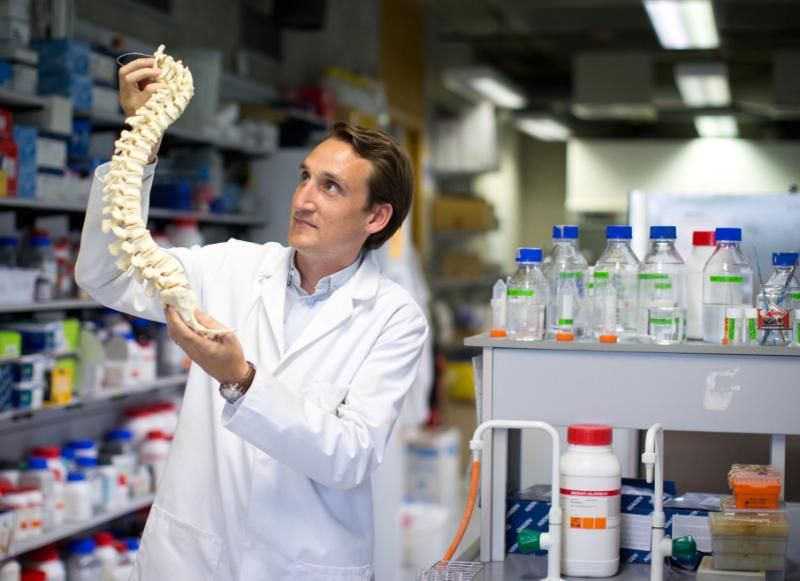 Prof. David Hoey in the lab.
The team found that M1 macrophage extracellular vesicles kickstart new bone formation, while M2 macrophage extracellular vesicles promote the growth of new blood vessels, which is the essential biological process for delivering nutrients to the healing site.
Creating a new “hybrid” healer
The next important step in this research journey had its roots in metabolism, which refers to all the chemical reactions that keep our cells working. The team found that the metabolic state of a macrophage directly shapes which type of particles it releases.
Using a drug called DASA-58, they were able to shift M1 macrophages into a new hybrid state, somewhere between M1 and M2.
“Crucially, the particles released by these hybrid cells were different,” added Prof. Hoey. “These hybrid particles were able to both support new bone formation and promote blood vessel growth at the same time, effectively combining the benefits of both M1 and M2 particles into a single population – and without triggering unwanted inflammation.”
Why does this matter? What is the potential impact of this research?
Slow or impaired bone healing is common in older adults, people with diabetes, and patients with large or complex fractures. This research suggests a new way to create cell‑derived therapies that could speed up recovery and improve outcomes.
The next steps for the team will be to further validate the regenerative properties of the hybrid extracellular vesicles with additional in-vitro and pre-clinical studies. In general, extracellular vesicle-based therapies are getting closer to the clinical stage, with around 500 such clinical trials currently under way across the globe.
Lead author, Dr Cansu Gorgun, DIMI, University of Genoa, said: “We’ve shown that it’s possible to guide immune cells to produce vesicles that support multiple stages of healing, which could be a very valuable approach for improving bone repair.”
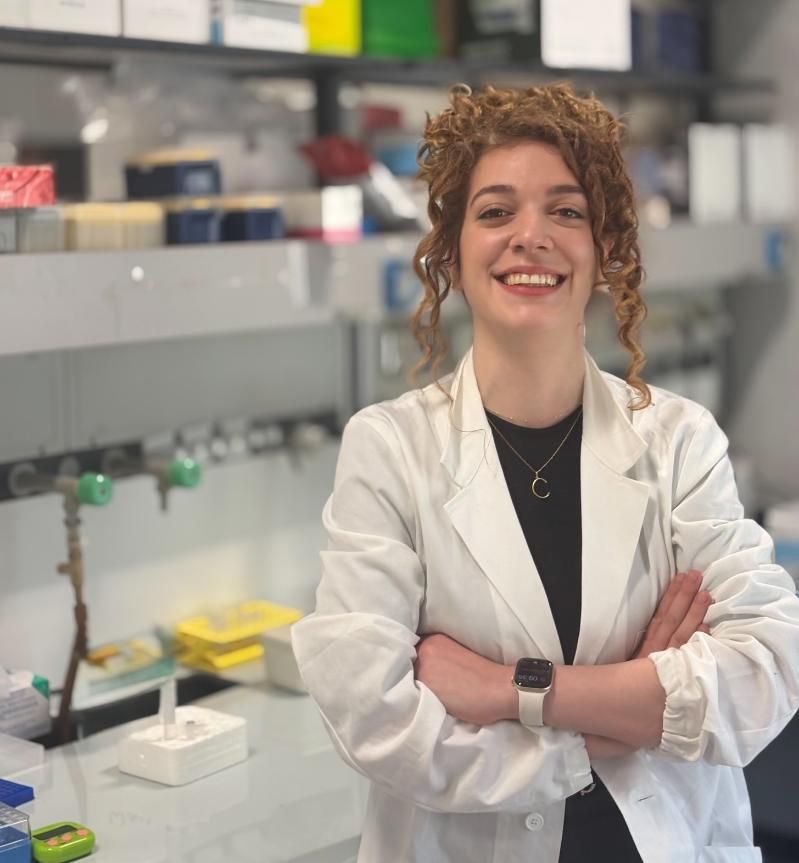 Dr Cansu Gorgun.
Senior co-author Prof. Annie Curtis, RCSI, added: “By reprogramming cell metabolism, we can design new kinds of regenerative signals. This is still relatively early stage, but it represents a very promising step toward next‑generation therapies for patients.”
This project was funded by the European Union under a Marie Sklodowska-Curie Post-doctoral Fellowship and by Research Ireland through a Frontiers for the Future Project Grant. The journal article can be read Open Access on the Biomaterials website.
Media Contact:
Thomas Deane | Media Relations | deaneth@tcd.ie | +353 1 896 4685