
Over half a million historical records now freely available as VRTI adds 194,000 new documents
Posted on: 30 June 2026
New project to uncover Ireland’s historical footprint in French archives, from Wolfe Tone to merchants in Bordeaux
194,000 new historical records have been released online bringing to over half a million the total number of records freely and permanently available on the Virtual Record Treasury of Ireland.
tHosted by Trinity College Dublin and funded by the Department of Culture, Communications and Sport, the Virtual Record Treasury of Ireland (VRTI) is an international research partnership working to digitally reconstruct the Public Record Office of Ireland — a magnificent archive destroyed on June 30th 1922, at the outset of the Civil War, and with it seven centuries of Irish history.
This year’s release of documents includes records from right across these centuries, ranging from stories of medieval poachers, the taxing of potatoes in 1692, and the mysterious Connaught Worm (1702), to women’s opposition to O’Connell’s Emancipation campaign (1825-1929), and Irish support for the American rebels in 1776.
Like all the records in the vast and ever-growing Virtual Treasury, these replacement documents — transcripts and copies — were identified in more than 100 partner archives in Ireland and around the world.
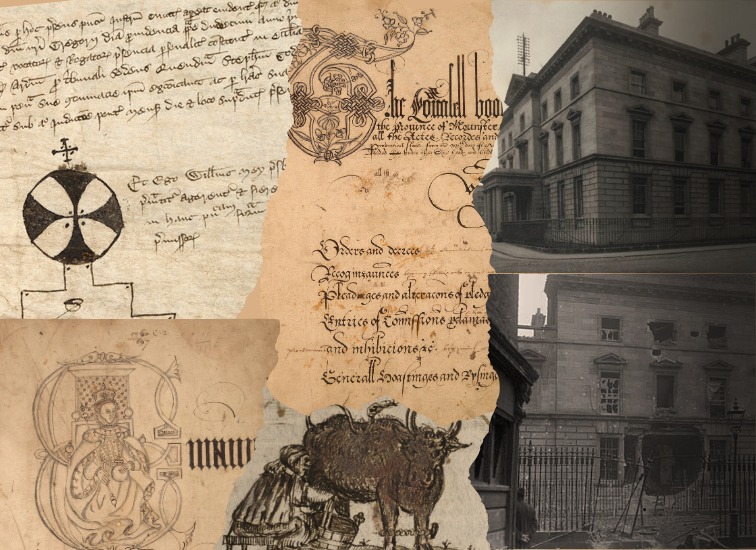
In addition, four new collections curated by VRTI historians allow the public to explore digitised material and expert commentary linked to critical moments in Irish history. Five new Gold Seams — full-scale reconstructions of entire series of archives destroyed in 1922 – provide deep historical context and exploration tools, providing an enriched understanding of life at the time.
Meanwhile, the pioneering VRTI Knowledge Graph for Irish History, developed by historians on the VRTI team and computer scientists in ADAPT, Research Ireland Centre for AI-Driven Digital Content Technology, has been significantly expanded. This powerful tool allows visitors to the VRTI to move directly between historical people and events and the surviving records that tell their stories. Now over 15,000 people from Irish history are included in the Knowledge Graph, offering users 3.5 million linked historical facts to explore.
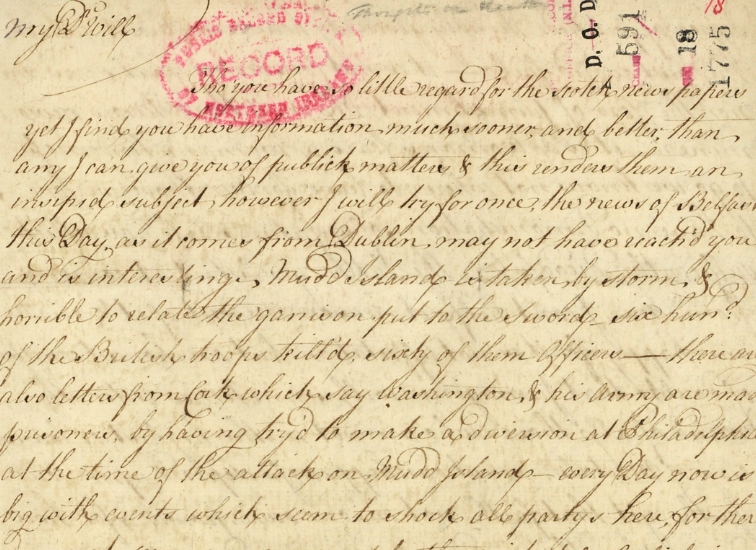 Letter written by Martha McTier to her brother William Drennan, one of the founders of the United Irishmen, December 1777. Public Record Office of Northern Ireland
Next on the horizon for the VRTI is the commencement of a two-year project entitled ‘Journey to Europe: Archives of the Irish in France’. This initiative, which was announced by An Taoiseach Micheál Martin last month, will identify material of significant Irish interest housed in French archives and make them freely available through the VRTI. Themes to be explored will include Wolfe Tone’s mission to France, the Irish Brigade and the Irish Legion in the French Army, the network of Irish Colleges across France and generations of Irish merchants trading along France’s Atlantic coast.
New in the Virtual Record Treasury of Ireland for 2026
- 194,000 new records bring to 544,000 the total number of records available in the VRTI and 340 million words of searchable Irish history.
- Enhanced Knowledge Graph of Irish History: a further 5,800 historical individuals have been added to the Graph including 2,300 women from the early modern period (1550-1700), and 2,300 individuals from the medieval/Norman period. (VOICES, NAISC, DIB).
- Catholic Emancipation, 1825-1829: Curated collection traces the campaign led by Daniel O’Connell, through a fascinating, and sometimes surprising, selection of letters, petitions, intelligence reports and government correspondence. (PRONI, NAI, Irish Manuscripts Commission, British Library).
- States of Independence, 1776-1783: Curated collection reveals the close connections between Ireland and the American Revolution. (Library of Congress, National Archive Ireland, Oireachtas Library, Public Record Office of Northern Ireland).
- The Birth of Local History in Ireland: Curated collection brings together attempts by early modern enthusiasts to document the customs, folklore, history and landscape of their localities. (RIA, TCD, Armagh Robinson Library, NLI, Maynooth University).
- State Papers Ireland 1660 – 1715: Over 40 more volumes of State Papers and Signet Office records - the core of English government in Ireland These have been interconnected with the Knowledge Graph creating a powerful new tool for researching this tumultuous period of Irish history following Cromwell’s death (TNA).
- Deeds of the Guild of St Anne, 1237 - 1778: Gold Seam containing 800 stories of the lives of ordinary men and women in Dublin, from arranging a funeral procession in 1345, and leaving bequests for prisoners in Dublin Castle in 1380, to mapping a property transaction on Merchants Quay in 1739. (RIA, IMC).
- Parchment Conquest (1171-1307): In 8,000 printed summaries of records drawn from a Calendar of Documents Relating to Ireland we encounter Italian tax-collectors in Galway, poachers in Dublin, and discovering gold inCork (TNA).
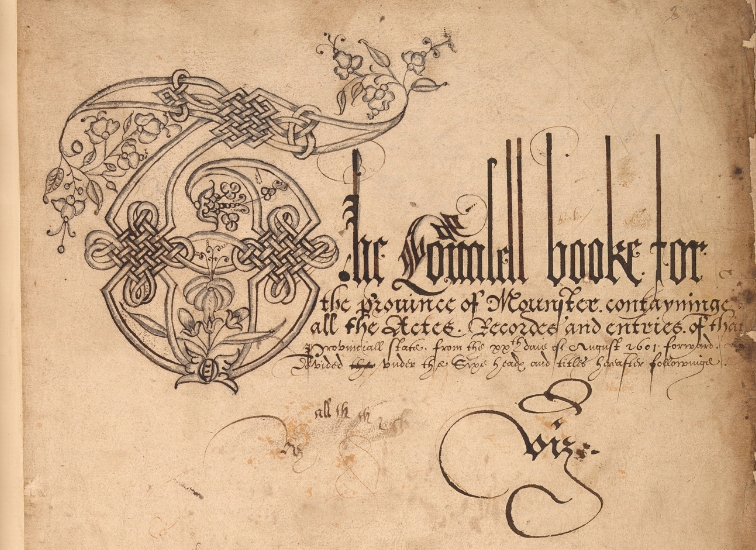 This handsomely decorated volume contains copies of earlier Munster records back as far as 1300. British Library.
Dr Ciarán Wallace, Programme Director, VRTI and Department of History, Trinity, said: “We are delighted to announce that the number of records in the Virtual Record Treasury of Ireland has passed the half-million mark. This important milestone has only been possible through our unique partnership with 100 archives, libraries and memory institutions worldwide.
“Four new Gold Seams and five new Curated Collections build on the success of a platform that has already attracted more than 7 million visits. These enriched collections connect Ireland’s past to major international commemorations, giving users fresh resources on many aspects of our history, such as Ireland and the American Revolution as we approach USA250, and the long struggle for Catholic Emancipation.
“Looking ahead we are embarking on an exciting new collaboration with the Embassy of Ireland in France to uncover Ireland’s historical footprint in French archives. These records tell the stories of women and men who made Ireland more European and Europe more Irish – from famous names like Wolfe Tone to merchants, scholars and artists, but we’ll be looking for the fugitives slavers and criminals too. This project will be a legacy of Ireland’s presidency of the EU Council and serve as a model for future archival collaboration with EU partners.”
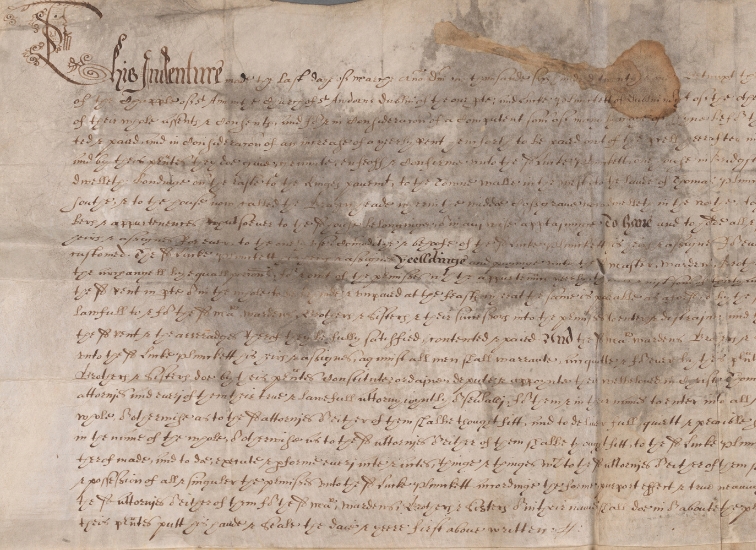
1621 mention of the Brazen Head pub (already centuries old) and its owner Widow Cosgrave. Royal Irish Academy Library
Professor Declan O’Sullivan, ADAPT Research Ireland Centre and the School of Computer Science and Statistics, Trinity, said: “The VRTI Knowledge Graph for Irish History is a ground-breaking digital resource connecting thousands of historical sources and records to create one of the most richly linked resources for Irish history ever assembled.
“In the past year, the Graph has grown by nearly six thousand people through collaboration with the VOICES and NAISC projects. Especially exciting is the addition of more than 2,300 early modern women, dramatically expanding the representation of women in Ireland’s digital historical record, and the inclusion of over 2,500 events associated with them.
“This year we are also pleased to introduce a new ‘Showcase’ feature, which allows historians to directly curate and make available a set of knowledge graph people and events on a particular theme.
“The expansion and enhancement of the Knowledge Graph marks an important step in making Irish history more connected, searchable and accessible. It gives researchers, students and the wider public new ways to discover the people and places of Ireland’s past, and to follow the links between individual lives and the records that survive today.”
Strength from unique research partnerships
VRTI draws its strength from its research partners across Ireland and Britain, as well as Europe, North America and Australia. The VRTI is uniting relevant records from over 100 memory institutions, including five core partners: the National Archives (NAI), Public Record Office of Northern Ireland (PRONI), The National Archives UK (TNA), Irish Manuscripts Commission (IMC), and The Library of Trinity College Dublin.
The VRTI has also forged strong partnerships with other flagship research projects, including the ERC-funded VOICES project, which reveals the lives of women in early modern Ireland, the Dictionary of Irish Biography at the Royal Irish Academy and the NAISC project (Normandy and Ireland Settlement Connections) funded by the National Monuments Service. Together these pioneering research projects have contributed more than 15,000 historical people to the Knowledge Graph for Irish History.
A living legacy from the Decade of Centenaries
The Virtual Record Treasury of Ireland was launched in 2022, as a living legacy from the Decade of Centenaries, to coincide with the 100th anniversary of the destruction of Ireland’s Public Record Office. The research programme receives core funding from the Department of Culture, Communications and Sport, and is supported by generous benefactions from multiple partners.
Media Contact:
Fiona Tyrrell | Media Relations | tyrrellf@tcd.ie | +353 1 896 3551