HIV’s protein disables lung immune cells, fuelling TB risk even in treated patients
Posted on: 11 May 2026
Trinity researchers address why people living with HIV remain vulnerable to tuberculosis, pointing to a new metabolic target for therapy.
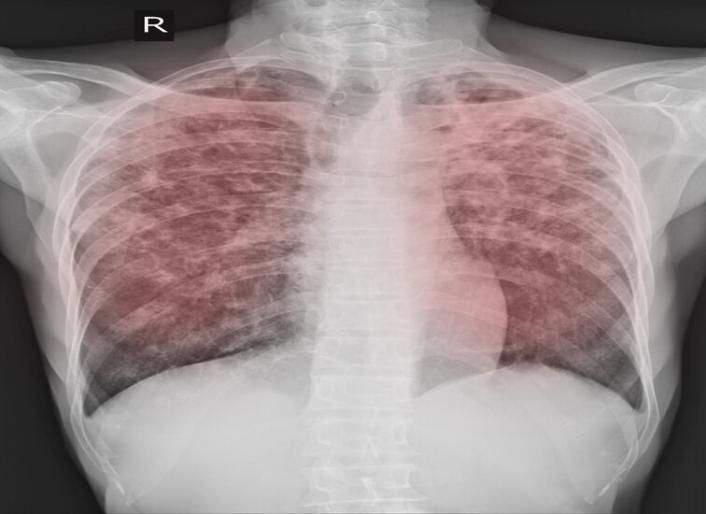
People living with HIV are far more likely to develop tuberculosis (TB), the world’s leading infectious disease killer. Even with antiretroviral therapy (ART) that suppresses the virus, this risk remains stubbornly high. Now, researchers at Trinity have discovered a mechanism. A leftover fragment of HIV, called gp120, continues to circulate in the body and quietly disengages the metabolism of the main immune cell responsible for TB defence-the macrophage.
Shutterstock / April stock
For the first time, the team has shown that gp120 blocks a crucial energy switch inside these immune cells, effectively disabling their ability to fight Mycobacterium tuberculosis, the bacterium that causes TB.
When a person is infected with HIV, even when ART keeps the virus under control, viral proteins like gp120 can persist in the blood and lungs. Scientists have known about this lingering protein for years, but its real-world impact on TB immunity has remained a mystery.
Using human macrophages (immune cells that engulf and destroy pathogens) infected with TB, the Trinity team found that healthy cells normally switch to a high-energy or “Warburg” metabolism to mount a rapid defence. But when macrophages were exposed to gp120 before TB, that metabolic switch failed. The cells became metabolically stalled, produced less of a key inflammatory signal called TNF-alpha, and lost their ability to control TB bacteria.
Professor Joseph Keane, lead of the TB Immunology Group at Trinity and senior author of the study, added:
“For years, we’ve seen that people with HIV on good ART still get TB more often than HIV-negative people. This research gives us a mechanism: the virus leaves behind a metabolic ‘fingerprint’ that cripples the lung’s first responders. This new paradigm might be exploited using adjuvant host-directed therapies and treatments that restore the human immune cell’s natural metabolism.”
Dr. Gina Leisching, corresponding author of the study and researcher in Trinity’s Department of Clinical Medicine, said:
“This is a significant step in understanding how small particles left over from the virus, like gp120, have such profound effects on disturbing the metabolism of macrophages, which are key cells in being able to eliminate TB. Because fractured metabolism is so important in this context, we now know that this is a target for therapeutics in people living with HIV.”
What this means for patients
The discovery suggests that even HIV-suppressed individuals remain vulnerable to TB not because the virus is actively replicating, but because lingering gp120 keeps their macrophages in a weakened, low-energy state. The team is now exploring whether cheap, safe drugs that boost cellular metabolism such as nicotinamide (a form of vitamin B3), could help restore the immune system’s ability to fight TB.
The researchers plan to validate their findings in more advanced models and test metabolic-boosting compounds as potential add-on therapies for TB/HIV co-infection. If successful, these host-directed therapies could one day be added to standard TB treatment, offering a new line of defence for millions of people living with HIV worldwide.
The work was funded by the Royal Hospital of Dublin City Trust and the Health Research Board.
Where is the paper published?
The study, “HIV inhibits Warburg metabolism in human macrophages infected with Mycobacterium tuberculosis,” is published in Scientific Reports (ACCEPTED).
Media Contact:
Ciara O’Shea | Media Relations | coshea9@tcd.ie | +353 1 896 4204