A symposium on declaring climate change a public health emergency to energise a response like the response to COVID-19
Ireland's opportunity to lead
Ireland has a unique opportunity to act whilst hosting the Presidency of the Council of the European Union by putting climate, biodiversity loss and public health at the heart of the European and global agenda.
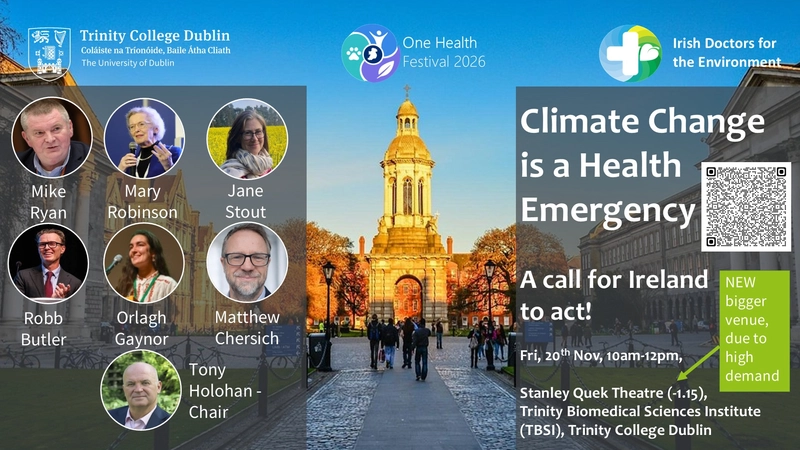
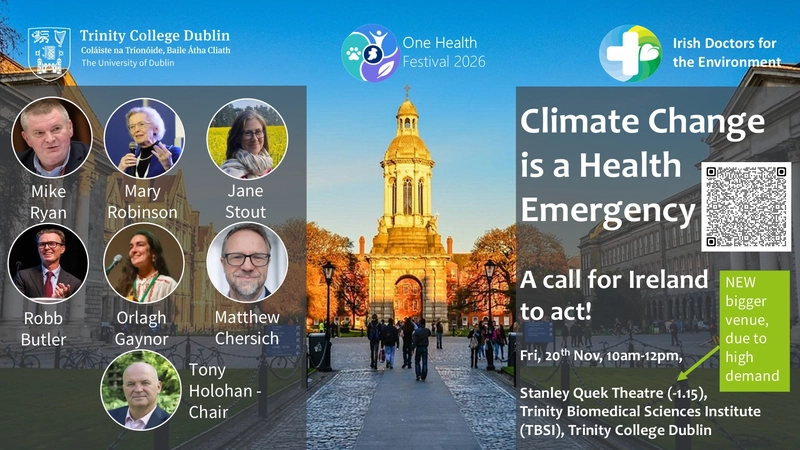
Chaired by Dr. Tony Holohan, with both global and local leaders in health, nature, climate, law, policy and activism, this event will imagine what would be possible if the climate emergency was declared a health emergency.
Health professionals and researchers hold a position of trust with people placing care in their hands. That work gives access to evidence and the means to interpret it. Bearing witness through patients and through the data carries a responsibility to speak out and to act where possible.
Communication about climate change has not sufficiently conveyed the human experiences of chronic illness made worse, changing patterns of infection and disruption to care. Those least responsible often bear the greatest harm. Research estimates more than 180,000 heat-related deaths across the European countries studied during the summers of 2022–2024. Heat is only part of a burden that accumulates year after year.
Opportunities discussed at this event will include:
1. Using Ireland’s EU Presidency conference on 23 November and its conclusions to invite European colleagues to declare climate change a health emergency and to provide reports on progress during each successive EU Presidency.
2. Asking the European Commission to assess the case for activating the EU’s formal health emergency mechanisms.
3. Joining other countries in requesting WHO to declare climate change a Public Health Emergency of International Concern (PHEIC) and offer to help finance the response in the Global South.
The Pan-European Commission on Climate and Health has recommended a WHO declaration of a Public Health Emergency of International Concern. The EU also has a formal mechanism under Regulation (EU) 2022/2371. These instruments warrant examination. They were designed principally for acute emergencies with an anticipated end. Their limitations underline the need for ministers to establish how they can respond effectively together over time.
Sign the Declaration
Please add your voice to this call by signing this declaration.
Who is organising this event?
Initiated by Trinity School of Medicine, this event is a partnership with Irish Doctors for the Environment, Trinity Sustainability, Trinity Climate Gateway, the Southern Africa Consortium for Climate Change Research and Policy and the All-Ireland One Health Collaborative Network. It launches the inaugural One Health Festival running from 20th November to 27th November 2026, an initiative of the All-Ireland One Health Collaborative Network. It is funded by Trinity School of Medicine, Healthy Trinity within Trinity Sustainability and supported by Wellcome Trust [336423/Z/25/Z]
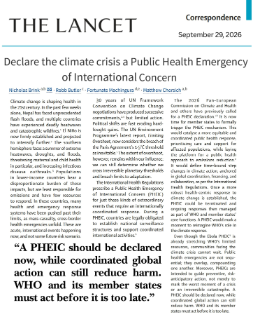
Letter published in The Lancet, 29th September 2026, by Dr Nicholas Brink, Robb Butler Dr Fortunate Machingura, Prof. Matthew Chersich. Dr Brink and Prof . Chersich are researchers with Trinity College School of Medicine, Wits Planetary Health Research of University of the Witwatersrand, South Africa, and members of Irish Doctors for the Environment. Read online.
Unable to attend in-person? Watch online:
This event will be livestreamed - details and link to follow shortly on eventbrite.
Speaker biographies
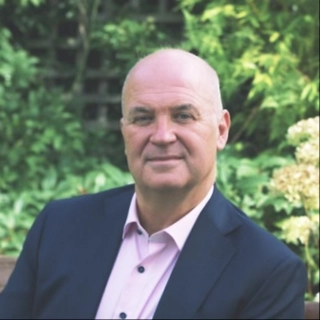
Chair, Dr Tony Holohan
Director of the UCD One Health Centre, a WHO Collaborating Centre for One Health and Adjunct Full Professor of Public Health at University College Dublin and Trinity College Dublin.
He served as Ireland’s Chief Medical Officer from 2008 to 2022. His current work focuses on translating One Health, which recognises the connections between human, animal, plant and environmental health, into practical policy and action.
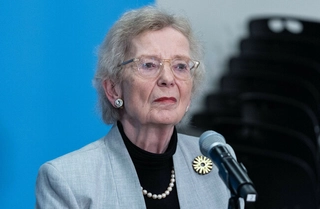
Dr Mary Robinson
Former President of Ireland and former UN High Commissioner for Human Rights and a founding member of The Elders.
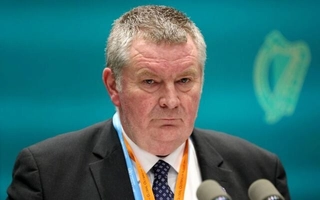
Dr Mike Ryan
An epidemiologist, serving for 30 years at the World Health Organization.
He was the executive director of the WHO's emergencies programme for 8 years, at the forefront of humanitarian crises such as Gaza, Myanmar, and Sudan, becoming an internationally prominent figure during the COVID-19 pandemic.

Prof Jane Stout
Vice President for Biodiversity and Climate Action at Trinity College Dublin and Professor of Ecology (Botany)
She has three decades of academic experience at the intersection of people an nature and co-founded the All-Ireland Pollinator Plan and the Natural Capital Ireland.
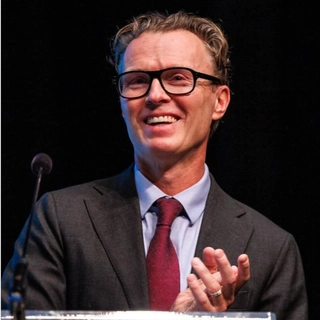
Robb Butler
Senior international public-health leader with extensive experience in global health, climate change, environmental health, health systems and humanitarian action
He is one of the co-authors of a September 2026 call to declare the climate crisis a public health emergency of international concern in the Lancet.
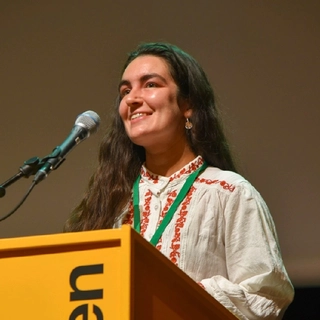
Orlagh Gaynor
Physiotherapist and Operations Officer for Irish Doctors for the Environment (IDE).
She advocates for sustainable healthcare, the inclusion of planetary health into medical and allied health education curricula, and helped establish the Environment Physiotherapy Network with the ISCP.
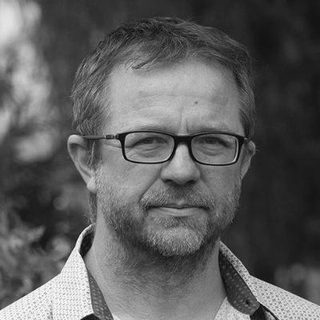
Professor Matthew Chersich
Medical doctor and public-health researcher with more than 25 years’ experience conducting research across Africa. He is Executive Director of Wits Planetary Health Research at the University of the Witwatersrand, South Africa,
and a Research Fellow in Public Health and Primary Care at Trinity College Dublin. He is also one of the co-authors of a September 2026 call to declare the climate crisis a Public Health Emergency of International Concern in the Lancet.