
Mental health toll of flooding in Ireland highlighted in new research
Posted on: 12 March 2026
The psychological impacts of flooding in Ireland often far outlast the physical damage, according to new research from Trinity College Dublin, Dublin City University and National College of Ireland.
The working paper published today by the Climate Change Advisory Council [March 12th] highlights the mental health toll of flooding and practical actions that could reduce it. Entitled ‘Flooding and mental health: lessons for Ireland’s adaptation and recovery planning’ it synthesises the mental health toll of flooding in an Irish context for the first time.
The authors have called for flood management to be recognised as a public health priority, with mental health support integrated into all climate adaptation and recovery plans.
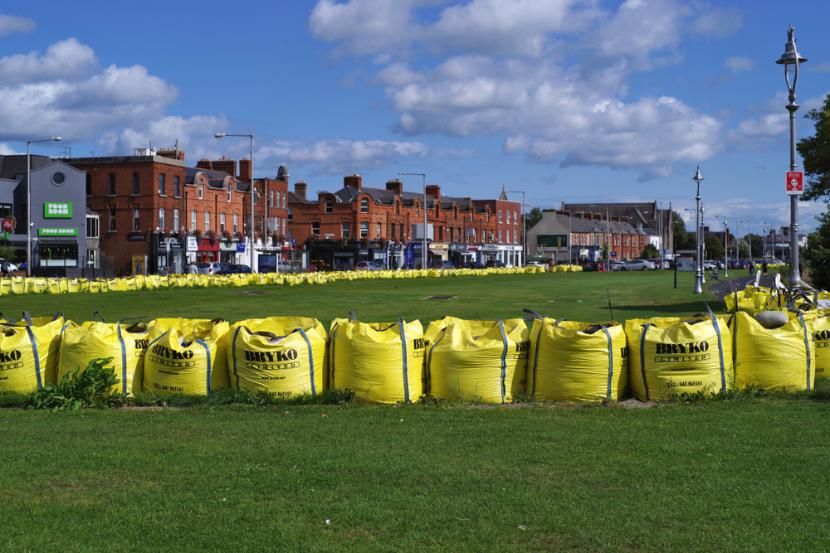
While the physical damage and financial costs of flooding are well recognised, the mental health effects are much less visible in flood risk management and recovery planning, explains lead author Charles Zemp, PhD student at Trinity Centre for Global Health, School of Psychology.
"Flooding is a real risk to individuals living in Ireland, as illustrated by the recent flooding across Ireland. International research has found that flooding can cause post-traumatic stress, depression, and anxiety and these symptoms can continue for years after the flooding event. Our research finds similar patterns here in Ireland among communities who have experienced flooding.”
The research draws on evidence from international studies, case studies (Northern Rivers, Australia, and Hull, England), and two small-scale workshops featuring flood-affected Irish communities in Midleton and Enniscorthy.
Actions to reduce mental health toll from flooding:
- Treat flood prevention and protection as a public health intervention, with clear delivery timelines and interim risk reduction measures.
- Set up local recovery hubs after major floods so people can sort insurance, grants, housing, clean up, and repairs in one place.
- Offer mental health and psychosocial support quickly after floods, starting within the first week, with clear routes from basic support to specialist care.
- Improve flood warnings and public information so they are timely, easy to understand, and give practical steps of how to respond before, during, and after flooding.
- Track mental health impacts after floods and use the results to improve policies and practices, with extra support for those most affected.
Flood management as a public health priority:
Flood management needs to be regarded as a public health priority, with mental health supports integrated into all climate adaptation and recovery plans, said Dr Ashling Bourke, Associate Professor, Dublin City University, and co-author of the paper.
"Flooding is one of the most serious climate-related risks facing Ireland – climate change is increasing both how often floods occur and how severe they can be. This will lead to a corresponding rise in mental health difficulties, most notably post-traumatic stress, chronic anxiety, and depression. These symptoms can persist for years after the water recedes.
“For these reasons flood management must be recognised as a public health priority, with mental health support integrated into all climate adaptation and recovery plans immediately.”
Flood protection as a tool to reduce distress:
The research also found that people were not only affected by what happens during the flood, but also by the stress that comes before and after, said co-author Dr Kristin Hadfield, Associate Professor, Trinity Centre for Global Health, School of Psychology.
“In workshops, many people described an intense fear during the flood, followed by ongoing worry and constant alertness afterwards, and anger or loss of hope when recovery feels slow or unclear.
“People who have lived through flooding experiences express fear of it happening again, uncertainty about warnings, the strain of dealing with insurance and grants, and whether people feel authorities are communicating clearly and responding effectively.
“Flood protection and effective early warning can do more than reduce property damage. They can also reduce fear, disruption, and longer-term distress.”
More about the research:
The study integrates a systematic review of 102 studies from high-income countries, two comparative case studies (Hull, England and Northern Rivers, Australia), two participatory workshops in Ireland (Midleton, Cork and Enniscorthy, Wexford) and written narratives submitted by flood-affected residents. One in-person workshop was held in Midleton on 25 November 2025 (n = 9; 3 men, 6 women), with additional written reflections submitted by two women and an interview with a third woman following the workshop. A second workshop was held in Enniscorthy on 6 December 2025 (n = 2; both men).
Read the paper on the Climate Change Advisory Council website.
Media Contact:
Fiona Tyrrell | Media Relations | tyrrellf@tcd.ie | +353 1 896 3551