
Executive education
Our aim is to educate and inform policy makers and the public in creative and resonant ways beyond the ‘lecture’, ‘the Report’ and ‘the petition’;
Professional training
The Lab listens to skills and experience gaps of civil society actors, and tailors executive education programmes based on this feedback. It places special empha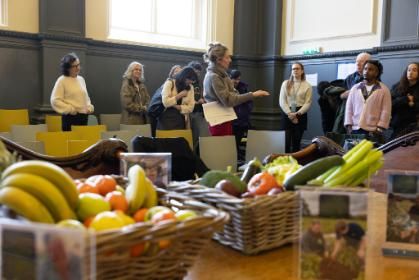 sis on using the theories in Arts, Humanities and Social Science for enhancing understanding of the commercial determinants of human and planetary health.
llustrative examples of such programmes (of differing durations e.g. half-day to 3 day):
- Computer Science – ‘Data Analytics for Social Good’
- The Lir – ‘Story telling’; ‘Non-Verbal Dynamics’; ‘Communicating difficult concepts to lay-Audiences’; ‘Empathy building’; ‘Imagining another World’
- School of English – ‘The Art of Rhetoric, Argument and Persuasion’; ‘Metaphors We Live By’
- The Law School – ‘Navigating the Irish Legislative Process’
- Department of Political Science – ‘Freedom of Information Processes’; ‘Citizens’ Micro-Assembly’; ‘Policy Windows’; ‘Understanding Voter Sentiment’
- Trinity Business School – ‘Financial Statement Analysis of Big Food’; ‘Social Marketing’; ‘The Corporate Political Activities of the Alcohol Lobby’
- Theology – ‘Writing a conflicts of interest statement’; ‘Moral Revolutions’
- Sociology – ‘What is Framing?’; ‘Social Experiments’
- Psychology – ‘Developing Persistence’; ‘Motivational interviewing’; ‘Nudge: is it effective?’
Précis gatherings
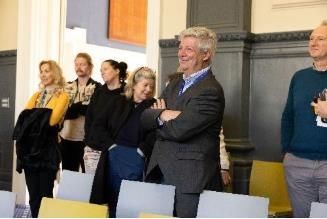
The Lab keeps civil society actors at the forefront of science, by hosting précis breakfast gatherings to update civil society on latest research on, for example:
- Nitrogen and Groundwater Vulnerability
- Pesticides and Pollinators
- Diabetes and Alcohol
- Mental Health and Digital Devices
- Public transport: Latest from Europe
Debate
The Lab builds 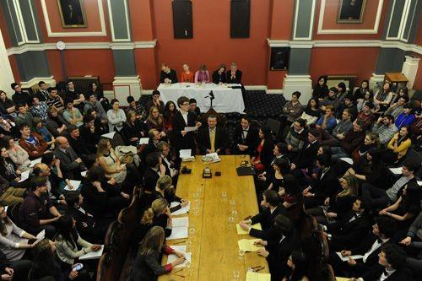 on Trinity’s world reputation for debating, using this format to host respectful, robust and listening fora on emergent research and concepts necessary to national health debates that impact and are impacted by CDOH, e.g. the sale of alcohol bill, managing subsidies in the food industry, legalising cannabis, gambling etc.