
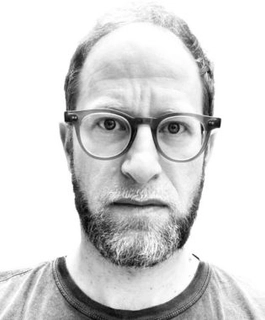
Biography
Hannes Opelz is Assistant Professor in the French Department at Trinity College Dublin, where he has taught since 2011 in the School of Languages, Literatures and Cultural Studies.
He read English at University College London, took an MA in French & Comparative Literature at the Université Sorbonne Nouvelle (Paris III), completed a graduate diploma in International Relations at Johns Hopkins SAIS in Bologna, and holds an MPhil and a PhD in European Philosophy and Literature from St John's College, Cambridge.
At Trinity, he teaches across the undergraduate degree in French (literature, film, philosophy, politics, translation) and on the School's postgraduate programmes in Comparative Literature, Literary Translation, and Identities and Cultures of Europe. He co-designed and established the last of these in 2019 and directed it until 2025. He supervises doctoral research and has provided award-winning mentorship to two Research Ireland postdoctoral fellows.
He has organised and co-organised international conferences in Oxford and Dublin, including a 2017 conference on Philippe Lacoue-Labarthe. With Michael Cronin, he co-founded The French Seminar @ Trinity, an online research seminar in contemporary French thought whose speakers have included Catherine Malabou and Emanuele Coccia. He also convenes cross-disciplinary public events, recently collaborating with the Irish Museum of Modern Art and an astrobiologist from NASA Ames Research Center.
His research lies where poetics, aesthetics, and politics meet. At its heart is representation -- not a copy of the world but the copy a world is made from. Through the figures we model ourselves on, experiences, subjectivities, and identities take shape, and as that shaping settles it hardens into myth. Opelz follows this through works of art and theory, asking how their forms lend myth its force and how, read again, they take it back.
He has organised and co-organised conferences in Oxford and Dublin, including a 2017 international conference on Philippe Lacoue-Labarthe, and co-founded, with Michael Cronin, The French Seminar @ Trinity, an online research seminar in contemporary French thought, featuring Catherine Malabou (2021) and Emanuele Coccia (2022) among its speakers. He has also convened public events with the Irish Museum of Modern Art (2024) and with an astrobiologist from NASA Ames Research Center (2025).
Publications and Further Research Outputs
- Thus Spoke Literature in, editor(s)Christopher Langlois , Understanding Blanchot, Understanding Modernism, New York, Bloomsbury Academic, 2018, pp37 - 56, [Hannes Opelz]Book Chapter, 2018
- Hannes Opelz, L'incitation au mythe: Ténèbres de la mimèsis, L'Esprit créateur, 57, (4), 2017, p50 - 63Journal Article, 2017
- L'Esprit créateur, 57, 4, (2017), 190p, Hannes OpelzJournal, 2017
- L'exhibition in, editor(s)Ginette Michaud & Isabelle Ullern , Sarah Kofman: Philosopher autrement, Paris, Éditions Hermann, 2021, pp315 - 325, [Hannes Opelz]Book Chapter, 2021
- Michael Holland & Hannes Opelz, Dictionnaire Maurice Blanchot, Paris, Classiques Garnier, 2026, 1128ppBook, 2026
- Hannes Opelz, Mimetic Annihilation, CounterText, 8, (1), 2022, p177 - 205Journal Article, 2022
- MLN, 137, 4, (2022), 186p, Hannes OpelzJournal, 2022
- Hannes Opelz, Plasticité du dehors, MLN, 137, (4), 2022, p657 - 672Journal Article, 2022
- Hannes Opelz, Présentation. L'art de Malabou, MLN, 137, (4), 2022, p627 - 636Journal Article, 2022
- Hannes Opelz & Catherine Malabou, L'avenir de la mimèsis. Entretien avec Catherine Malabou, MLN, 137, (4), 2022, p801 - 813Journal Article, 2022
- Hannes Opelz, L'espoir d'une communauté, Les Cahiers Maurice Blanchot, (2), 2013, p138-56Review, 2013
- Hannes Opelz, Philippe Lacoue-Labarthe, 'Ending and Unending Agony', New York, Fordham University Press, 2015, -Translation, 2015
- La précipitation du désastre in, editor(s)Isabelle Ullern Pierre Gisel , Penser en commun? Jean-Luc Nancy et Sarah Kofman lecteurs de Blanchot, Paris, Beauchesne, 2015, pp31 - 62, [Hannes Opelz]Book Chapter, 2015
Research Expertise
Opelz sets out from a single claim: representation -- what the Greeks called mimesis -- comes first. It does not copy a world already given; it is what we copy in order to have one. What we copy are figures -- an image, a scene, a character, a saying, a voice -- and figures give experience its form. To copy a figure is also to answer it, and in answering, subjectivities and identities take shape. As these settle, representation comes to rest.
Representation at rest is myth. Nothing in it is left moving to show that it was made, and so a myth has no origin -- it has become one. The figure we copied now passes for a likeness of the world it made, and that world for what was given all along. A given world is one that makes sense: this, Opelz contends, is the work of myth, which converts experience into meaning. A myth is figuration looked through and never at.
But not everything converts. Something is left over -- a contradiction we can live but not resolve, settled on our behalf before we had time to think -- and it never quite comes to rest. It stirs beneath the figure, and in stirring calls the given into question.
Myth lives by burying that question -- before it can be asked, and just when it is most acutely felt. This is where Opelz's readings begin. Only when a work is re-read -- at another time, in another place, by another reader -- does the question return and figuration appear as what it is: rhetoric, with the power to make a world, a subject, an identity. There myth becomes legible, its hold loosens, and what had taken shape can come undone.
Opelz calls this framework critical mythopoetics. It treats myth not as an archaic or founding narrative to be demystified or left behind -- there is no uncopied world to return to -- but as the working grammar of aesthetic and political reality, in which nations still claim their origins and technologies sell their futures. There is no mythopoetics that is not already mythopolitics.
Its method is materialist-deconstructive. Materialist, because a copy is always made of something: it asks how narratives, and the theories that read them, are assembled -- on the page, in the cut -- how they hold, and where, under strain, they give. Deconstructive, because it attends less to what a myth says than to what it does: how it lays claim to truth, installs an origin, welds an identity, and where it shows its seams.
The reading is double by necessity: there is no vantage outside representation, and a text that undoes myth in what it says may smuggle it back in how it says it. This matters most in art, which gives myth its forms but is also where it is stirred from its rest. Because a work is an artefact, experienced as form as much as deciphered as content, it can exceed the concepts brought to bear on it. Opelz therefore keeps to its figured surface, leaning towards form until it turns opaque and the myth it harbours is glimpsed at work. And since there is no original to return to, every figure undone is paid for with another.
The inquiry is also pursued in direct exchange: a public debate with Jean-Luc Nancy (2015) and an interview with Catherine Malabou (2022). Its sustained engagement with Philippe Lacoue-Labarthe (whom he has translated for Fordham UP), Hans Blumenberg, Sarah Kofman, and Malabou has yielded the first bilingual journal issues on Lacoue-Labarthe (L"Esprit créateur, 2017) and Malabou (MLN, 2022).
Two domains now bring poetics and politics into sharpest friction. The first is Maurice Blanchot: the Dictionnaire Maurice Blanchot (Classiques Garnier, 2026), co-edited with Michael Holland -- the first systematic reference work on Blanchot -- and a forthcoming monograph on myth at the seam of literature and politics in his thought. The second is science fiction, which lays the premise bare: a world copied before it exists. Here he is writing a monograph on the films of Alex Garland and co-editing a volume rethinking the genre's theoretical foundations.
-
TitleThe New Language of Science Fiction: Form and Materiality in Postwar Francophone and Anglophone SF (1959-1976)SummaryDoctoral project led by Giaime LazzariFunding AgencyClaude and Vincenette Pichois Research AwardDate From2024Date To2028
-
TitleXenogenesis: Octavia Butler, Gateway for Racial and Gender Aliens at IMMASummaryPostdoctoral project led by Dr John WilkinsFunding AgencyResearch Ireland (formerly Irish Research Council)Date From2022Date To2024
-
TitleTime and the Other Capitalism: The Pasts, Presents and Futures of WorkSummaryPostdoctoral project led by Dr Anne MulhallFunding AgencyResearch Ireland (formerly Irish Research Council)Date From2020Date To2022
Literary studies, Cultural Studies, Philosophy, Languages and literature, Humanities and the arts, Other Humanities, History and philosophy of specific fields, Visual arts,
Recognition
- Arts and Humanities Research Council (AHRC) Doctoral Competition Award 2005-2008
- Benefactors' Scholarship for Doctoral Research, St John's College, Cambridge 2005-2008
- Austrian National Bank (ÖNB) Scholarship 2003-2004
- Research Ally Award - Taighde Éireann / Research Ireland 2023-2024
- Society for French Studies (SFS) present
- Associations des Amis de Maurice Blanchot present
- Association des Études Françaises et Francophones d'Irlande (ADEFFI) present