/filters:format(webp)/filters:quality(100)/prod01/channel_3/media/tcd/langs-lits-cultures/images/news-and-events/TrinityTonguesConf-March2026-group-855X400px.png)
On 21 March 2026, a postgraduate and early career researcher conference was held at the Trinity Centre for Literary and Cultural Translation as a part of the Languages 250 programme. 'Trinity Tongues: Exploring the History of Modern Languages at Ireland’s Oldest University' was co-organised by Max McGuinness of the Department of French and Antonio Belfiore and Berenice Daniele of the Department of Italian. The conference featured papers by nine Trinity PhD candidates and early career researchers (ECRs) that examined the evolution of our discipline within the university since the nineteenth century as well as contributions made by key figures who studied and taught modern languages here.
Opening remarks by Michael Cronin, the 1776 Chair of French, situated the conference within the Languages 250 programme and examined the complex relationship between languages and imperialism. Individual papers explored the development of French studies in nineteenth-century Trinity, the history of the Department of Russian and Slavonic Studies, Trinity’s role in the creation and development of the Irish Association for Applied Linguistics, the development of Latin American studies within Hispanic studies, the central role of women in building the discipline at Trinity, and the shifting contours of the contemporary within Italian studies.
One panel was devoted to the role of modern languages and translation in shaping the work of Samuel Beckett, perhaps our most distinguished alumnus. Another paper looked at the intellectual background to Conor Cruise O’Brien’s evolving attitudes towards censorship and free speech.
The conference concluded with a keynote, on the theme of “Dante at the Campanile”, by Daragh O’Connell of University College Cork, who previously studied and taught Italian at Trinity. This lecture delved into the extensive historical connections between Trinity and Italy’s national poet, from Henry Boyd’s first complete English translation of the Commedia to politically charged tensions around the 1921 Dante sexcentenary. Corinna Salvadori Lonergan, who has taught Dante here since the 1960s, also contributed some poignant memories and reflections from the floor.
“Trinity Tongues” was notable for the way it brought together several generations of scholars, including several who had participated in the 1976 bicentenary, to explore our shared and continually evolving history. The organisers plan to develop a collective publication based on the conference.
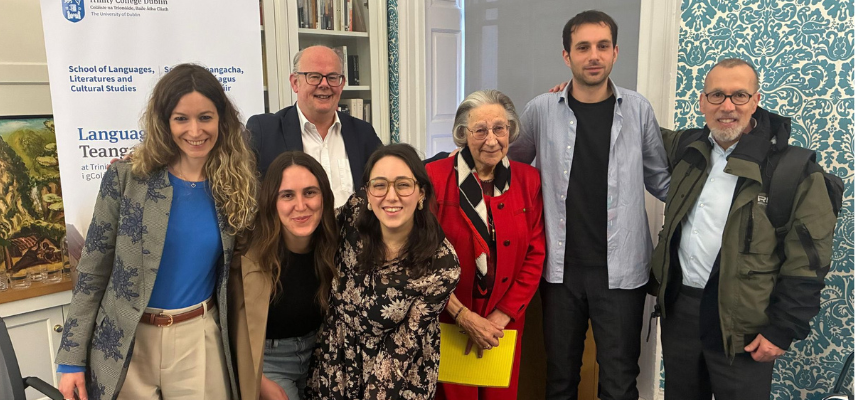
L-R: Serena Vandi, Chiara Valcelli, Daragh O'Connell, Berenice Daniele, Corinna Salvadori Lonergan, Antonio Belfiore, Joseph Muratore
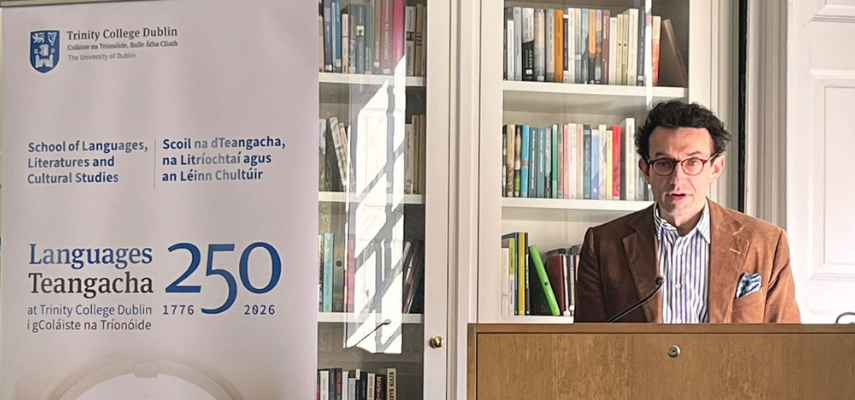
Max McGuinness
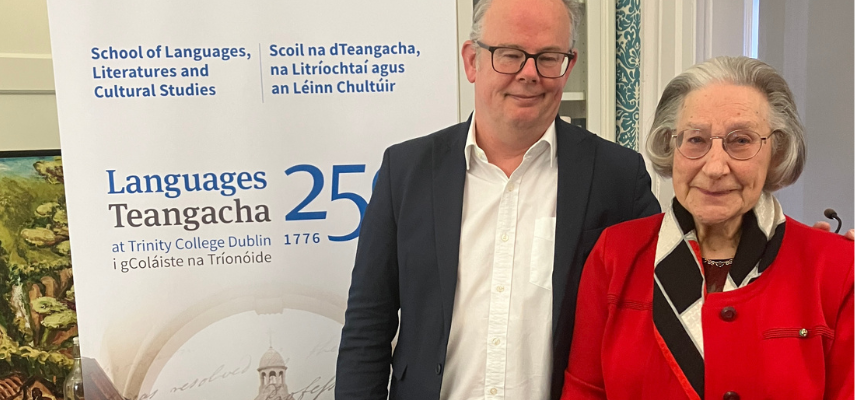
Daragh O'Connell and Professor Emerita Corinna Salvadori Lonergan
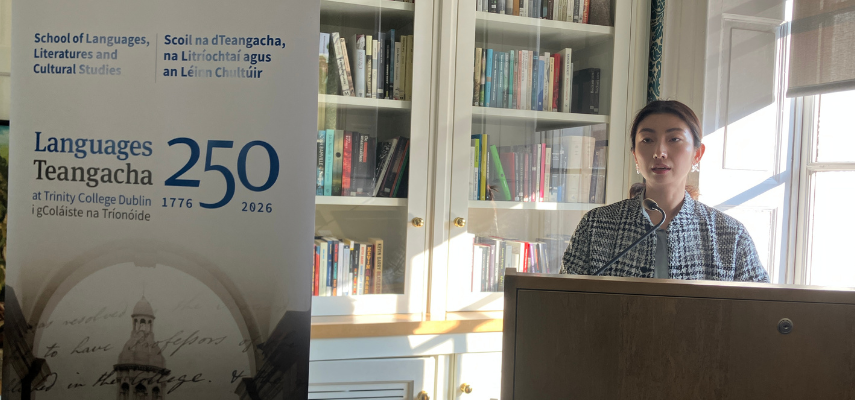
Hao Yang
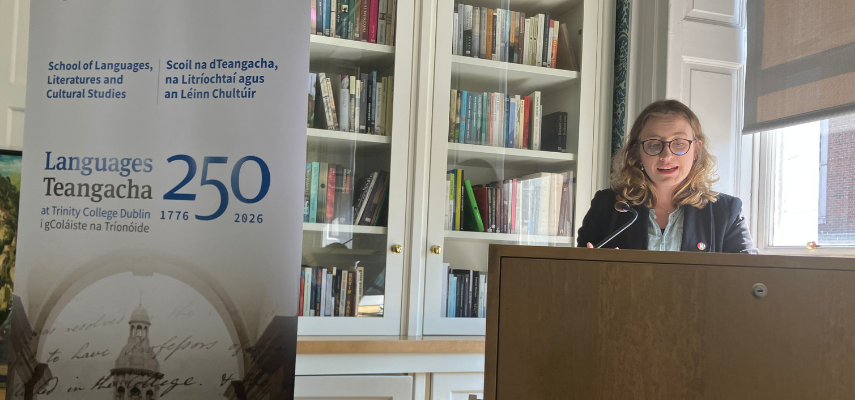
Katarzyna Stepien
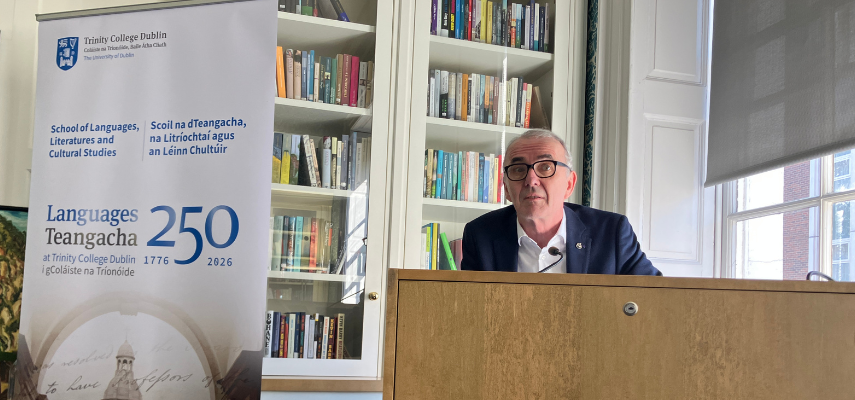
Professor Michael Cronin
This event formed part of the 'Languages 250 at Trinity (1776-2026)' programme, throughout 2026, the School of Languages, Literatures and Cultural Studies is marking the 250th anniversary of the establishment of Modern Languages in Trinity College Dublin.