
/filters:format(webp)/filters:quality(100)/prod01/channel_3/media/tcd/cihs/images/headers/about-cihs.jpeg)
About the Centre for Innovative Human Systems
The Centre for Innovative Human Systems (CIHS) at Trinity College Dublin is dedicated to understand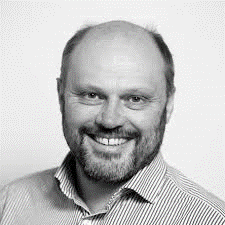 ing how human systems work and how they can work better in a world defined by complexity, uncertainty, and change.
Our work focuses on the interaction between people, organisations, technology, and context. We study these interactions where they matter most, in real-world systems under pressure.
Sam
Professor Sam Cromie, Centre Director
Why Human Systems Matter
Modern societies rely on complex systems such as healthcare services, transport networks, workplaces, manufacturing environments, public institutions, and digital infrastructures.
When these systems struggle or fail, the causes are rarely simple. Problems often emerge not from individual error alone, but from how human behaviour, organisational structures, technologies, and time constraints interact.
Human systems expertise is therefore not a niche concern. It is central to safety, wellbeing, performance, and sustainability across modern life.
CIHS exists to address this challenge through research, education, and applied practice.
Why CIHS Exists
CIHS was established to bridge a persistent gap, the distance between academic knowledge and the realities of working systems.
Our approach brings together psychology and behavioural science, human factors and systems safety, organisational behaviour and work design, and applied systems thinking.
Rather than studying systems in isolation, CIHS works inside live contexts, alongside practitioners, organisations, and public institutions, to understand how systems actually behave and how they can be redesigned.
Research, teaching, consultancy, and advisory work are deliberately integrated. Each informs the other, ensuring that theory remains grounded and practice remains evidence based.
How We Think About Systems
CIHS approaches problems systemically rather than through single disciplines.
We recognise that human behaviour is shaped by context, incentives, culture, and time. Performance and safety emerge from system design, not individual effort alone. Effective interventions require interdisciplinary collaboration. Real-world systems are dynamic, constrained, and imperfect.
Our work is guided by established and evolving frameworks, including People Process Performance and STAMINA, as well as emerging research on temporal design, coordination, and the future of work.
This system’s first perspective underpins all CIHS activity.
What Makes CIHS Distinctive
CIHS is distinguished by a combination of depth, breadth, and real-world engagement.
We are embedded in applied research across healthcare, transport, manufacturing, and public systems. We are interdisciplinary by design rather than by add-on. We are committed to evidence-based practice. We are actively engaged with industry, government, and policy contexts. We are able to move between research, education, and applied systems work. We are increasingly focused on future challenges such as artificial intelligence, sustainability, and work transformation.
This allows CIHS to address complexity without losing rigour.
A Community of Systems Thinking
CIHS brings together psychologists, human factors specialists, organisational researchers, behavioural scientists, and systems thinkers.
What unites our team is not a single discipline, but a shared commitment to serious engagement with complexity, interdisciplinary collaboration, applied research and practice, and improving how systems work for people.
We work closely with collaborators across Trinity College Dublin, Ireland, and internationally.
Looking Forward
The coming decade will reshape how people work, move, learn, and interact with systems. Climate transitions, advances in artificial intelligence, changing patterns of work, and pressures on public services will all require deeper understanding of human systems.
CIHS is positioning itself to support Ireland and Europe through these transitions by generating robust research, educating future professionals, and working directly with organisations facing real-world challenges.
Complexity is not going away. The need for human systems expertise will only grow.
Explore Further
Join the CIHS mailing list
Keep up to date with our latest research, events, programmes and opportunities.