
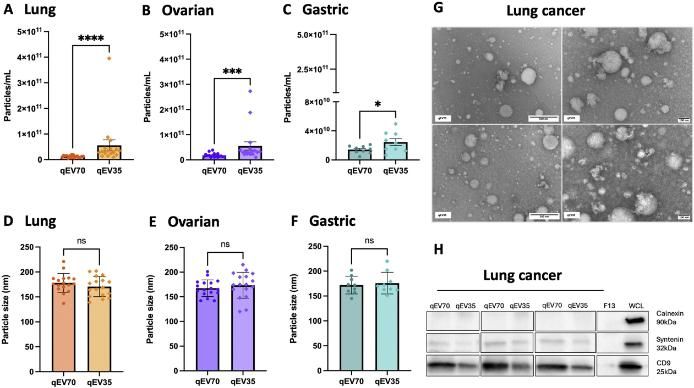
Image: Characterisation of EVs (qEV70 and qEV35) isolates from the three cancer patient cohorts.
Extracellular Vesicles (EVs) are tiny particles of cell membrane originating from every cell in our bodies, which are constantly released into our blood, saliva, urine and other fluids. These vesicles are important for cell-to-cell communication as they relay messages about a cell's condition - whether it is healthy, under stress, or affected by disease.
The research team, Dr Szilárd-Krisztiánán Belényesi and Dr Sean Patmore, led by Professor Lorraine O'Driscoll, therefore investigated how EVs could be detected and measured in cancers. As EVs are released into the blood, it was hoped that they could help detect cancer through a simple blood test, known as liquid biopsy. However, the process of quantifying EVs is difficult and requires multiple processing steps.
In the study, the researchers compared two types of size-exclusion chromatography (SEC) columns (a method to separate EVs from other substances in the blood according to their size). They then processed blood samples from patients diagnosed with various types of cancers (lung, ovarian, gastric) and assessed how their results compared with the patients’ clinical information and outcomes.
The research revealed the merits of each of the two SEC columns. Smaller-pore columns resulted in greater extracellular vesicle counts, whereas the larger-pore columns found slightly lower EVs numbers, but they had reduced protein contamination. Each method had its advantages and disadvantages: greater EVs counts may provide stronger clinical associations and diagnostic potential when evaluating a known EVs marker, whereas a method that prioritises reduced contamination would provide a better model for researchers looking to investigate EVs function, and large-scale protein and RNA (ribonucleic acid, a molecule that turns DNA into proteins) content.
Ultimately, these findings will help researchers make the most of valuable patient samples and support the development of more reliable EV-based blood tests for cancer.
Read the paper here.
The All-Ireland Cancer Liquid Biopsies Consortium (CLuB) is funded by the Higher Education Authority North South Research Programme. Further information can be found here.