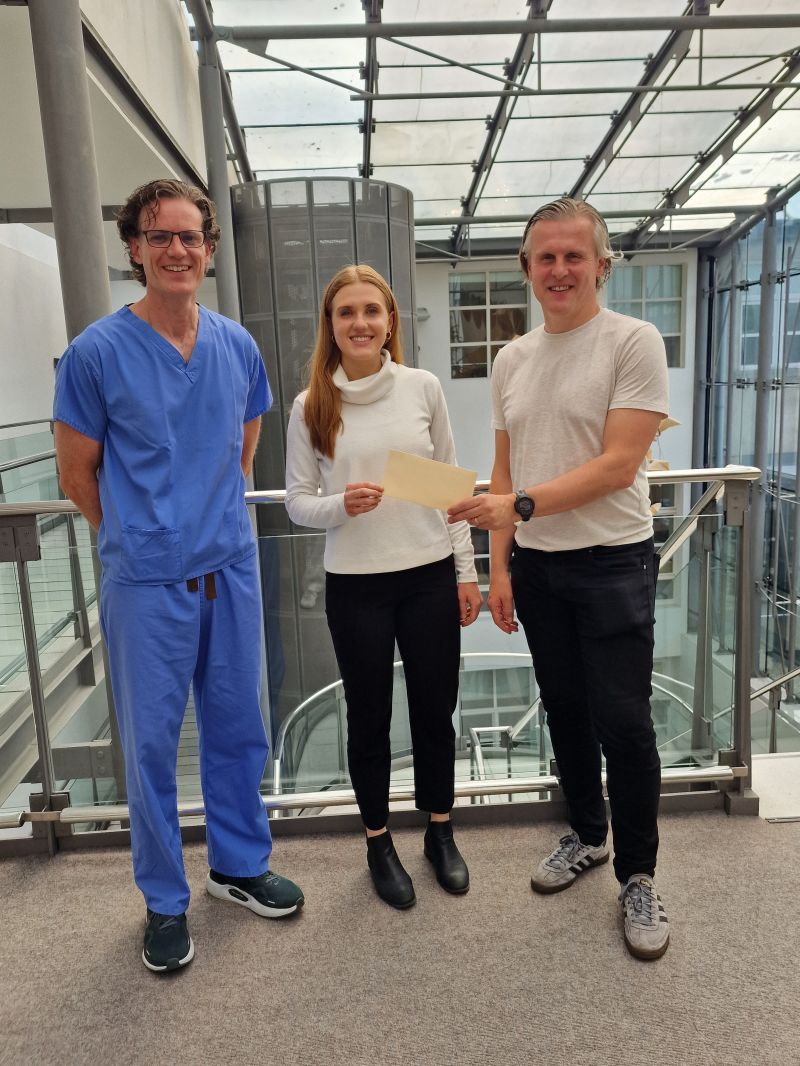
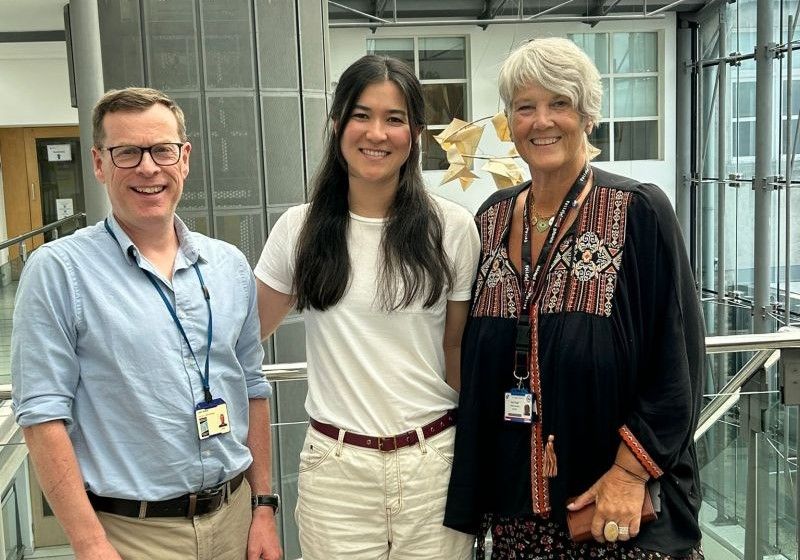
Congratulations to Carley Wlad and Christina Sharp, who were both awarded a DDUH Summer Research studentship. Announcing the awardees, Dean of Dental Affairs and Head of School Prof Alison Dougall said: "Many of our current clinical academics, including myself, started their research journey with a summer project, and it's wonderful to see our undergrads so enthused and curious about dental science."
Christina's project will examine Candida yeasts recovered from the mouths of patients, with and without potentially malignant diseases, to examine their ability to generate carcinogenic acetaldehyde (a cancer-causing chemical) from alcohol.
Alcohol is a known risk factor for oral malignancies and its first metabolite, acetaldehyde is a recognised carcinogen. Candida yeasts, which are commonly found in patients with oral potentially malignant diseases, are known to generate acetaldehyde from ethanol. Christina will examine a large collection of yeasts recovered from patients attending oral medicine clinics and determine if acetaldehyde production is a common feature of these strains and whether alcohol consumption and smoking is related to acetaldehyde generation.
The research is part of an ongoing collaboration with Dr Sheila Galvin and Prof Claire Healy in the oral medicine unit to examine microbial markers and risks for oral malignancies, and is Entitled Quantification of Acetaldehyde Production by Oral Candida Isolates from Dublin Dental University Hospital Patients.
Carley's project will use data from The Irish Longitudinal Study on Ageing (TILDA) to investigate the relationship between gum disease and cognitive function in older adults. Entitled Periodontal Health and Cognition in Older Irish Adults: Examining the potential mediating role of systemic inflammation, it will be supervised by Prof Lewis Winning and Dr Michael Crowe.
Periodontitis (gum disease) has been linked to cognitive decline and dementia, but the biological pathway behind this link is not well understood. Carley's project will examine whether systemic inflammation, measured through a blood marker called CRP, helps explain why poorer gum health is associated with lower cognitive performance, using a large nationally representative sample of older Irish adults. The research builds on an established programme of TILDA-linked research examining the connections between oral health, inflammation, and healthy ageing.
Prof Winning commented: "We're delighted to support Carley in this project, and grateful to Pamex Limited Ireland for providing a bursary for this studentship. It builds directly on our long-standing TILDA research into the links between oral health and healthy ageing, and gives Carley hands-on experience in analysing a major national dataset to answer a question with real relevance for how we understand and prevent cognitive decline in older adults."