/filters:format(webp)/filters:quality(100)/prod01/channel_3/media/tcd/langs-lits-cultures/images/news-and-events/DrRachelHoare-BookLaunchFeb2026-855X400px.png)
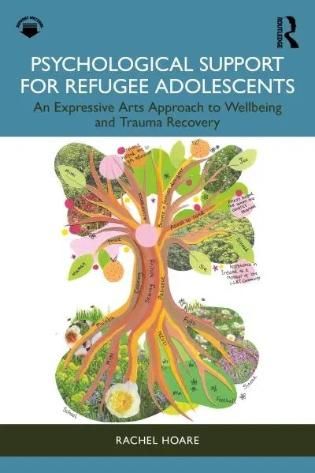
Psychological Support for Refugee Adolescents: An Expressive Arts Approach to Wellbeing and Trauma Recovery (Routledge, 2025) by Dr Rachel Hoare, is an exploration of how creativity can support healing and resilience for young people who have experienced displacement and trauma. All royalties from the book will support the Trinity Sanctuary Fund.
The book was launched by Provost Dr Linda Doyle and Vice-Provost for Global Engagement Emma Stokes, in the Long Room Hub on 13 February 2026. The event brought together voices from practice and lived experience: Thomas Dunning (Principal Social Worker, Separated Children's Unit, Tusla), Somaia Abunada and Abdallah Hasaneen (University of Sanctuary Scholarship students from Gaza) and Thahmina Begum (Artist, Researcher and Therapist).
.png)
Provost Dr Linda Doyle launching Dr Hoare's publication.
.png) Rachel Hoare surrounded by her family at her book launch.
Rachel Hoare surrounded by her family at her book launch.
.png)
Audience members in the Long Room Hub for Dr Hoare's book launch.
.png)
Audience members in the Long Room Hub for Dr Hoare's book launch.
.png) Thahmina Begum speaking to the audience.
Thahmina Begum speaking to the audience.
.png)
Attendees in conversation at the book launch.
.png) Rachel Hoare and her daughter.
Rachel Hoare and her daughter.
Dr Rachel Hoare is Director of the Centre for Forced Migration Studies in the School of Languages, Literatures and Cultural Studies, where she has been a full-time academic since 1996. She is an accredited expressive arts psychotherapist who has been working with unaccompanied minors through Tusla (Irish Child and Family Agency) for nearly a decade, and also serves as faculty at the Children's Therapy Centre in Mullingar. Her recent book bridges neuroscience, trauma theory, and creative interventions to provide practical guidance for professionals working with displaced young people.
Rachel's research is grounded in the lived experiences of people navigating forced migration, exploring how young people rebuild identity, belonging, and wellbeing in the aftermath of displacement and trauma. She has worked extensively with Spirasi, Ireland's National Centre for Survivors of Torture, researching how creative expression within befriending programmes can facilitate healing and connection for torture survivors. At Trinity College Dublin, she has been actively involved in supporting refugee students, including recent initiatives for students from Gaza. Her work emphasises the power of creative expression to facilitate healing and connection when verbal communication is constrained by trauma, language barriers, or cultural differences.