

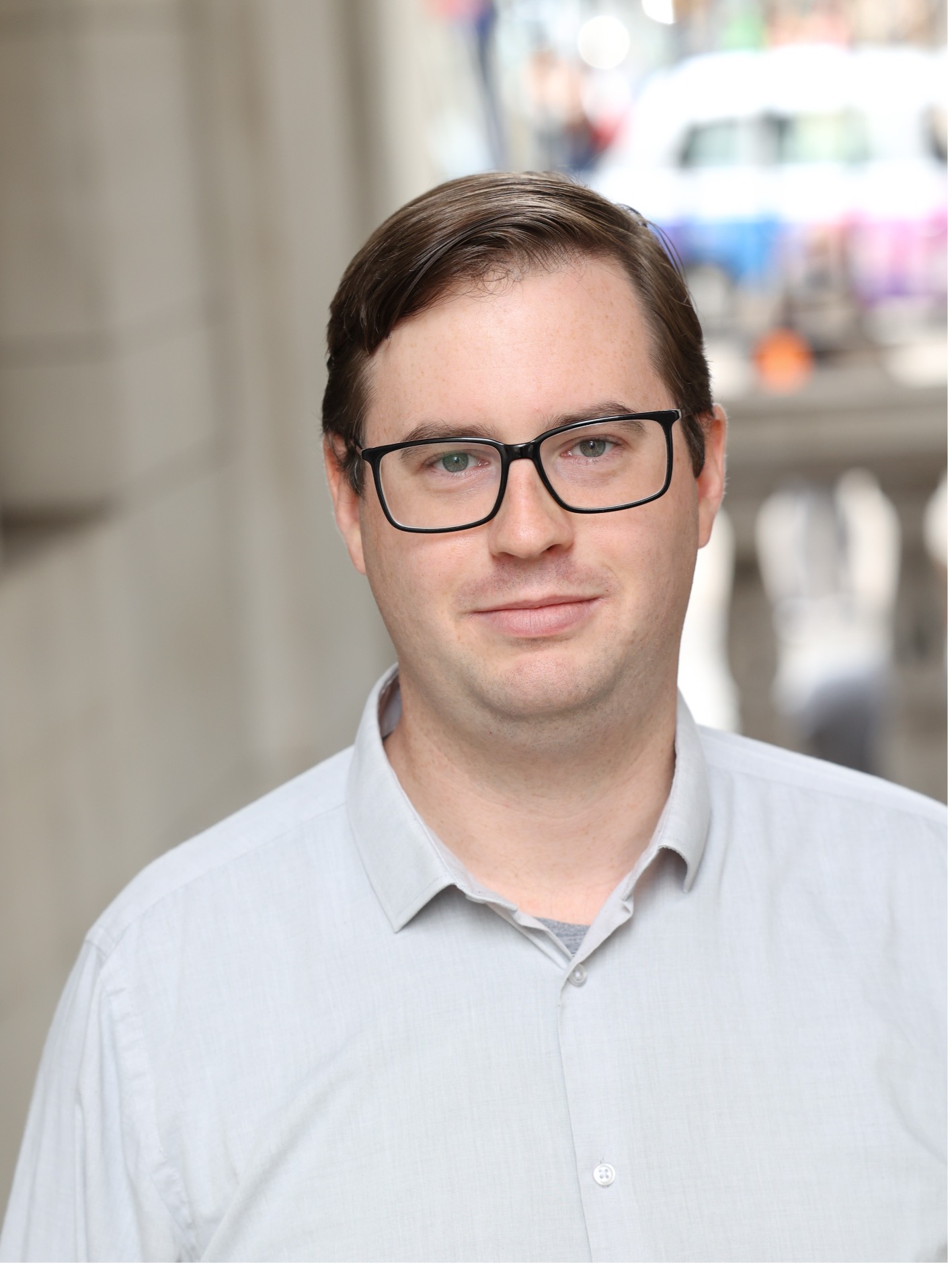
Dr Niall Ó Súilleabháin
Teaching Fellow in Medieval History
I received my historical education in Trinity and at the University of Oxford, culminating in my PhD in Medieval History in 2020, awarded by Trinity College Dublin. I have held a variety of teaching and research positions at Maynooth (2020-21), Trinity (2020-23), Poitiers (2023-25) and London (2025-26), before returning to Trinity in September 2026. My research has been funded by the Irish Research Council, the MSCA fund, the Society for the Study of French History and the Haskins Society.
Research Interests
I am a social and economic historian of the early and central middle ages, with a particular focus on what is now northern France and Belgium between the ninth and the twelfth centuries AD. My research explores how social hierarchies were created, enforced and reproduced in medieval societies, both at the very top of the social scale (among lords, knights, churchmen and monks) as well as at the very bottom (among peasants, slaves and other unfree people). My work draws on the ideas and methodologies of historians working outside medieval Europe, particularly in the global history of slavery, as well as borrowing from anthropology, sociology, archaeology and post-colonial studies. My research focuses in particular on the following topics:
- Social Transformations and the 'Feudal Revolution' in post-Carolingian Europe
- Slavery and Unfreedom in Medieval Europe
- Medieval Social Elites and Hierarchies, particularly in Francia/France
- Charters and Documentary Culture in the Early and Central Middle Ages
Publications
Books
- Social Élites in Medieval France: Status, Wealth and Power in the Loire Valley, c. 850 – 1150. Artes Liberales (Manchester: Manchester University Press, 2026).
Articles
- [with Justine Firnhaber-Baker, Erika Graham-Goering, Benoît Grenier, Elie Haddad, Stephen Miller, and Laure Verdon] ‘French Lordship, c. 1000–1789: A Roundtable Discussion’, French History 40;4 (Forthcoming, December 2026)
- ‘The Meaning of Miles: Knighthood as Social Signifier in Early Capetian France’, French History 38;4 (2024), pp. 393-404. DOI: https://doi.org/10.1093/fh/crae041
- Winner of the French History Article Prize 2024.
- French translation: ‘Le sens de miles : la chevalerie comme marqueur social aux premiers temps de la France capétienne’, Memini – Travaux et documents 32 (Forthcoming, 2026).
- ‘Landholding in the Loire Valley and the Late Carolingian Economy (c. 840 – c. 1000)’, Early Medieval Europe 31;2 (2023), pp. 274-296. DOI: https://doi.org/10.1111/emed.12634
- ‘Enduring Bonds: Social Pressure, Church Reform and Grants of Lay Societas in Central France, c. 950-1150’, Viator: Medieval and Renaissance Studies 51;2 (2022 for 2020), pp. 131-54. DOI: https://doi.org/10.1484/J.VIATOR.5.128751
Chapters In Edited Volumes
- ‘The Monastic Familia in Northern France as a Coercive Labour Regime, c. 900 – c. 1100 AD’ in Ulbe Bosma, Stephan Conermann and Gijs Kessler (eds), Households as Coercive Labour Regimes (Berlin: De Gruyter, 2026).
- ‘Ecclesiastical Proprietary Communities and the Restitution of Local Churches in the Loire Valley during the Age of Reform, c. 1050 – c. 1150’ in Tristan Martine (ed.) Communautés déchirées ? Violences et divisions au sein des communautés de l’Occident grégorien (mi XIe-mi XIIe siècles) : entre pratiques et discours(Rennes: Presses Universitaires de Rennes, 2025), pp. 155-64.
- ‘Mórmaors, Mayors and Merchants; The Early Development of Municipal Government in Dublin’ in Seán Duffy (ed.) Medieval Dublin XIII; Proceedings of the Friends of Medieval Dublin Symposium 2011, (Dublin: Four Courts Press, 2013), pp. 108-15.
Dr Ó Súilleabháin on the TCD Research Support System
Teaching
I teach a wide range of courses in medieval history across the undergraduate and MPhil programmes on topics such as medieval towns, modern receptions of medieval history, the writings of Bede, slavery in the first millennium AD, and the histories of women and gender in the Middle Ages.
Contact Details
Room 3144
Arts Building
Department of History
Trinity College
Dublin 2.
nosuille