
Professional Development for Postgraduate Research Students
Develop the skills that shape your research and your future career
Professional development is a core part of your postgraduate research journey at Trinity. Alongside developing expertise in your research area, you are encouraged to build a broad range of transferable and discipline-specific skills that will support your success, both during your doctorate and beyond it.
Whether you are planning an academic career or exploring opportunities outside academia, Trinity provides tools, training and guidance to help you take ownership of your professional development.
The Skills Development Framework Guiding your Learning
Trinity aligns skills development for postgraduate research students with the Irish Universities Association (IUA) Doctoral Skills Statement (Third Edition (2021).
This nationally recognised framework outlines desired skill sets of doctoral graduates and provides a structured way to reflect on your development throughout your research degree.
As illustrated on the graphic below, the framework highlights multidimensional skill areas, including:
- Research Skills
- Ethics and social understanding skills
- Personal effectiveness transferable skills
- Team-working and leadership skills
- Communication skills
- Entrepreneurship and innovation skills
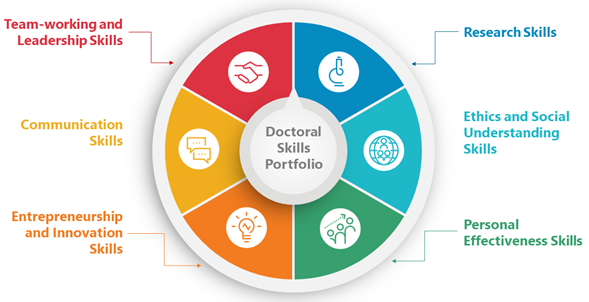
Figure 1: Desired skill sets of doctoral graduates identified by the IUA Doctoral Skills Statement
You are encouraged to use this framework as a reference point when reflecting on your strengths, identifying skills gaps, and planning your development activities.
Roles and Responsibilities in Skills Development
YOU are at the centre of your professional development, supported by your supervisor(s) and the University.
- YOU take responsibility for reflecting on your skills, setting development goals, and engaging with opportunities.
- Your supervisor or supervisory team enable your engagement with training opportunities, provide guidance, and discuss your development during supervision meetings and reviews.
- The University offers training, tools, resources and structured opportunities to support your skills development.
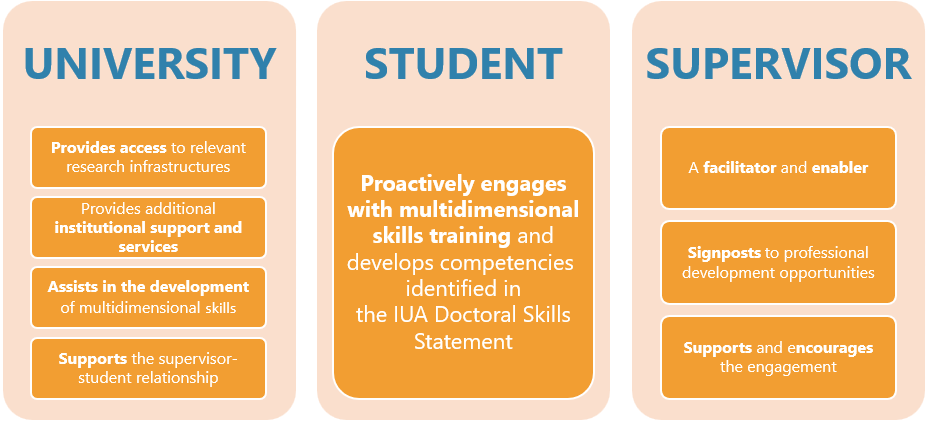
Figure 2: Roles and responsibilities in the development of a student’s multidimensional skill set
Your Professional Development Journey: Key Steps
Professional development is an ongoing, reflective process. The steps below provide a practical structure you can follow throughout your research programme.
- Reflect and complete a skills audit
Use either the Careers and Employability Skills Audit Tool or the PMRP Skills Audit, Docx 98KB
Identify goals, actions and timelines using the PDP template.
- Discuss your PDP with your supervisor
Use it to structure conversations during supervision meetings.
- Engage with training and development opportunities
Build your skills through workshops, modules and experiential learning.
- Review and update your plan
Revisit your PDP in preparation for your annual review or confirmation interview.
- Discuss progress with your Thesis Committee
Reflect on development at review meetings and adjust goals as needed.
Professional Development Planning (PDP)
Reflecting on your skills is essential for your development, both during your PhD and beyond. The Professional Development Plan (PDP) Template is a useful tool that helps you to:
- Reflect on your skills
- Articulate your strengths and achievements
- Identify skills gaps and development priorities
- Plan your engagement with targeted development activities
- Structure meaningful discussions with your supervisor
- Support career planning and CV development
The PDP template includes clear guidance on how to complete each section, as well as an example of a completed document.
Resources
- Professional Development Plan (PDP) Template
- PhD PDP Workshop slides - January 2026
- Recording of the PDP workshop: Developing Your PhD Skillset for Annual Reviews and Career Planning (delivered on 27th January 2026)
Developing your PhD skillset for Annual Reviews and Career Planning
You may also wish to attend upcoming training events, coordinated by the Office of the Dean of Graduate Studies.
Skills Development Opportunities at Trinity
There is a wide range of development opportunities across the University to help you build a strong, multidimensional skills portfolio.
The Student Lifecycle resource provides a catalogue of selected learning opportunities available to you at different stages of your student journey.
You can explore and register your interest in training through the following services:
Career coaching, employability workshops, CV and interview support
Academic writing, study skills and learning support.
Research data management, literature reviews, publishing and open research.
Credit-bearing taught modules for PhD students.
On-demand online courses covering a wide range of multidimensional skills (free access extended to all Trinity students and staff).
If you have any questions please contact the Administrative Officer in Graduate Studies or check for answers on our FAQ page.