
/filters:format(webp)/filters:quality(100)/prod01/channel_3/media/tcd/careers/images/Laidlaw-news-header-nov-25.jpg)
This summer, Trinity’s Laidlaw Scholars are once again demonstrating the programme’s global reach and transformative potential. From empowering communities in Sweden and New Zealand to conducting hands-on ecological research closer to home, our scholars are applying their skills, curiosity, and leadership to real-world challenges. Here’s a spotlight on three scholars and the inspiring work they’re undertaking.
Milla Li (2025 Scholar)
Course: Philosophy, Political Science, Economics and Sociology (PPES)
Year: 3
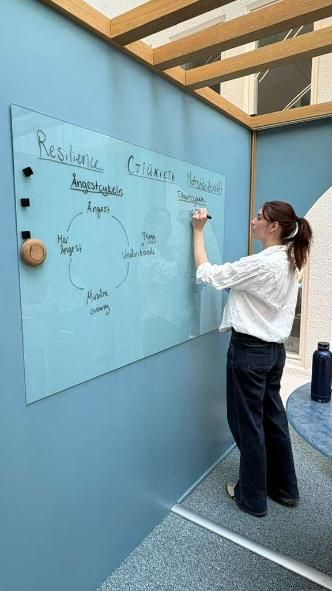
LiA Project: “Confidence Is a Muscle: Empowering Swedes towards Gainful Employment”
This summer, Milla Li is working with Arbetslösas, an organisation dedicated to supporting individuals struggling to secure stable employment in Sweden. The organisation focuses particularly on refugees and native Swedes affected by precarious work conditions and restrictive labour policies.
Milla’s role has been both impactful and deeply people-focused. She has been delivering workshops designed to develop practical workplace skills while also nurturing essential personal attributes such as confidence, leadership, and resilience.
Her work reflects the project’s central philosophy: that confidence is not an innate trait, but something that can be strengthened over time. By equipping participants with both technical and interpersonal tools, Milla is helping individuals navigate and integrate into Swedish professional environments more effectively.
Through direct engagement with communities, she is contributing to a broader mission of social inclusion and empowerment - demonstrating how policy, sociology, and human connection intersect in meaningful ways.
-413X551.jpeg)
Ishna Tripathi (2025 Scholar)
Course: Physical Sciences
Year: 3
LiA Project: “Driving Community Behaviour Change to Reduce Litter Pollution in Auckland”
Working in Auckland, New Zealand, Ishna Tripathi is tackling one of today’s most pressing environmental challenges: waste management and pollution. Her project focuses on influencing community behaviour to reduce litter and improve recycling practices.
One of the highlights of her experience so far has been visiting ReGroup, a large-scale recycling facility:
“Seeing the scale of the operation was eye-opening… waste collected by Auckland Council gets separated into plastics, glass, paper, and aluminium before being compressed into massive bales and sent away for recycling.”
This behind-the-scenes exposure underscored the complexity of waste systems and the critical importance of correct recycling practices. Ishna has since been directly involved in community engagement, visiting apartment complexes and helping residents reduce contamination in recycling bins.
Her work highlights that sustainability is not just about infrastructure, but also about communication and behaviour change. As she notes:
“It was interesting seeing the practical side of sustainability work, not just environmental action, but also communication and community engagement.”
Another particularly meaningful aspect of her placement has been learning about Mātauranga Māori, the indigenous Māori perspective on environmental stewardship:
“It added a whole new dimension to the idea of sustainability… showing how environmental care can be deeply connected to culture, identity, and community values.”
Ishna’s experience reflects a holistic approach to environmental science—one that blends technical understanding with cultural and social awareness.
-389X518.jpeg)
-313X417.jpeg)
Kilian Mangan (2026 Scholar)
Course: Computer Science
Year: 3
Research Project: Living Campus: Ecology, Climate Action & Healthy Spaces
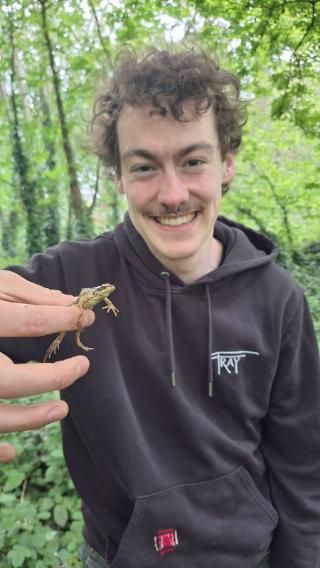
Closer to home, Kilian Mangan has been immersed in a six-week pre-defined ecological research project across Trinity’s sports grounds at Santry, Iveagh, and the Islandbridge boathouse. As part of the project, Killian is conducting field surveys and documenting biodiversity across these sites.
Kilian’s research has brought him face-to-face with a variety of fascinating species:
Common Frog (Rana temporaria) discovered under a log in protected woodland at the Santry grounds
Common Blue Damselfly (Enallagma cyathigerum): a young specimen observed at Iveagh
Banded Demoiselle (Calopteryx splendens) spotted near the Islandbridge boathouse
Cucumber Spider (Araniella cucurbitina): found at the Iveagh grounds
Through this hands-on fieldwork, Kilian is contributing to our understanding of local ecosystems and biodiversity. His experience highlights the importance of preserving green spaces and monitoring wildlife, even within urban and semi-urban environments.
While his academic background is in Computer Science, this project shows the interdisciplinary nature of the Laidlaw Programme, encouraging scholars to explore beyond their primary fields and engage with broader scientific and environmental questions.
-313X416.jpeg)
Although their projects span different disciplines and continents, Milla, Ishna, and Kilian share a common thread: a commitment to making a tangible difference. Whether building confidence in jobseekers, improving recycling behaviours, or documenting biodiversity, they are embodying the change-maker values of the Laidlaw Scholars programme, while developing capacities such as leadership, curiosity, and global citizenship.
Their work this summer serves as a powerful reminder that meaningful impact can take many forms and that the next generation of leaders is already out in the world, making change happen.