
/filters:format(webp)/filters:quality(100)/prod01/channel_3/media/tcd/careers/images/Laidlaw-news-header-nov-25.jpg)
Every year, our Laidlaw Scholars embark on an inspiring journey of research, leadership development, and social impact. The Laidlaw Scholars Leadership and Research Programme is an intensive and rewarding 18-month experience that equips students with the skills, confidence, and practical experience needed to become leaders who can tackle complex global challenges.
And we're back with Part two as our scholars engage in an impressive range of research and Leadership in Action projects—from pioneering medical research to community-based social impact initiatives across Europe and Latin America.
Advancing Medical Research
Ei Thant Htoo (2026 Laidlaw Scholar)
Medicine, Year 3
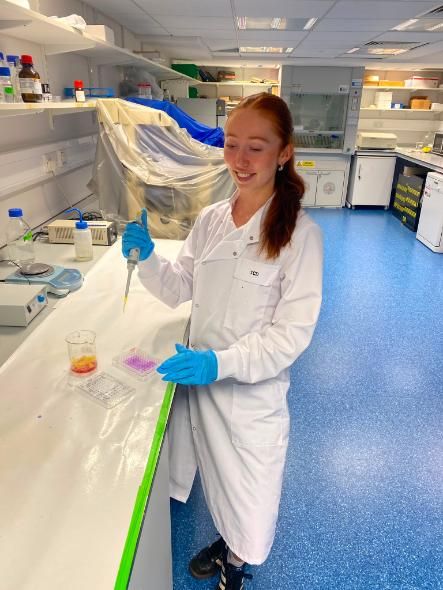
Ei Thant is spending her summer investigating "Cigarette and Vape Smoke-Induced Trained Immunity in Monocytes," with a particular focus on iron homeostasis in patients with chronic obstructive pulmonary disease (COPD).
Reflecting on her experience so far, Ei Thant said:
"I'm studying iron homeostasis in the monocytes of people with chronic obstructive pulmonary disease (COPD). My research period has been fantastic, starting off with the European Iron Club, a large conference organized by our PI Dr. Suzanne Cloonan. Here, I had the opportunity to explore the relevance of iron in various pathologies, and connect with brilliant scientists and clinicians from all over Europe. In the lab, I have been processing blood samples from patients and running flow cytometry; the learning curve has been steep, but I'm excited to see where the next few weeks will take me!"
From presenting alongside leading researchers to gaining hands-on laboratory experience, Ei Thant's project highlights the invaluable opportunities available through the Laidlaw programme to engage with cutting-edge scientific research.
-369X492.jpeg)

Eva McParland (2026 Laidlaw Scholar)
Medicine
Eva's research project, "HSP90 Inhibition as a Dual Therapy for Glioblastoma and Tumour Related Epilepsy," explores a critical challenge in neuro-oncology.
Glioblastoma (GBM) is the most aggressive form of brain cancer, and between 29% and 52% of patients experience debilitating seizures associated with their tumour. These seizures, known as brain tumour-related epilepsy (BTRE), can significantly impact quality of life, affecting independence, employment, and everyday activities.
Eva's research examines whether targeting a key signalling protein, heat shock protein 90 (HSP90), could both slow tumour progression and reduce seizure activity. Her work involves laboratory viability assays investigating the effects of different drug combinations, alongside the analysis of previously collected patient tumour samples.
By studying HSP90 expression and comparing it with clinical information such as seizure history, age, sex, and treatment details, Eva hopes to help uncover new therapeutic possibilities for patients facing both glioblastoma and tumour-related epilepsy.
Projects like Eva's demonstrate how Laidlaw Scholars are contributing to research with the potential to improve patient outcomes and deepen our understanding of complex diseases.
Leadership in Action Across Europe
Ben Kieran-Glennon
Law and Political Science, Year 3
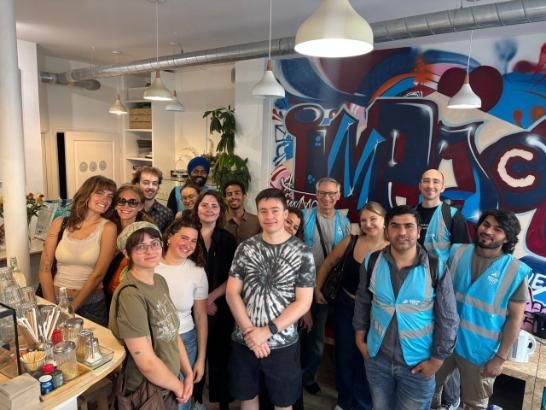
This summer, Ben completed his Leadership in Action (LiA) project with Serve the City Paris, focusing on homelessness and food security.
Working directly with an organisation that distributes food to people experiencing homelessness across the French capital, Ben investigated how food distribution could be improved to better meet community needs.
As he explains:
"The specific problem and cause that I am exploring is homelessness and food shortages. Serve the City carry out food distribution to the homeless around the city of Paris."
As part of his project, Ben conducted an audit of existing food distribution practices and explored whether the nutritional balance of the food provided was optimal. He examined opportunities to provide healthier and more nutritious options at a comparable cost, while also assessing whether some areas of the city were underserved or only reached at times when distribution was less effective.
Ben's work demonstrates how leadership can be applied through careful analysis, evidence-based decision-making, and a commitment to improving outcomes for vulnerable communities.
Building Change in Mexico City
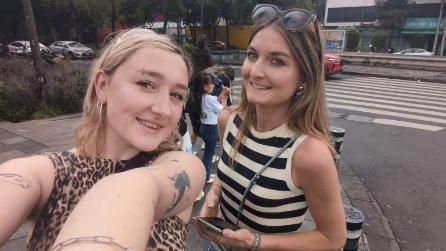
A group of scholars from the 2024 and 2025 cohorts are spending their summer in Mexico City as part of a collaborative Leadership in Action project with the organisation Make Sense, through the Laidlaw Foundation's Reaction for Impact programme.
The team includes:
- Sarah Jane Smith (2025 Scholar) – Environmental Science and Engineering
- Ruby Murphy (2025 Scholar) – English Literature Major and Philosophy Minor
- Eva (Evie) Kramer (2025 Scholar) – Politics and International Relations
- Eve Townsley (2024 Scholar) – Middle Eastern and European Languages and Cultures
Reaction for Impact brings together Laidlaw Scholars from around the world to contribute to social and environmental change through immersive, community-driven projects. Scholars work alongside local communities, social entrepreneurs, and partner organisations to develop practical solutions to real-world challenges, learning through action and collaboration.
Over recent weeks, the group has been working with Rennueva, applying research and leadership skills to support the organisation's mission.
Sarah Jane reflected on their experience:
"My second week in Mexico City was definitely eventful. We made great progress with our project, explored more of the city, ate an unreasonable amount of chocolate and, for the first time in my life, I fainted in the middle of a packed World Cup fan zone. So yes, quite a lot happened.
Our project with Rennueva really started taking shape this week. After completing the research Hector had given us, the four of us travelled back to Rennueva's office to present what we had found and begin turning it into an actual plan."
Their experience captures the essence of Leadership in Action: stepping into unfamiliar environments, working with local partners, tackling complex challenges, and learning how leadership is developed through experience rather than theory alone.
-360X338.jpeg)
Whether they are conducting groundbreaking medical research, analysing food security initiatives in Paris, or collaborating with community organisations in Mexico City, our Laidlaw Scholars are demonstrating the programme's core values of curiosity, courage, and social responsibility.
By combining academic research with practical leadership experiences, the Laidlaw Scholars Leadership and Research Programme empowers students to become thoughtful, adaptable leaders capable of creating positive change in their communities and beyond.
Their work this summer serves as a powerful reminder that meaningful impact can take many forms and that the next generation of leaders is already out in the world, making change happen.