/filters:format(webp)/filters:quality(100)/prod01/channel_3/media/tcd/ttmi/images/core-tech/header.png)
Trinity Translational Medicine Institute has a number of the latest cutting-edge core technologies to carry out ground-breaking work in biomedical research. All facilities are staffed by skilled managers to enhance the efficiency of delivering results to both the academic and industry communities.
Research Facilities and Services
Genomic Technologies
TrinSeq, the Trinity Genome Sequencing Laboratory is located in the Trinity Translational Medicine Institute (TTMI), Trinity College Dublin. The laboratory now houses an Illumina MiSeq, NovaSeq 6000 Sequencing System both of which can undertake a range of ultra-high throughput genomics applications. Furthermore, the Ion Chef System provides affordable sequencing for small genomes and targeted panels. This is a core facility supported by full-time research staff available to all academic and industry-based 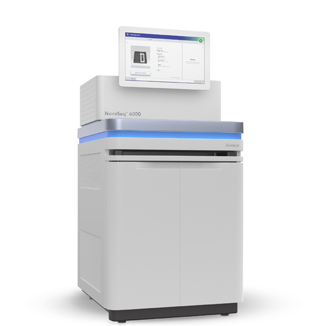 researchers in Ireland.
NovaSeq 6000 Sequencing System
Illumina’s NovaSeq 6000 provides access to the most powerful, high-throughput sequencing instrument available that allows for faster and more cost-effective genomic analyses. The largest benefit is provided for applications that require large amounts of data, such as human Whole Genome Sequencing (WGS), Exome Sequencing (WES) and tumor–normal profiling. These projects can be analyzed at a sharply reduced price per sample compared to sequencing on all other HiSeq instruments and require only 1 or 2 sequencing days.
MiSeq Technology
This ultra high-throughput sequencing system enables a wide range of genetic analysis applications including 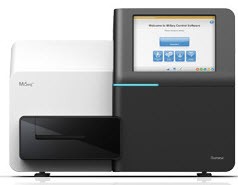 de novo sequencing of novel genomes, resequencing of whole genomes or target regions (e.g. candidate disease genes), transcriptome profiling and the study of DNA regulatory mechanisms. The MiSeq system is powered by Illumina sequencing technology, which uses a massively parallel sequencing-by-synthesis approach to generate billions of bases of high-quality DNA sequence per run.
Applications
|
DNA Sequencing |
Transcriptome analysis |
Gene Regulation and Control |
|
|
Genome-wide analysis of
|
BD Rhapsody™ Single-Cell Analysis System
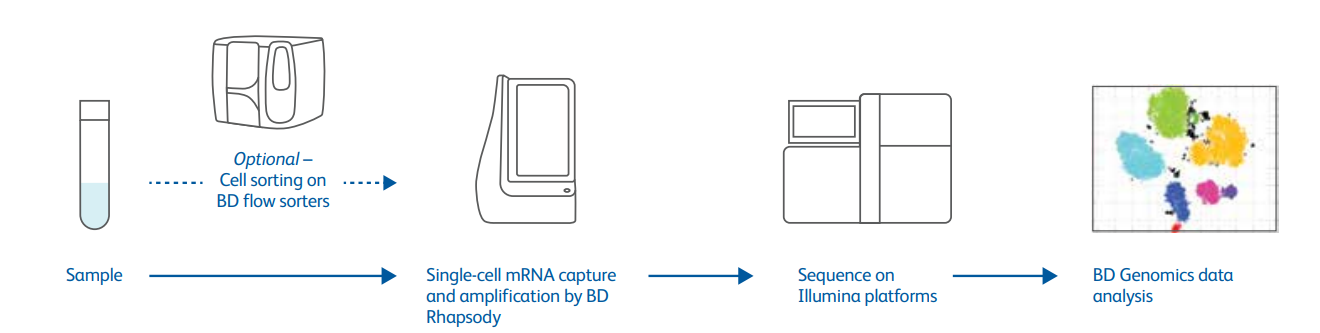
Single-cell experiments are very expensive due to sequencing costs associated with high-throughput experimental methods. The BD Rhapsody Single-Cell Analysis System was designed with multiple features that help reduce experimental costs by utilizing sequencing reads more efficiently. The following provides an example of the BD Rhapsody workflow including cell isolation (FACS optional), cell capture and molecular indexing, sequencing and data analysis.
Core Facility
The Trinity Genome Sequencing Laboratory provides the following assistance to researchers interested in undertaking a project using the Illumina MiSeq Benchtop Sequencer:
- Advice on study design and costs
- Advice and guidance on sample library preparation
- Access to automated liquid handling for large scale projects
- Sequencing and primary data analysis
- Advice and guidance on secondary data analysis
 The Trinity Genome Sequencing Laboratory was established with funding from Science Foundation Ireland through a grant awarded to Dr. Derek Morris.
For project enquiries/project quotes please contact:
Business Manager: Frank Mangan by MANGANFR@tcd.ie
Trinity Omics Technical Director: Siya Ma by MAS1@tcd.ie
Flow Cytometry
Flow cytometry plays a significant role in the understanding of many biological processes, due to its ability to simultaneously analyse multiple parameters on individual cells. This technology enables specific subpopulations of cells to be characterised and, if required, isolated for further investigation. The Flow Cytometry Core Facility at TTMI offers researchers access to state-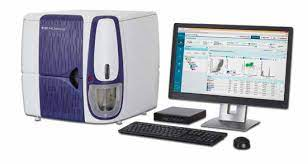 of-the-art flow cytometry analysis and sorting equipment.
The BD FACSMelody cell sorter allows researchers to work more efficiently and improves throughput. A streamlined workflow eliminates manual setup of the stream and monitoring of the sort, which minimizes hands-on time and provides walk-away sorting capability.
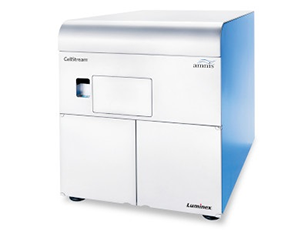 The new CellStream Benchtop Flow Cytometer delivers unparalleled sensitivity and flexibility for cell and particle analysis. This compact system contains patented optics technology unique to our state-of-the-art Amnis flow cytometers and has a fully configurable 7-laser capacity. With highly sensitive and configurable optics, researchers benefit from multiparameter detection capabilities, while maintaining the flexibility to tailor and expand the system according to their research needs and budget.
BD Rhapsody™ Single-Cell Analysis System: single-cell experiments are very expensive due to sequencing costs associated with high-throughput experimental methods. The BD Rhapsody Single-Cell 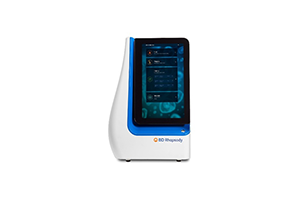 Analysis System was designed with multiple features that help reduce experimental costs by utilizing sequencing reads more efficiently. The following provides an example of the BD Rhapsody workflow including cell isolation (FACS optional), cell capture and molecular indexing, sequencing and data analysis.
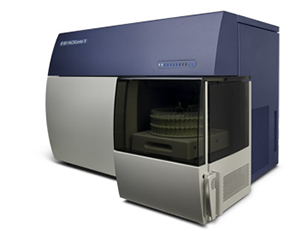 FACSCanto II (BD): a 3 laser analyzer, capable of analyzing up to eight fluorescence parameters at once, at acquisition rates of up to 10,000 events per second.
Booking Calendar
For project enquiries/project quotes please contact:
Dr. Eamon Breen
Flow Cytometry Facility
Trinity Translational Medicine Institute
Trinity Health Sciences
St James Hospital
Trinity College Dublin
Dublin 8
Phone: +353 1 8963055
E-mail: BREENEA@tcd.ie
High Content Screening
This instrument has successfully serviced numerous research projects covering a broad spectrum of biomedical research areas, including cancer, heart disease, nanotechnology, inflammation and infection and 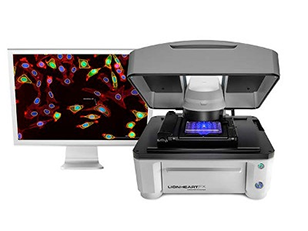 immunity.
Lionheart™ FX Automated Microscope is a compact, inclusive microscopy system for a broad range of imaging workflows. It offers up to 60x air; 60x and 100x oil immersion magnification, with fluorescence, brightfield, color brightfield, and phase contrast channels for maximum application reach. The environment control cover provides incubation to 40°C and effective containment for CO2/O2 control, a humidity chamber optimizes conditions for long-term live cell imaging applications.
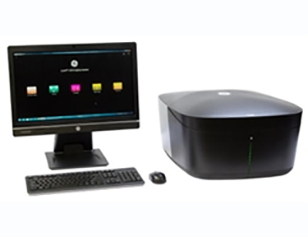 The intuitive Cytell Cell Imaging System captures cellular and sub-cellular images in a benchtop unit equipped with on-board data analysis and visualization tools. It streamlines and simplifies routine assays, such as cell cycle and cell viability assays, to save you time and help your research progress more rapidly.
Booking Calendar
For project enquiries/project quotes please contact:
Dr. Eamon Breen
Flow Cytometry Facility
Trinity Translational Medicine Institute
Trinity Health Sciences
St James Hospital
Trinity College Dublin
Dublin 8
Phone: +353 1 8963055
E-mail: BREENEA@tcd.ie
Multiplex Analysers
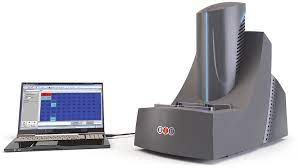 MESO QuickPlex SQ 120 offers affordable access to high-performance electrochemiluminescence immunoassays. This compact system has been engineered for reliability, ease of use, and low cost of ownership. The combination of rapid read times and the ability to perform multiple, simultaneous tests on a single sample increases productivity, saves sample, and delivers results quickly. The QuickPlex instrument has a wide menu of commercially available assay kits and a full line of components and reagents
 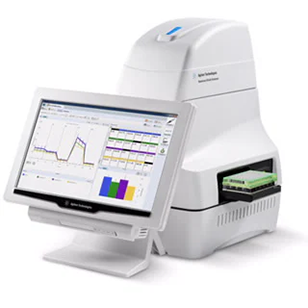 for developing your own assays.
Agilent Seahorse XFe24 Analyzers measure the oxygen consumption rate (OCR) and extracellular acidification rate (ECAR) of live cells in a 24-well plate format. OCR and ECAR rates are key indicators of mitochondrial respiration and glycolysis as well as ATP production rate, and together these measurements provide a systems-level view of cellular metabolic function in cultured cells and ex-vivo samples.
The Agilent Seahorse XFe24 Analyzers are used in conjunction with HypOxystation® which is the only hypoxic chamber purpose built for physiological cell culture research. Specifically designed to create normoxic, hypoxic and anoxic conditions within a controlled and sustained workstation environment; this hypoxic incubator is 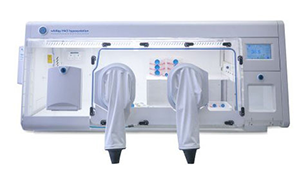 ideal for research requiring the ability to accurately control oxygen, carbon dioxide, temperature and humidity. With such accurate control and the ability to manipulate cells in situ without altering the incubation environment, research into cell biology can be performed over a comprehensive range of oxygen tensions with precision.
Arriving shortly the Luminex MAGPIX Instrument System is the simplest, most affordable, and most compact Luminex instrument. This image-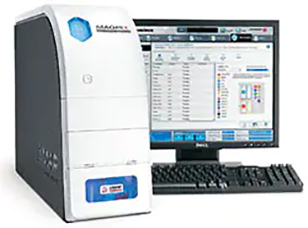 based multiplexing unit performs up to 50 different tests in a single reaction volume and reads a 96-well-plate in just 60 minutes. The Luminex MAGPIX system is compatible with ProcartaPlex multiplex immunoassays and QuantiGene Plex multiplex gene expression assays.
The GloMax® plate reader is a highly sensitive, easy-to-use microplate readers with luminescence, fluorescence and absorbance detection capabilities. 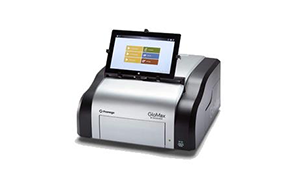 These high-performance instruments are offered in a choice of configurations to suit varying detection needs, from dedicated luminometer to advanced microplate reader functionality.
Booking Calendar
For project enquiries/project quotes please contact:
Dr. Eamon Breen
Flow Cytometry Facility
Trinity Translational Medicine Institute
Trinity Health Sciences
St James Hospital
Trinity College Dublin
Dublin 8
Phone: +353 1 8963055
E-mail: BREENEA@tcd.ie
XStrahl RS225 Irradiator Cabinet
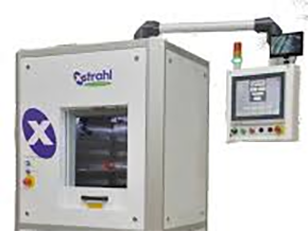 XStrahl RS225 Irradiator Cabinet supports lab-based in-vitro and in-vivo irradiation studies. Meeting the needs of medical and biological research, the RS225 and RS320 are self-contained cabinets incorporating the irradiation chamber and system electronics in one enclosure. The software interface allows for multiple user logins, while X-Ray exposures can be programmed and executed automatically. In addition to removing the health and safety burden associated with the use of radioactive sources, the Xstrahl RS225 and RS320 provides a safer, simpler and less costly alternative to radioisotope irradiators for radiation exposure studies.
Booking Calendar
For project enquiries/project quotes please contact:
Dr. Eamon Breen
Flow Cytometry Facility
Trinity Translational Medicine Institute
Trinity Health Sciences
St James Hospital
Trinity College Dublin
Dublin 8
Phone: +353 1 8963055
E-mail: BREENEA@tcd.ie
Digital PCR System
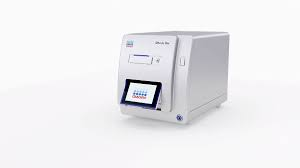 Arriving soon; the QIAcuity Digital PCR System is designed to deliver precise and multiplexed quantification results for mutation detection, copy number variation (CNV), gene expression studies, gene-editing analysis, and many more. This nanoplate-based system seamlessly integrates a standard dPCR workflow of partitioning, thermocycling and imaging into a walk-away automated platform with minimal hands-on time.
Booking Calendar
For project enquiries/project quotes please contact:
Dr. Eamon Breen
Flow Cytometry Facility
Trinity Translational Medicine Institute
Trinity Health Sciences
St James Hospital
Trinity College Dublin
Dublin 8
Phone: +353 1 8963055
E-mail: BREENEA@tcd.ie
Western Blotting system
Arriving soon
Booking Calendar
For project enquiries/project quotes please contact:
Dr. Eamon Breen
Flow Cytometry Facility
Trinity Translational Medicine Institute
Trinity Health Sciences
St James Hospital
Trinity College Dublin
Dublin 8
Phone: +353 1 8963055
E-mail: BREENEA@tcd.ie
Biobanking
Biospecimen quality is of fundamental importance for biomedical research particularly in the realm of translational research. The Trinity Biobank was established in 2004 to facilitate processing, storage and distribution of biospecimens related to clinical and epidemiological research undertaken in Trinity College-St James’s Hospital. The Biobank provides a range of services for colleagues and clients internally as well as for Universities and research organisations internationally:
— Nucleic Acid Extraction Service (Up to 10ml whole blood samples & concentration determination of nucleic acids)
— In conjunction with the Irish Blood Transfusion Service (IBTS) we make available purified DNA and associated GWAS data from 2000 healthy donors for research use.
— Standardised processing and preservation of whole blood (EDTA), serum, plasma and buffy coats
— Seamless links with the Trinity Genome Sequencing Laboratory
Collections:
The St James's, Tallaght, Trinity Allied Researchers (STTAR) Bioresource is biorepository containing SARS-COV2 infected patient samples and is linked to detailed pseudonymised clinical data. Samples are taken at 4 timepoints:
- Admission
- ICU admission
- Discharge
- Convalescence
At each time point blood is being processed for Serum, plasma PBMC, DNA/RNA and in LiHep tubes for functional studies.
All application for sample/data access are subject to review by the STTAR Datamanagement and Access committee.
Irish Blood Transfusion Service (IBTS) – purified DNA and associated GWAS data from 2000 healthy donors.
Contact: Mary Cunneen
Trinity Translational Medicine Institute, Trinity Centre for Health Sciences, St. James’s Hospital.
Tel: +353-(0)1-8963383
E-mail: CUNNEENM@tcd.ie
Containment Level 3 Laboratory
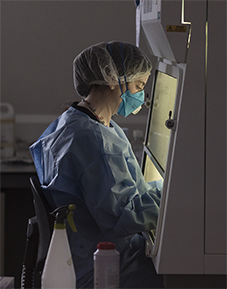 The Containment Level 3 Laboratory is a three-room suite state-of-the-art facility that allows work with infectious and dangerous pathogens such as virulent and multiple-drug-resistant Mycobacterium tuberculosis and Hepatitis C virus. Specifically this facility is fully equipped with tissue culture, mycobacterium or virus culture, cell biology equipment.
TTMI delivers translational research that addresses the research focus of Trinity College Dublin. This includes molecular medicine, immunology and global health. In this regard, work in this facility is a crucial aspect of our attempts to improve treatments, vaccines and tests for tuberculosis and hepatitis. Through well-established connections to other investigators interested in immunology and infectious diseases this facility is seen as a strategic lynch pin in delivering translational research in this field.
For project enquiries contact:
Dr. Eamon Breen
Flow Cytometry Facility
Trinity Translational Medicine Institute
Trinity Health Sciences
St James Hospital
Trinity College Dublin
Dublin 8
Phone: +353 1 8963055
E-mail: BREENEA@tcd.ie