

The End of the Sea of Plenty
Author Poul Holm
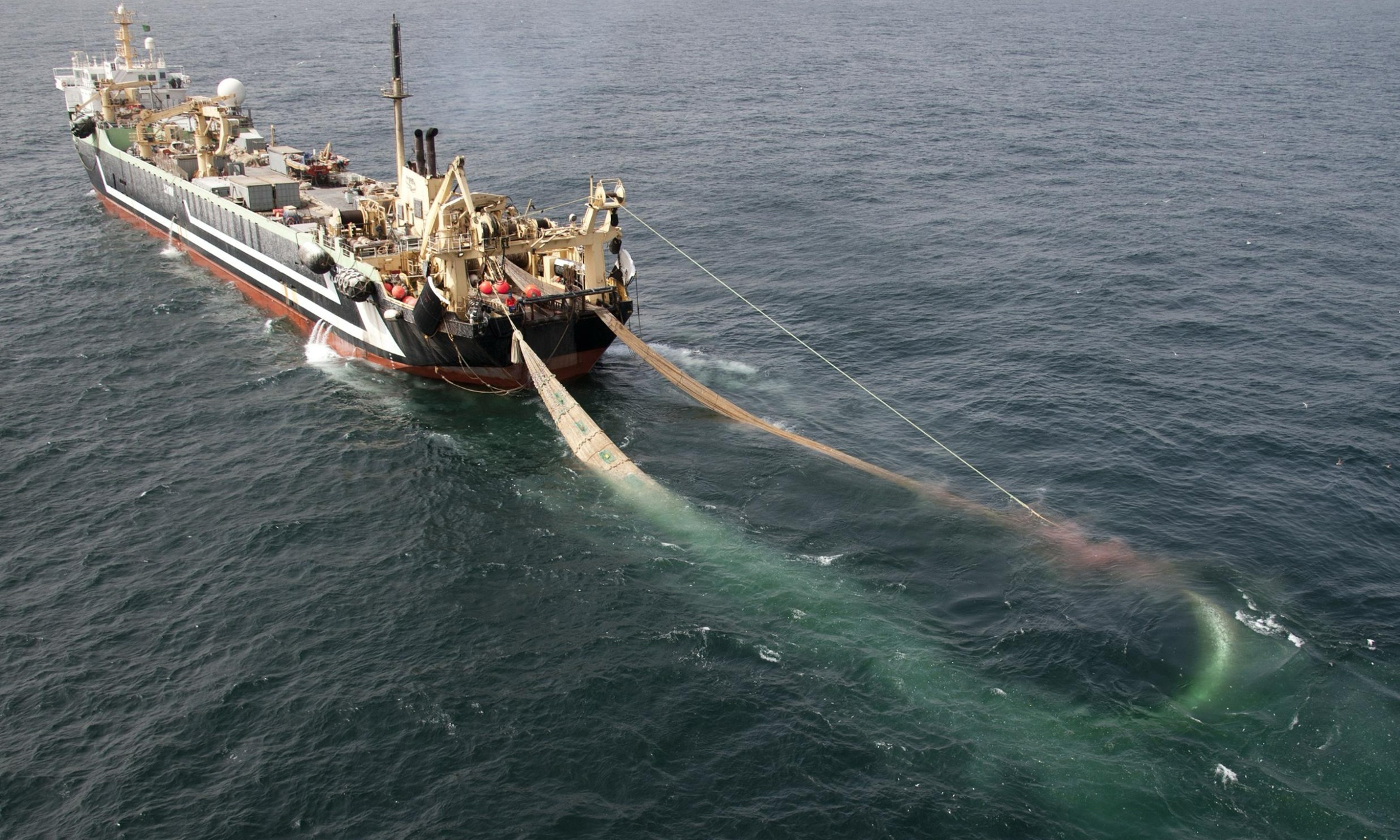
For decades, we have viewed the ocean as a boundless source of healthy, abundant food. This perception was cemented by a remarkable period between 1950 and 2010, the "Aquatic Food Acceleration", when both the global population and the average person's consumption of seafood tripled. This surge reshaped global food systems, coastal communities, and our relationship with the sea.
But that era is over. After decades of relentless growth, global seafood consumption has peaked and is now showing clear signs of slowing down. This new reality challenges our long-held assumptions and exposes the hidden complexities of the global seafood industry.
The Great Fish Boom Was a Short-Lived Bubble
The Aquatic Food Acceleration was an extraordinary, but temporary, period of growth. From 1950 through the 1980s, expanding capture fisheries—wild-caught fish from the ocean—drove this expansion. When wild catches stagnated and began to decline in the 1980s, the rapid growth of aquaculture, or fish farming, took over. Crucially, it was freshwater aquaculture that drove this new phase; marine aquaculture, or mariculture, showed much less impressive gains.
This entire period of massive growth, however, was a relatively short-lived phenomenon. By the 2010s, per capita consumption had peaked. Today, population growth is outpacing the growth of seafood production, leading to a stall and even a decline in the amount of seafood available per person. This shift from acceleration to deceleration signals a fundamental change in our food systems.
The emerging deficit in accessible aquatic food is a growing concern and demands fundamental change.
We Feed a Shocking Amount of Fish... to Other Animals
It’s natural to assume that most fish caught are meant for human plates, but this is far from the truth. A key driver of the fishing boom was the industrial practice of catching vast quantities of species like sardines and herring and reducing them into fishmeal and fish oil.
Initially, these products were used as feed for pigs and poultry. Later, they became essential inputs for the booming aquaculture industry, used to raise high-value farmed fish like salmon. The scale of this diversion is staggering. In Europe, for example, redirecting marine resources into animal feed accounted for nearly half of all fish catches during the acceleration period. This industrial-scale production of fishmeal didn't just create an inefficient energy cycle; it also provided the essential fuel for the explosion of corporate aquaculture, which would come to define the new global seafood system.
Energetically, this represented a massive inefficiency, as roughly 90 percent of energy is lost with each step up the food chain.
A Handful of "Keystone" Corporations Rule the Seas.
The romantic image of the small-scale, independent fisher is increasingly a relic of the past. The modern seafood industry is characterized by extreme corporate consolidation, a reality built in two distinct historical phases.
The first phase was Territorialisation. Following World War II, the creation of 200-mile Exclusive Economic Zones (EEZs) empowered coastal states to control the marine resources off their shores, curtailing the reach of distant-water fishing nations. This created vast, nationally controlled territories ripe for corporate exploitation. The second phase was Globalisation. Starting in the 1990s, trade liberalization and new cold-chain logistics allowed a few powerful companies to build integrated global supply chains, transforming seafood into a highly interconnected commodity.
This new structure favoured economies of scale and led to the industry becoming highly financialized. A key mechanism for this was the introduction of policies like Individual Transferable Quotas (ITQs), which turned the very right to fish into a tradable financial asset. This could be bought and sold, leading to windfall profits for some but squeezing out many smaller operators, resulting in the outright closure of many small fishing ports and communities.
The numbers are stark: in 2012, the revenues of just thirteen companies accounted for 18% of the global value of all seafood production. These are called "keystone actors" for a reason. Their immense scale, operating across over 100 countries, gives them outsized influence not just over markets, but also over the very international policies and governance bodies meant to regulate them.
The companies controll between 19 and 40% of the most valuable capture fisheries and more than a third of the main aquaculture species.
We're Eating from the Ocean All Wrong
To understand the inefficiency of our seafood consumption, it helps to think about the food chain, or "trophic levels." Plants are at the bottom (level 1), herbivores are next, and top predators are at the highest levels. On average, the human trophic level is 2.21 (closer to a herbivore than a carnivore), which is low because our diet is dominated by plants and herbivores like cattle.
When it comes to the ocean, however, we eat completely differently. Humans consume seafood from a level that is roughly two steps higher up the food chain than our land-based diet. We have a strong cultural preference for predator fish like tuna and cod, while consuming very little from lower levels, such as seaweed and shellfish. The consequence of this is a massive loss of energy. Nearly 99% of the ocean's primary production is lost before it reaches our plates—a striking inefficiency compared to our land-based food systems.
In short, if humans consumed the sea as we do the land by eating further down the marine food web, we could, at least in theory, multiply available ocean-derived food several times over.
A New Relationship with the Sea
The great seafood boom has ended, leaving behind a global system defined by profound inefficiencies, highly concentrated corporate power, and the hard limits of our planet's oceans. We are now entering a new phase of Global Reconfiguration, where this already complex system is being reshaped by powerful new forces. Climate change is physically shifting fish stocks across national boundaries, while digital governance tools like blockchain traceability are creating new standards for transparency and accountability.
For decades, how we got food from the sea remained largely invisible. Today, it has moved to the centre of global concern. Knowing our seafood system was built on a short-lived boom and startling inefficiencies, what will it take for us to start eating from the ocean as wisely as we eat from the land?
At TCEH, we are using historical insights to inform consumers about healthy and sustainable seafood choices: FoodSmartDublin and Coastal Tales