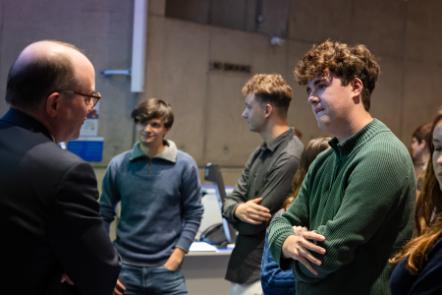
The panel featured Mark Hanniffy, Director of the EU Presidency Policy Unit at the Department of Foreign Affairs; Professor Raj Chari, lecturer in EU politics and Director of Trinity Research in Social Sciences (TRiSS); and Oisín Horgan, an analyst at the European Central Bank and Trinity Scholar.
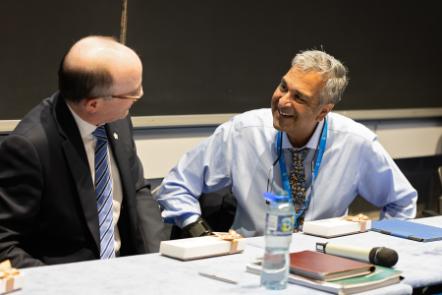
The discussion examined the priorities and practicalities of Ireland’s Presidency, including how the Government has prepared for and is coordinating the Presidency programme, the stakeholder engagement that informed its priorities, and the programme of events and public engagement taking place throughout the six months.
Professor Chari explored a range of issues connected to the Presidency and Ireland’s role in the European Union, including competitiveness, security and European values, as well as longer-term questions around EU enlargement and the Multiannual Financial Framework. Drawing on his research interests in transparency in EU politics and lobbying regulation, he also considered the relationship between European policymaking and public engagement.
Oisín Horgan brought a perspective from the European Central Bank, discussing the ECB’s role within the European project and recent developments including the potential implications of a digital euro. As a Trinity graduate, he also reflected on his experience of moving from university into the European institutions.

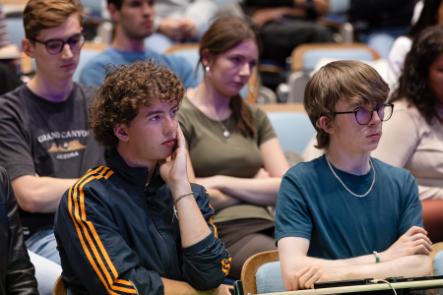
The panel concluded with a question-and-answer session, giving students and members of the Trinity community an opportunity to engage directly with the speakers and explore the issues raised during the discussion.
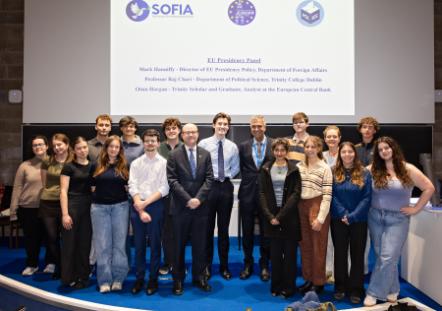
The event formed part of Trinity’s wider programme of activities during Ireland’s EU Presidency, creating opportunities for the Trinity community to engage with the issues and questions shaping Europe. With students taking the lead in bringing together academic, government and European perspectives, the discussion reflected the wider aim of Trinity’s Presidency campaign: to bring Europe into conversation across the campus and highlight the contribution of the university community to Europe’s future.