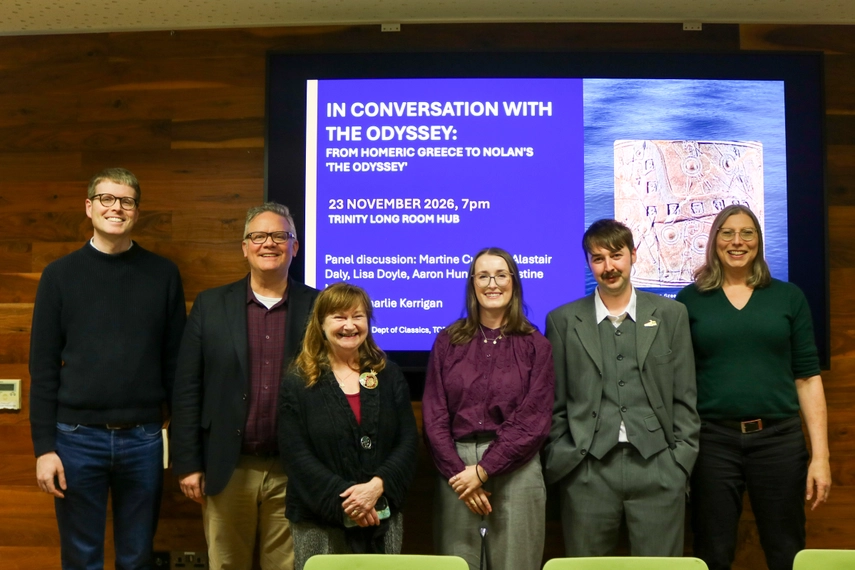
The enduring appeal of Homer's epic poetry took centre stage at Trinity College Dublin recently, as the Department of Classics and the Trinity Long Room Hub hosted a special panel discussion examining the continuing influence of The Odyssey and The Iliad across literature, archaeology and contemporary film.
Part of Trinity's activities marking Ireland's hosting of the EU Presidency, the event In Conversation with the Odyssey: From Homer's Greece to Nolan's "The Odyssey" celebrated the pairing of Co. Dublin with Greece during the EU Presidency through a lively exploration of one of the most influential stories ever told.
The lasting power of Homer's work has been memorably captured by poet, classicist and 2026 Nobel Prize in Literature winner Anne Carson, who once remarked that she does not read new books, saying simply: "Homer, I always say Homer."
That influence continues to resonate today, including in contemporary cinema. Christopher Nolan's recent film The Odysseyoffers a new interpretation of Odysseus' journey home to Ithaka following the fall of Troy. While inspired by the ancient epic, Nolan's retelling reimagines aspects of the story in ways that differ significantly from Homer and other ancient literary and visual traditions, sparking considerable debate among classicists and wider audiences alike.
Against this backdrop, a panel of Trinity academics shared perspectives from their respective fields. The discussion featured Drs Martine Cuypers, Alastair Daly, Lisa Doyle and Prof Christine Morris from the Department of Classics, alongside Dr Aaron Hunter from Film Studies. Each speaker explored a different aspect of The Odyssey, drawing on their own research interests and expertise in Greek literature, archaeology and film.
Chaired by Dr Charlie Kerrigan of the Department of Classics, the event prompted a rich and engaging conversation on the enduring relevance of Homer's works, the ways in which ancient stories are reinterpreted for modern audiences, and why the adventures of Odysseus continue to capture the imagination thousands of years after they were first told.
Following the panel discussion, audience members joined the conversation, contributing to a lively exchange of ideas that highlighted the continuing cultural significance of the classical world and its influence on contemporary storytelling