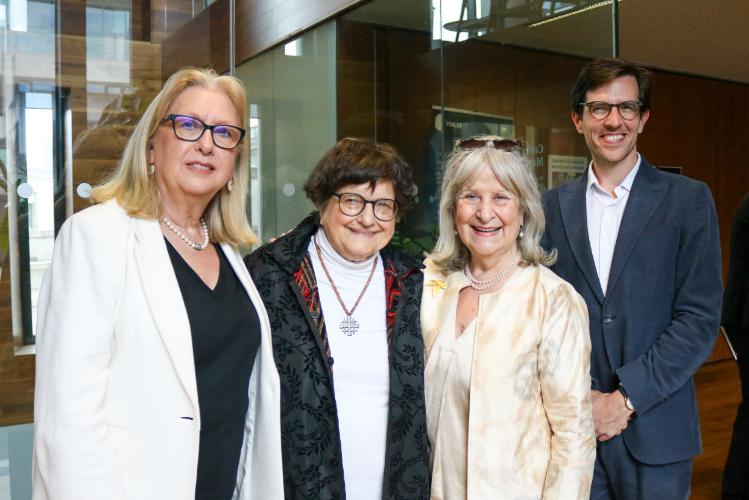
Former President of Ireland Dr Mary McAleese, renowned human rights lawyer Baroness Helena Kennedy, and veteran campaigner for the abolition of the death penalty, Sister Helen Prejean, came together in a conversation chaired by Prof David Kenny, School of Law, at the Trinity Long Room Hub to consider justice, dignity, and the challenges facing human rights in an increasingly uncertain world.
In a wide-ranging discussion, the speakers reflected on how their different experiences had shaped their understanding of justice, and outlined what challenges may lie ahead for the next generation.
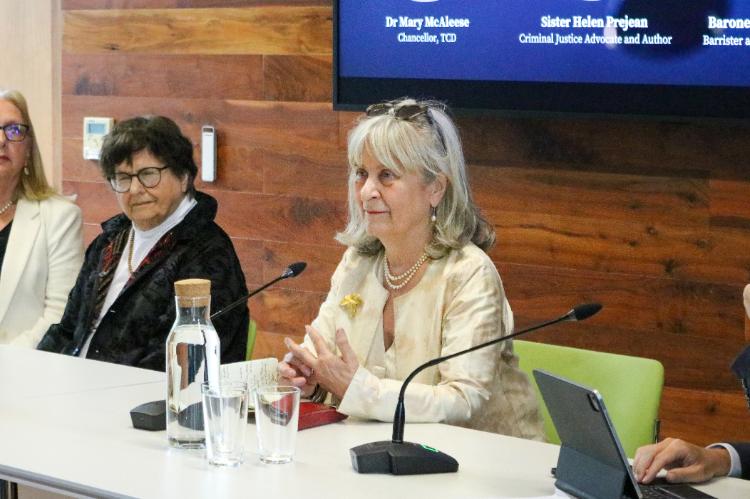
Reminiscing on her journey into activism, Sister Helen Prejean described having to "wake up to justice" after confronting the inequalities she had accepted growing up in Louisiana. She spoke about how that realisation led her to dedicate her life to opposing the death penalty, recounting her experiences accompanying people in their final moments before execution. Having faced many instances of injustice, she found that her skills in dialogue and relationship-building led to her addressing Pope John Paul II on the injustice of the death penalty, and convincing him to begin condemning its use as a means of punishment.
“Where else in the criminal justice system do we ever imitate the crime to determine a punishment?”
Speaking on her own sense of responsibility towards others, Baroness Kennedy recalled her varied experiences with legal justice, from her background growing up in the Glasgow tenements to working on cases such as the Guildford Four and the Brighton Bombing trial. What struck her most forcibly in regard to the law was how it can change someone’s life for the better, but how, in the wrong hands, it can be weaponised and used to destroy people’s lives.
“I've always felt that law can be captured by those in power and used in bad ways, undoubtedly. But law can also be a tool that you can use to try and get justice.”
From reflecting on past experience to looking towards the future, Chancellor McAleese spoke of her concern for the future generation growing up in the age of tech empires. Sharing troubling experiences with her own grandchildren in relation to topics such as online misogynist Andrew Tate and the online grooming of children through video games, she voiced her discomfort with the lack of accountability for tech companies and the new challenges facing the new generation as they seek justice and equality.
“What we're up against now is trying to tell this new generation, they need to be doubly vigilant because there are people out there, powerful people waiting in the long grass to set it all back. The manosphere, the misogynists, the anti-trans, the anti-gay, the anti-poor, the racists who want the easy answers and who want to live life at an extraordinarily superficial level.”
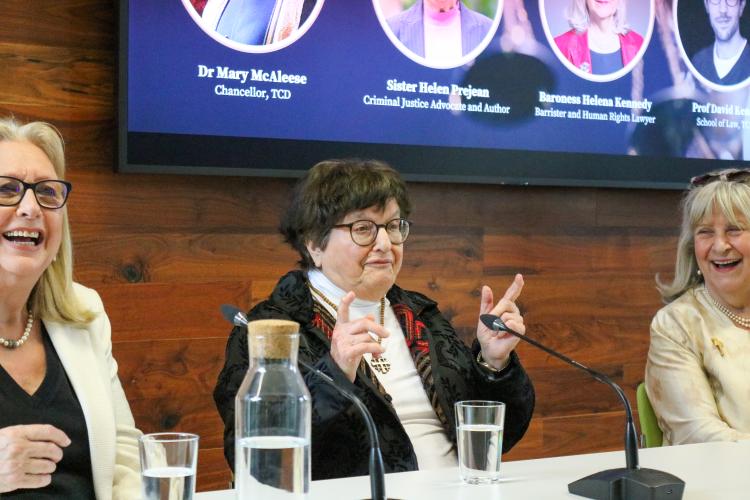
Ending on a note of hope, when asked how to share the message that human dignity and human rights should be the lens through which we see the world, Sister Helen concluded that “the future is always uncertain because it’s in our hands” and called for community and dialogue to help move society towards a more just and fair future.
Listen back to the full discussion here: