The Sound of Hope, a 15-minute documentary, was screened in the Trinity Long Room Hub as part of the European Union’s communication campaign Voices of Humanity. The short film follows three EU-supported humanitarian workers as they deliver assistance in some of the world’s most challenging environments, including Haiti, Burundi, and Syria and explores the many forms EU humanitarian aid can take.
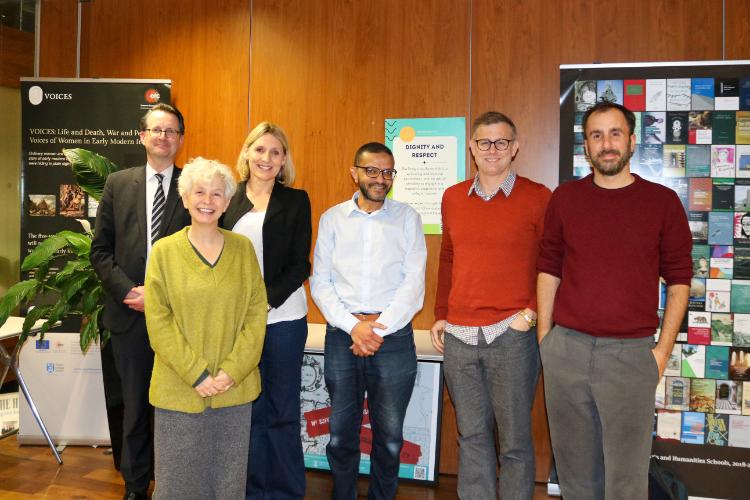
The screening was followed by a panel discussion featuring Petros Kremonas, Communication Campaigns Manager at the European Commission’s Civil Protection and Humanitarian Aid Department; Dr Rachel Hoare, Director of the Trinity Centre for Forced Migration Studies; Dr Tylor Brand, Head of Near and Middle Eastern Studies; Professor Gillian Wylie, Head of the School of Religion, Theology and Peace Studies; Dr Ghaiath Hussein, School of Medicine; and Dr Ganzamungu Zihindula, public health epidemiologist, humanitarian researcher and refugee rights advocate, and the founder of URASA South Africa, ATRASID in the Democratic Republic of Congo and RefuMind Ireland.
Opening the event, Petros Kremonas outlined the aims of the Voices of Humanity campaign and what it hopes to achieve through the documentary, "We want to bring the realities of humanitarian aid closer to people, to show what it actually looks like".
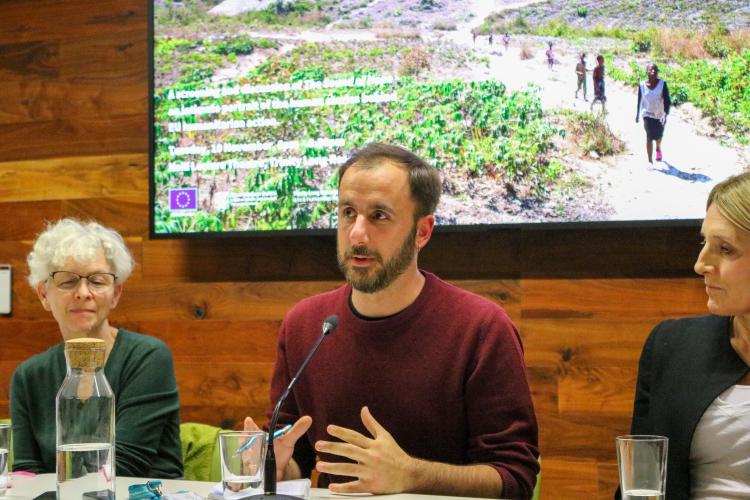
Beginning the panel discussion, Dr Rachel Hoare noted the connections between the film and her own work with refugees helping them find their voice through non-speech-related techniques, "There was so much that resonated with this film. I think that whole journey from being silenced by trauma to actually finding a voice again was extremely powerful".
Bringing his own lived experience of being a person receiving aid, Dr Ganzamungu Zihindula spoke on the bravery of the participants in the documentary who shared their stories, and reminded us as the audience to understand the emotional toll that takes. "It's important to share lived experiences. But I think it’s more important to consider that this is a can of worms that has been opened and we've got to gel with this person to help them heal".
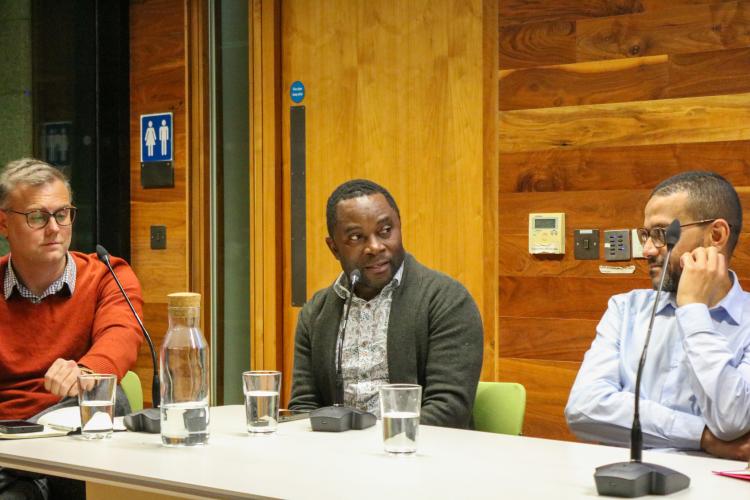
Exploring the themes of the documentary from a healthcare perspective, Dr Ghaiath Hussein reflected on deprioritising numbers and statistics when it comes to humanitarian aid, and prioritising the human beings they serve, "I think it's one of the really important messages from this documentary is that we always need to remind ourselves that the humanitarian aid should always go beyond the numbers, the medications, the tangible things, and to the people". He spoke on his experience on the ground providing humanitarian aid to people, and the importance and the challenge of making someone feel seen, heard and valued. "For many people it’s like someone knocking on, if I can call it a door, their door, or coming to their tents to ask 'how are you today?' or 'how do you feel about this or that?', for them this is something, this is humanitarian aid in a way".
Considering a humanitarian crisis as more than just one big event, and instead a prolonged set of circumstances, Dr Tylor Brand brought it back to the people experiencing the crisis and asked us to consider the people who are trying to live their lives as best they can. He spoke about a trip he took to Beirut and seeing a young boy in 2013, and then seeing the same boy, now a young man, in 2024, "His entire youth has been taken from him, his education has been taken from him. But he’s not a victim out there, he’s striving and trying to figure out a way to live his life despite all of these things, and people within these situations have to do that."
Bringing questions of politics and power into the discussion, and referencing her research in trafficking and exploitation, Dr Gillian Wylie encouraged the audience to take a bigger view and consider how we solve these big global problems from a systemic point of view. "The film is focused on the experience in the camps, in the spaces where people are inhabiting, these places they've been forced to by conflict. I think we also need to zoom out and ask some bigger questions about the systemic creation of the problems in the first place, and also the difficulties in finding longer-term solutions."
Reflecting on the significance of hosting the screening of the documentary, Professor Patrick Geoghegan said, "We were honoured to host the screening of The Sound of Hope at the Trinity Long Room Hub, and discuss the vital importance of humanitarian aid, especially during Ireland's Presidency of the Council of the European Union. At its heart, this documentary is a story about hope and human dignity. We were delighted to have had the opportunity to explore the important questions it raises with our panel and audience".
Listen back to this panel discussion on SoundCloud or wherever you listen to podcasts: