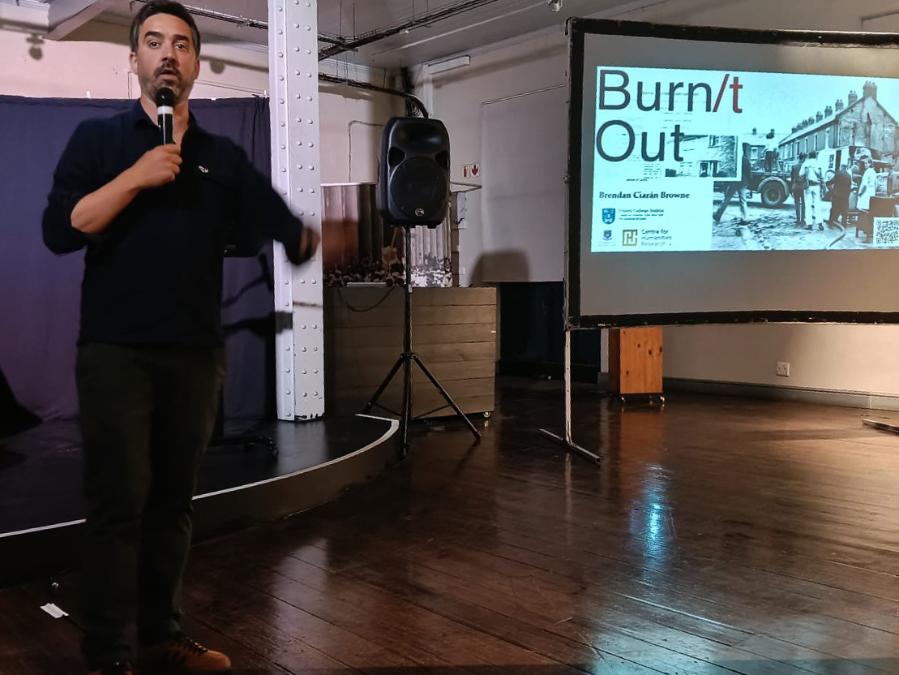
In August of this year, I had the privilege of travelling to Cape Town as a Visiting Fellow on the Charlotte Maxeke-Mary Robinson Research Chair, Centre for Humanities Research at the University of the Western Cape (UWC). During my time in the Mother City, I was involved in a number of public events, beginning first with the presentation of my Burn/t Out project, based on years of research I have been engaged in since 2019 examining the legacy of violent forced displacement during the ‘troubles’ in the north of Ireland.
Rather than restrict the presentation to a university audience, and in keeping with our shared values in producing work that is community-engaged and accessible, Prof. Maurits Van Bever Donker - Director of the Centre for Humanities Research - and I took the decision to host the event in collaboration with the Homecoming Centre based in the world-famous District Six museum.
The District Six Museum is a unique space. It is based in an area known as District Six, a once vibrant mixed community characterised by diversity on a range of levels, including language, religion, economic class, and race. As a community of freed slaves, merchants, artisans, labourers and immigrants, with close links to the city and the port, its composition stood in direct contrast to the segregationist and racist policies of the Apartheid government. It was subsequently targeted and destroyed, leading to the forced displacement of more than 60,000 residents whose homes were razed to the ground. Families displaced were pushed into barren outlying areas known as the Cape Flats.
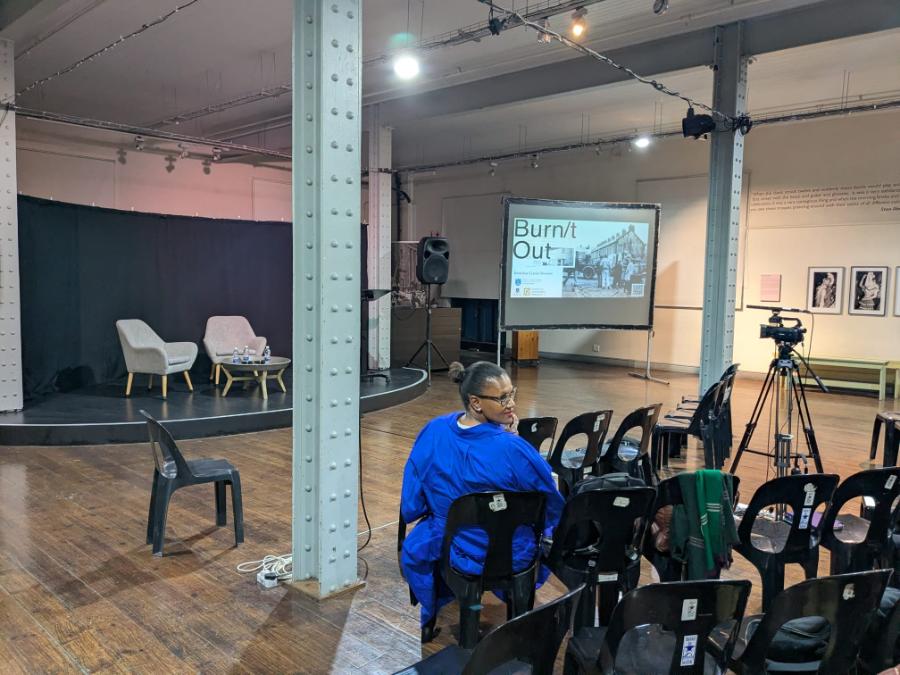
In bringing my own research into conversation with another site of violent forced displacement, the aim was to spark critical conversation on the legacies of colonial violence and the impact of enduring segregation evident in our incomplete transition in the north of Ireland and ‘post-Apartheid’ South Africa. The event opened up the possibility of sharing experiences and allowed for the points of similarity and difference to be teased out. Those attending represented a broad cross-section of Cape Tonian society and included activists, academics and community leaders.
The public talk was the start of a packed programme of events which included; a one-day conference organised by the Centre for Humanities Research celebrating the life and work of the late Charlotte Maxeke, the launch of a gallery exhibition documenting the Irish Anti-Apartheid movement through the photographic work of Derek Spiers (entitled Rhythmic Solidarity), and a collaborative teaching seminar involving research fellows and doctoral candidates based at the Centre in which I led a guided reading of the seminal text ‘Minor Detail’ by acclaimed Palestinian author, Adania Shibli.
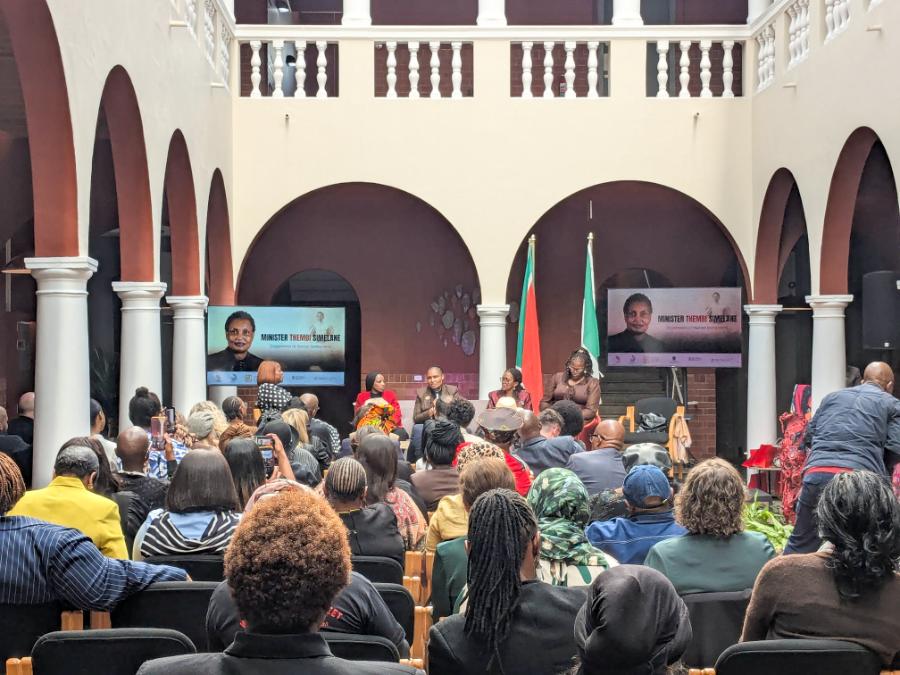
Finally, on Friday 28th August, I was invited to take part in the honorary graduation ceremony at the University in which degrees were conferred on 7 recipients, including Dr Naledi Pandor, Advocate Adila Hassim, former Irish President Mary Robinson, the late Charlotte Maxexe, Mandisa Monakali (posthumously), Francesca Albanese (in absentia) and Professor Emeritus Loyiso Nongxa. It was a powerful moment, and I was extremely proud to be able to share this occasion with such inspirational leaders who have played a key role in working for the betterment of society across their various fields.
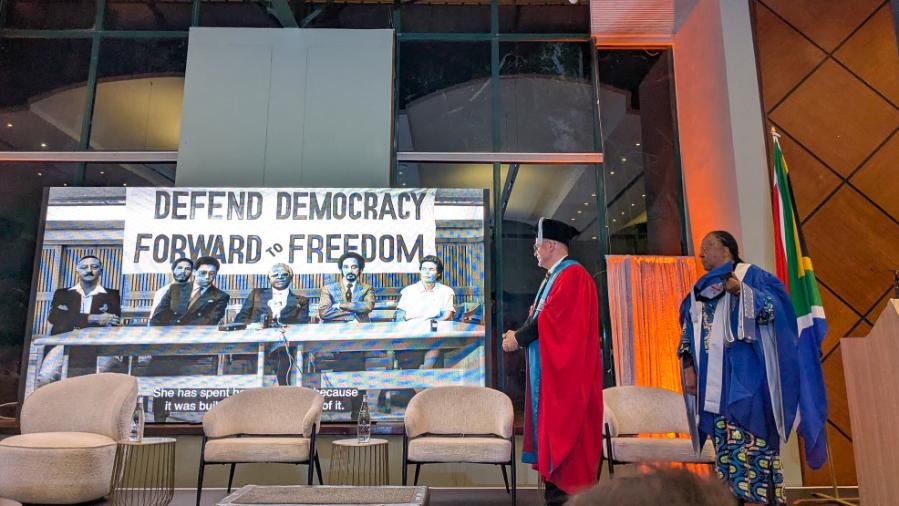
The partnership between the Trinity Long Room Hub and the Centre for Humanities Research at UWC represents an exciting opportunity for those interested in developing transnational research projects based on shared interests. I am grateful to the Irish Department of Foreign Affairs for their sponsorship of the chair and in providing the support needed to generate such an intellectually stimulating and collaborative opportunity. A special thanks to Prof. Maurits Van Bever Donker, Prof. Heidi Grunebaum, Prof. Premesh Lalu, and all the colleagues and comrades who welcomed me with open arms. Long may the partnership continue!
The Charlotte Maxeke – Mary Robinson Research Chair emerges out of a longstanding collaboration between the Centre for Humanities Research (CHR) at UWC and the Trinity Long Room Hub Arts and Humanities Research Institute at Trinity College Dublin that has focused on colonialism, partition, postcoloniality and race. Previous visiting fellows include Prof Ruth Barton (School of Creative Arts), Prof Eoin MacNamee (School of English), and artist Rita Duffy. The Charlotte Maxeke-Mary Robinson Research Chair inaugurates, through the Humanities, a broader and reciprocal collaboration between Ireland and South Africa which engages our complex inheritance of colonialism, empire, partition and apartheid, and how to overcome this legacy. The Charlotte Maxeke-Mary Robinson Research Chair was launched in March 2023, by H.E. Fionnuala Gilsenan, former Ambassador of Ireland to South Africa and with the support of the Department of Foreign Affairs.