
A Week at Trinity College Dublin: Learning, Sharing and Advancing Research on Ageing and Intellectual Disability
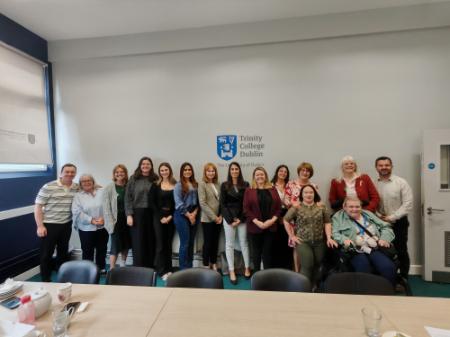 I had the privilege of spending a week at the Trinity Centre for Ageing and the Life Course in Intellectual Disability (TCAID) at Trinity College Dublin, an experience that was both professionally enriching and personally inspiring.
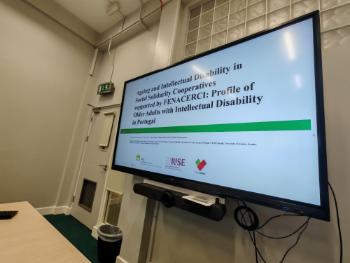
I am a PhD student at the University of Aveiro, Portugal, where my research focuses on Ageing and Intellectual Disability in Social Solidarity Cooperatives Supported by FENACERCI: Profile of Older Adults with Intellectual Disability in Portugal.
Throughout my doctoral research, TCAID has consistently emerged as an international reference in the field of ageing and intellectual disability (ID). In particular, the Intellectual Disability Supplement to The Irish Longitudinal Study on Ageing (IDS-TILDA) represents an outstanding contribution to understanding the ageing process among people with ID. Having the opportunity to visit the Centre, engage with its researchers and to learn directly from their experience was therefore an important milestone in my academic journey.
Learning from IDS-TILDA: Research with Real-World Impact
During my week at TCAID, I had the opportunity to gain a deeper understanding of the methodology underpinning IDS-TILDA and to explore the findings from its first five waves.
It was particularly valuable to learn about the practical challenges of conducting longitudinal research, including participant recruitment and retention, the organisation of fieldwork and the strategies used to maintain meaningful engagement with participants over time. I was especially interested in understanding the role of the health fairs in supporting the study's implementation and long-term success.
The TCAID research team also introduced me to several ongoing research projects, demonstrating how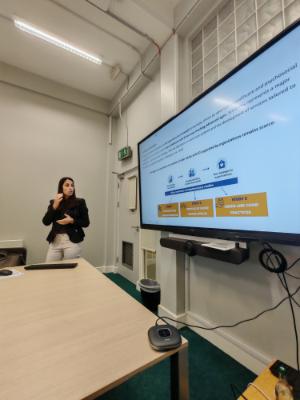 scientific evidence can contribute to improving services and informing public policy. In this context, learning about the TCAID Policy Lab was particularly relevant, as it highlighted the importance of translating research findings into practical recommendations and policy development.
Another important aspect of the visit was learning more about Public and Patient Involvement (PPI) in Research. This approach actively involves people with lived experience in different stages of the research process, from identifying priorities and developing research instruments to interpreting findings and disseminating results. It reinforced the importance of moving beyond conducting research about people with ID towards conducting research with them. I believe this approach offers valuable opportunities to strengthen inclusive research practices in Portugal.
The week also provided an opportunity to present and discuss findings from my own PhD research with the TCAID team. These discussions offered valuable insights and perspectives that will contribute to the final stages of my doctoral work.
Visiting Avista: Person-Centred Care and Ageing with Dementia
 As part of the programme, TCAID organised visits to two organisations providing support to people with intellectual disabilities, allowing me to observe how research-informed approaches are translated into everyday practice.
The first visit was to Avista, where I learned about its services and, in particular, two specialised residential settings supporting people with ID who are living with dementia.
One of the most meaningful aspects of this visit was observing how person-centred care is embedded in everyday life. Support is adapted to each person's individual needs, while their preferences, routines, choices and personal histories remain central to the care provided.
The multidisciplinary team works collaboratively to respond to increasingly complex health and support needs, while ensuring that the living environment remains familiar, comfortable and meaningful to each resident.
One message from the visit has stayed with me:
“Meadowview is not a care facility where people happen to live. Meadowview is their home.”
This simple but powerful perspective captures the importance of dignity, belonging and person-centred support, particularly when responding to the challenges associated with ageing and dementia.
Visiting Stewarts Care: Independent Living, Health and Early Dementia Screening
The second visit was to Stewarts Care, where I had the opportunity to learn about different approaches to independent living, community-based support and person-centred services for people with ID.
It was particularly interesting to understand how people are supported to live independently within their communities, with individualised assistance adapted to their needs and personal goals.
Another valuable aspect was learning about the organisation's approach to dementia screening and the early identification of cognitive changes. The integration of health monitoring into routine support practices, together with collaboration between specialised professionals and primary healthcare services, demonstrated the importance of proactive and coordinated approaches to ageing.
The combination of social protection, specialised services and person-centred support illustrated how coordinated systems can promote autonomy, social inclusion, quality of life and ageing with dignity.
Reflections and Future Perspectives
This week at TCAID was much more than an opportunity to learn about an internationally recognised longitudinal study. It allowed me to reflect on how research, policy and practice can work together to improve the lives of people with ID as they age.
Three aspects were particularly meaningful to me: the methodological rigour and long-term commitment demonstrated by IDS-TILDA; the importance of involving people with ID in research and decision-making; and the practical application of person-centred approaches in community and residential services.
These experiences are especially relevant to my doctoral research, which seeks to better understand the needs of older adults with ID in Portugal and the challenges faced by organisations supporting them.
Above all, the visit reinforced my conviction that ageing well with an ID requires more than appropriate services. It requires coordinated policies, knowledgeable professionals, inclusive research and, most importantly, a genuine commitment to recognising each person's rights, preferences and aspirations throughout their life course.
I am deeply grateful to the entire TCAID team for their warm welcome, generosity and willingness to share their knowledge and experience. I would also like to thank the professionals at Avista and Stewarts Care for providing such valuable insights into their work.
It was an inspiring week that has broadened my perspectives, strengthened my research and provided important lessons that I will carry forward throughout my PhD and future professional work.