Celebrating Inclusive Oral Health Research
To mark World Oral Health Day 2025, we’re proud to highlight the work of the oral health research team at the Trinity Centre for Ageing and Intellectual Disability (TCAID). In close collaboration with the Dublin Dental University Hospital (DDUH), the National Federation of Voluntary Service Providers, and our Keep My Teeth project partners, the team is leading innovative research that brings the voices and needs of people with intellectual disabilities into focus.
Inclusive Research in Action
PhD researcher Katrina Byrne and Dr. Caoimhin Mac Giolla Phadraig have been championing a more person-centred approach to oral health research through IDS-TILDA. Their work is helping to close long-standing gaps in knowledge by developing tools and training that make research more accessible and relevant.
The MOSST Tool – Practical and Inclusive The Modified Oral Status Survey Tool (MOSST) is one such innovation. Developed in partnership with DDUH, MOSST allows both dental and non-dental professionals to assess oral health in a simple, respectful, and inclusive way. Findings from IDS-TILDA show significant oral health needs and highlight how MOSST can help identify and address these gaps.
IDS-TILDA W5 Findings – Understanding the Gaps
Oral Health Assessment: In Wave 5 of the IDS-TILDA health fair, 469 participants underwent an oral health assessment using the MOSST, revealing significant oral health concerns among individuals with intellectual disabilities in Ireland.
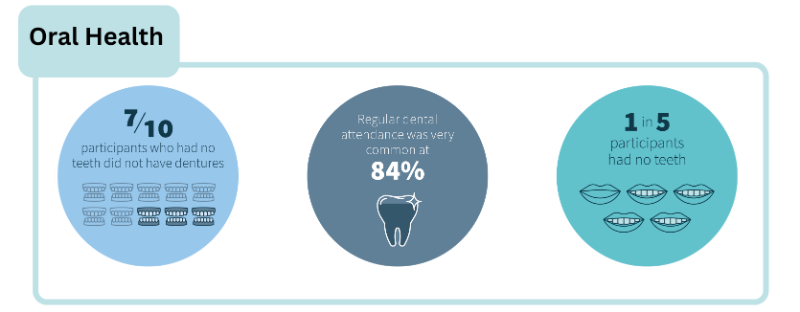
- Tooth Loss and Inequity: One in five IDS-TILDA participants had no teeth, rising to two in five for those aged 65 and over—significantly higher than the one in eight found in the general ageing population in TILDA Wave 6.
- Widespread Oral Disease: Nearly half of dentate participants had at least one cavitated tooth, fewer than 30% had good oral hygiene, and fewer than 40% had healthy gums. One in twelve reported experiencing oral pain in the past week, demonstrating a high burden of oral disease.
- Impact on Oral Function: A high proportion of participants lacked the minimum number of functional teeth needed for aesthetics (front teeth) and effective chewing (back teeth).
/filters:format(webp)/filters:quality(100)/prod01/channel_3/media/tcd/nursing-midwifery/images/staff-images/Katrina-Byrne_500X500.jpg)