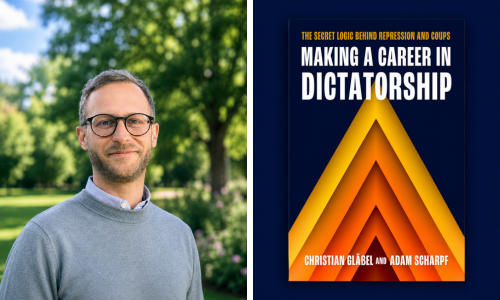
Dr Christian Gläßel's new book featured in The New Yorker
Dr Christian Gläßel's new book with Dr Adam Scharpf, Making a Career in Dictatorship: The Secret Logic behind Repression and Coups (Oxford University Press), is featured in a new article in The New Yorker by Eyal Press. "Should I Stay or Should I Go?" examines a dilemma facing lawyers at the U.S. Department of Justice under the Trump Administration. More than 4,000 DOJ lawyers have left since the beginning of 2025, a reduction of roughly 30 percent. Yet should career lawyers who believe the department is crossing legal or ethical lines resign—or stay and resist from within?
It is in explaining this position that the prosecutor explicitly turns to Gläßel and Scharpf’s Making a Career in Dictatorship. The book examines why individuals become willing to carry out a government’s "dirty work." Drawing on career data covering the full population of officers in the Argentine army, Gläßel and Scharpf show that officers facing poor career prospects were especially likely to enter the repressive apparatus during Argentina’s military dictatorship in the 1970s. For these career underachievers, taking on horrific tasks that others were reluctant to perform offered an alternative route to demonstrate loyalty and obtain advancement that might otherwise have remained out of reach.
The prosecutor sees a similar danger in the current Justice Department. As experienced and professionally grounded officials leave, they create opportunities for people who might have struggled to advance through conventional career channels but who are willing to demonstrate political loyalty by carrying out the Administration’s priorities. The prosecutor explicitly points to lawyers with limited management experience and reportedly weak performance evaluations who have been elevated to senior positions.
From this perspective, exit can itself change who staffs an institution. Leaving too early risks opening positions to opportunistic replacements who may be particularly willing to carry out politically motivated assignments because doing so offers career opportunities otherwise unavailable to them. The prosecutor’s conclusion is therefore to stay until a genuine red line is reached—and then stand one’s ground and "make them fire you."