The launch of the Martin Naughton E3 Learning Foundry today marks a significant milestone in the evolution of STEM education at Trinity College Dublin. Bringing together Engineering, Natural Sciences, and Computer Science & Statistics under one roof, the new facility represents far more than a new building. It is a bold statement about how universities must prepare students for a world increasingly shaped by complexity, uncertainty, sustainability challenges, and rapid technological change.
At the heart of Trinity's E3 initiative, which stands for Engineering, Environment and Emerging Technologies, is a simple but powerful idea: the world's greatest challenges cannot be solved by a single discipline. From climate change and sustainable energy to intelligent technologies and resilient communities, tomorrow's solutions will come from collaboration across traditional boundaries. The Martin Naughton E3 Learning Foundry has been purposefully designed to make that collaboration a daily reality.
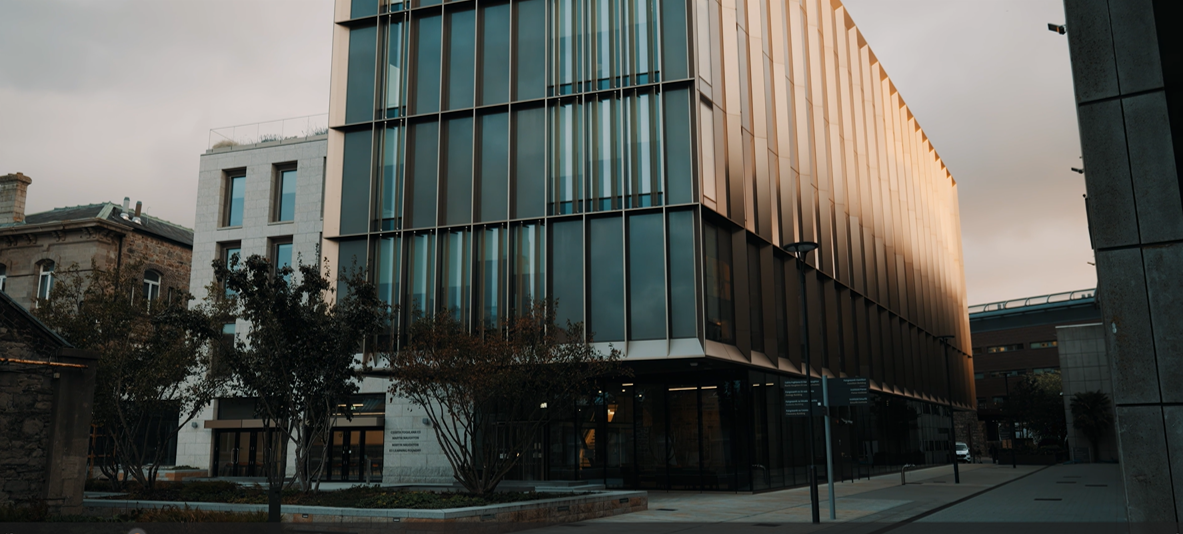
Above: The Martin Naughton E3 Learning Foundry
A Shared Vision for the Future
The Learning Foundry creates a vibrant, transdisciplinary environment where students, academics, researchers and industry partners can learn, create and innovate together. Designed as a state-of-the-art facility, it supports a new model of education that places active learning, teamwork, creativity and problem-solving at its centre.
The launch event brought together members of the Trinity community, representatives of the Naughton family, student leaders, academic staff and invited guests to celebrate the opening of a building that has been years in the making.
Opening proceedings included a ribbon-cutting ceremony followed by a programme of speeches reflecting on the ambition behind the project, the journey to bring it to life, and the opportunities it creates for future generations of students.
Speaking at the launch, the Dean of STEM Prof. Sylvia Draper highlighted how the Learning Foundry has evolved from an ambitious vision into a dynamic educational environment that is already transforming teaching and learning. The new facility supports innovative programmes and creates opportunities for students to work across disciplines, develop new skills and engage with real-world challenges in meaningful ways.
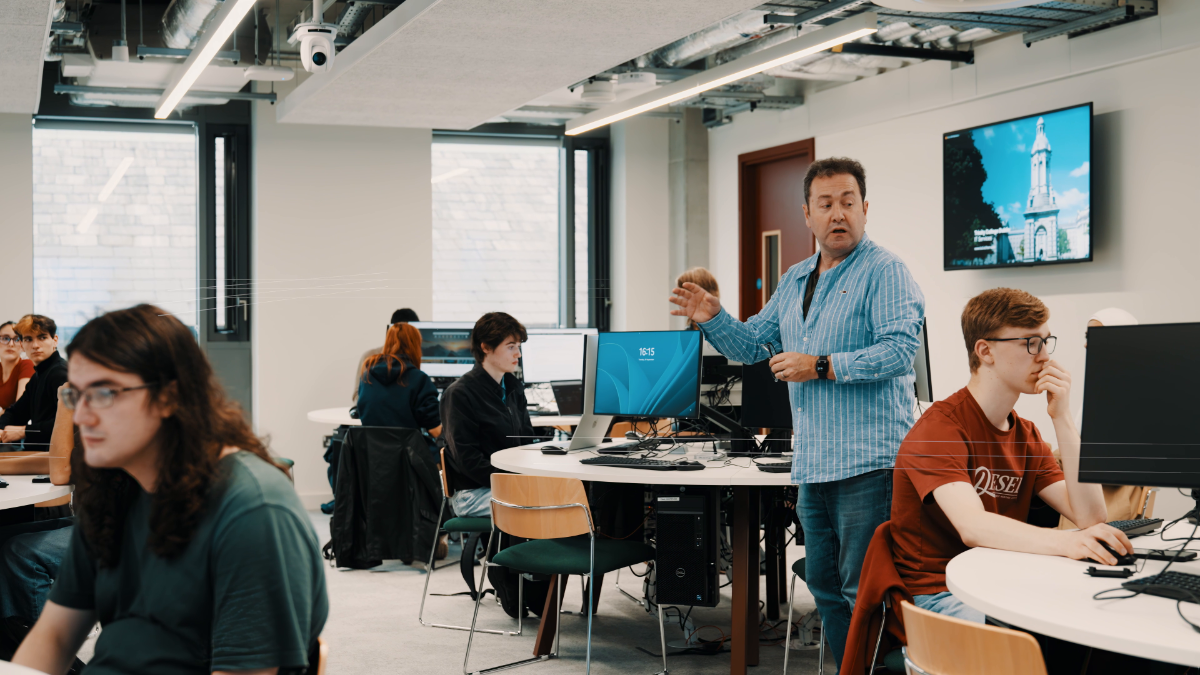
Above: Digital Media Labs in the Martin Naughton E3 Learning Foundry
Three Schools. One Community.
A recurring theme throughout the launch was the unique collaboration between Trinity's School of Engineering, School of Natural Sciences, and School of Computer Science & Statistics.
Professor Anil Kokaram, Head of the School of Engineering, described the creation of the Learning Foundry as an "institutional relay race", recognising the many individuals who contributed to making the project a reality. He highlighted the importance of providing students with modern teaching spaces and advanced equipment while emphasising the value of bringing students from different disciplines together in a shared environment.
As he noted, the major challenges facing society, whether energy transitions, sustainable infrastructure or intelligent automation, cannot be neatly confined within a single academic discipline. The Learning Foundry creates opportunities for students to encounter different perspectives and collaborate naturally as part of their daily learning experience.
For Dr Matthew Saunders, Head of the School of Natural Sciences, sustainability sits at the core of the building's educational purpose. He emphasised how the Learning Foundry will equip students with the knowledge and skills needed to address some of the world's most pressing environmental challenges, including climate change, biodiversity loss and water resource management.
The facility enables students to explore future scenarios, test ideas and develop evidence-based solutions that are both scientifically rigorous and practically relevant.
Professor Gregory O'Hare, Head of the School of Computer Science and Statistics, highlighted the transformative nature of the project. By bringing together three distinct schools within a single collaborative environment, the Learning Foundry encourages the exchange of ideas across disciplines and creates the conditions where innovation often thrives, at the intersection of different ways of thinking.
A Living Laboratory
The building itself serves as a powerful educational tool.
Designed as a living laboratory, the Learning Foundry integrates sustainability into its physical infrastructure and daily operation. Features relating to energy performance, water management, building monitoring systems and environmental design provide students with opportunities to engage directly with the systems they study.
This approach reflects Trinity's wider commitment to sustainability while creating a tangible connection between theory and practice. Students are not simply learning about sustainable development. They are learning within a building that demonstrates these principles in action.
The project also reflects Trinity's Thrive strategy, creating shared spaces that encourage interaction, build community and foster greater understanding between disciplines.
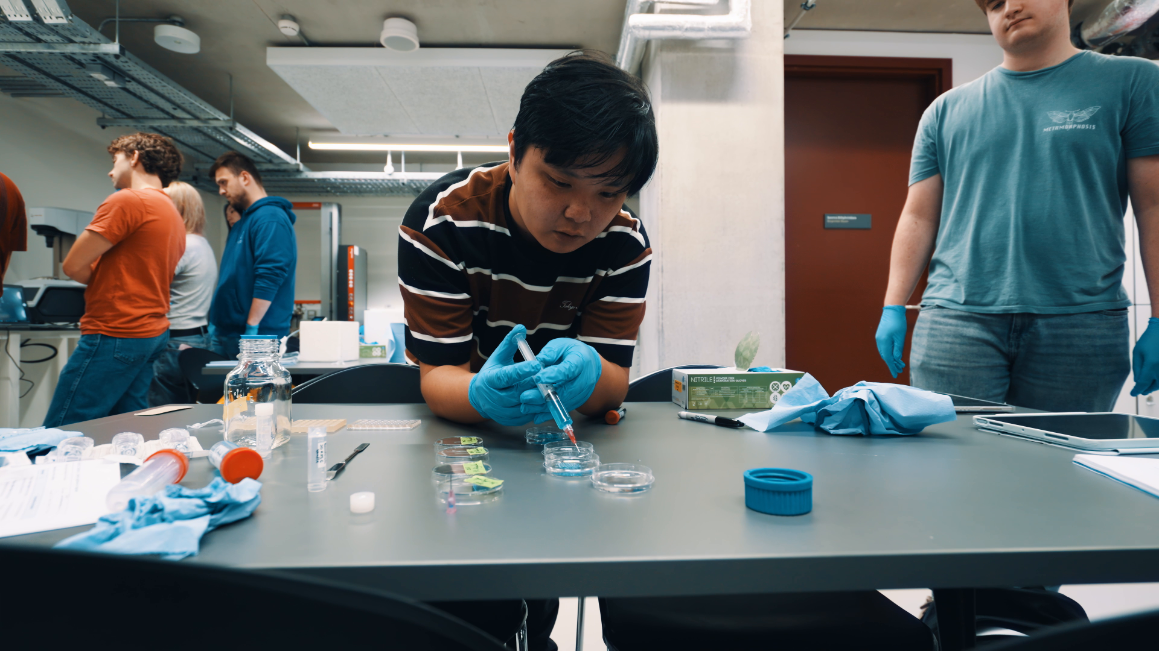
Above: Students engaging within one of the new laboratories
Learning Beyond the Traditional Classroom
One of the most significant aspects of the Learning Foundry is its commitment to active, project-based learning.
Throughout the building, collaborative teaching spaces, specialist laboratories, ideation areas and the E3 Makerspace have been designed to support experimentation, innovation and teamwork.
The Makerspace, in particular, provides students with the opportunity to transform ideas into reality, enabling them to design, build, test and refine solutions in a hands-on environment. Combined with flexible learning spaces, these facilities encourage creativity, curiosity and interdisciplinary problem-solving.
Students featured in the launch video spoke about the impact the building is already having on their educational experience, highlighting access to new facilities, opportunities for collaboration and exposure to different disciplines and perspectives.
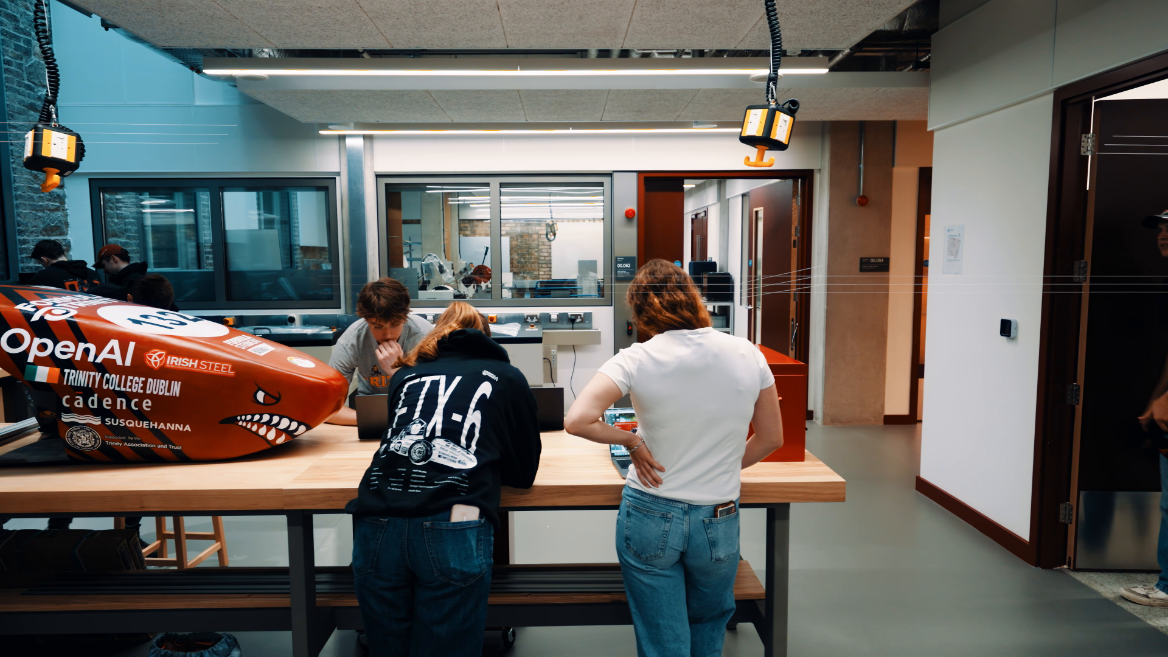
Above: Trinity's Formula One team utilising the Maker Space with the Martin Naughton E3 Learning Foundry.
Educating for a Complex and Uncertain World
A central feature of the launch was a panel discussion exploring a critical question:
How should universities rethink learning to prepare graduates for a world defined by complexity, uncertainty and rapid technological change?
Moderated by E3 Senior Business Development and Engagement Manager Deirbhle O'Reilly, the panel brought together leading academics from across the E3 community:
- Dr Silvia Caldararu, School of Natural Sciences
- Professor Laurence Gill, School of Engineering
- Dr Arthur White, School of Computer Science & Statistics
The discussion focused on how universities can better prepare students for increasingly complex global challenges, the importance of interdisciplinary education, and how the Learning Foundry can help shape the future of learning.
Their insights reinforced a key principle underpinning E3: that future graduates must possess not only deep disciplinary expertise but also the ability to collaborate, communicate, adapt and solve problems across traditional boundaries.
Shaping the Next Generation of Innovators
The Martin Naughton E3 Learning Foundry represents a major investment in people as much as infrastructure.
It is designed to help students develop the capabilities that will define success in the decades ahead:
- Collaboration
- Communication
- Creativity
- Critical Thinking
- Leadership
By bringing together diverse disciplines within a shared learning environment, students are encouraged to challenge assumptions, combine knowledge in new ways and develop solutions with genuine societal impact.
As Trinity continues to expand its E3 vision, the Learning Foundry will play a central role in educating the next generation of scientists, engineers, technologists and innovators.
More than a building, it is a place where ideas meet, disciplines connect and new possibilities emerge.
The future will not be built by one discipline alone. It will be shaped by collaboration, powered by innovation and driven by the next generation of problem-solvers.
The Martin E3 Learning Foundry.
Where ideas connect. Where innovation happens. Where the future begins.