
Four new projects from across Trinity’s Arts and Humanities schools have been awarded funding under the latest Research Incentive Scheme (RIS) Funding call from the Trinity Long Room Hub.
The RIS scheme provides seed funding to researchers to help them at a critical stage in the lifecycle of their research proposals. Many previous awardees have subsequently developed their projects into larger funding grants. This scheme is available to academic and research staff in the Trinity Long Room Hub's partner Schools and the Library.
Through the latest funding awards, over €18k was awarded to four new projects from Trinity’s School of Histories and Humanities, the School of Creative Arts, and the School of Languages, Literatures and Cultural Studies. Projects will explore a range of research areas from the connections between African American and Northern Irish civil rights movements to a systematic study of the evaluation of University of Sanctuary supports in Ireland.
Congratulating the awardees, Professor Patrick Geoghegan, Director of the Trinity Long Room Hub said:
“It’s wonderful to see these new projects being advanced through the Trinity Long room Hub’s Research Incentive Scheme. We look forward to seeing how these projects generate new knowledge in their respective areas, helping researchers to lay the groundwork for more ambitious funding proposals and initiatives.”
List of awardees:
Katja Bruisch (School of Histories and Humanities): ‘Siberian gas on the world’s dinner tables: A global history of Soviet and Russian Fertilizers.’
 Against the backdrop of massive price fluctuations in international fertilizer markets following Russia’s full-scale invasion of Ukraine in 2022, this project aims to rewrite the global environmental history since the late Cold War period through the lens of Soviet and Russian fossil-fuel based synthetic fertilizers and their global circulation. Combining archival and library research, this research revisits the place of the Soviet Union and the Russian Federation in the world economy while adding to ongoing efforts to historicize the planetary crisis.
Stefanie Van de Peer (School of Creative Arts): ‘Feminist Witness Seminar: An Intersectional Approach to Film Heritage’
 This project conceptualises a new transparent intersectional oral histories methodology for film preservation projects and asks: how can individual women’s legacies become part of a shared global film heritage? Global South women’s careers and collaborations remain undocumented, and this research project aims to create a new approach to recording their experiences. By facilitating memory work and mobilising new audiences, the project reshapes film historiography through feminist and anti-colonial practices.
Rachel Hoare (School of Languages, Literatures and Cultural Studies): ‘Navigating Sanctuary: Creative Arts Methodologies and Digital Solutions for Forcibly Displaced Students in Irish Higher Education Institutions’
 Ninety Gazan students were evacuated to Irish HEIs in 2024 and 2025 with more expected in 2026. They navigate unfamiliar cultural and academic systems whilst carrying profound trauma and loss. This two-phase research project develops creative trauma-informed methodologies to evaluate sanctuary-seeking students’ experiences in Irish HEIs and inform technology-enhanced solutions. This is the first systematic evaluation of University of Sanctuary supports in Ireland, uniquely combining participatory creative methodologies with technology-enhanced solution development.
Daniel Geary (School of Histories and Humanities): ‘We Shall Overcome: Northern Ireland, the U.S., and the Long Civil Rights Movements.’
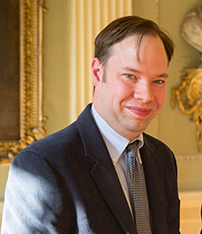 The African American civil rights movement inspired the Northern Irish one. The Northern Irish movement borrowed iconography, music, tactics, and even its very name. Such identification reverberated throughout Ireland and back across the Atlantic elicited complicated responses from a wide variety of political actors. Why did this identification occur? What were its consequences? How was it rooted in a longer history of relations between the "black and the green"? And what legacy does it have for our own time? This research project aims to explore these topics in a collaborative fashion drawing from multiple experts.