Key role of research and innovation in shaping EU’s future placed centre-stage as Trinity hosts significant EU meetings.
As part of an ongoing programme to mark Ireland's presidency of the Council of the European Union, Trinity this week hosted two important meetings on research and innovation.
On Monday, 20 July, an informal meeting of the EU’s Competitiveness Council (Research), known as COMPET, met in Trinity. COMPET develops and adopts EU legislation to strengthen the single market and make Europe more competitive. The meeting was attended by government ministers with responsibility for research and innovation along with policy makers and research leaders.

On Wednesday, 22 July, a delegation of EU research attachés, along with representatives from embassies and permanent representations across Europe, gathered at the Trinity Long Room Hub to examine the role of research in addressing challenges that transcend national borders. Research attachés play an important role in shaping research and innovation policy, fostering international collaboration, and informing future research investment across Europe. During the meeting, Trinity experts showcased how the University's research is helping address major societal challenges in areas including health, climate, technology, the humanities and quantum science.
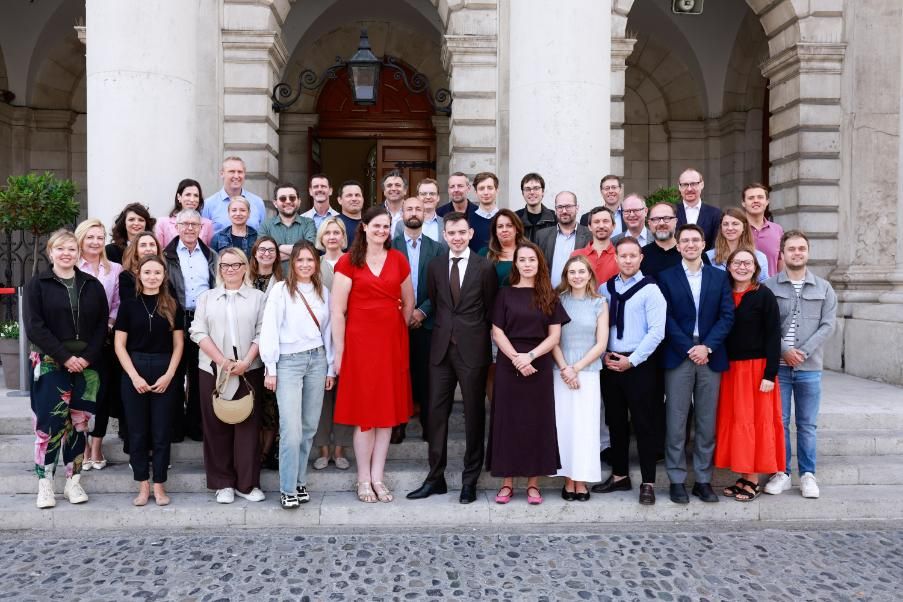
Speaking at both events, Linda highlighted the central role of research and innovation in addressing challenges that extend beyond Ireland. She emphasised that many of the issues facing society today, including healthcare, climate change, housing, security and technological transformation, depend on sustained investment in research, education and innovation, and she advocated particularly for strong investment in and continued support for the FP10, and Erasmus+.
For more information, read the full Trinity news stories: "Trinity hosts EU Research and Innovation Ministers in the Old Library" and "Trinity showcases research tackling Europe's hardest problems."
Read Linda's article in Science Business, co-authored by Kurt Deketelaere, Secretary General, League of European Research Universities.

/filters:format(webp)/filters:quality(100)/prod01/channel_3/media/tcd/provost/images/news/20260722-DFHERIS-TCD-18-2000X936.jpg)