Abstract:
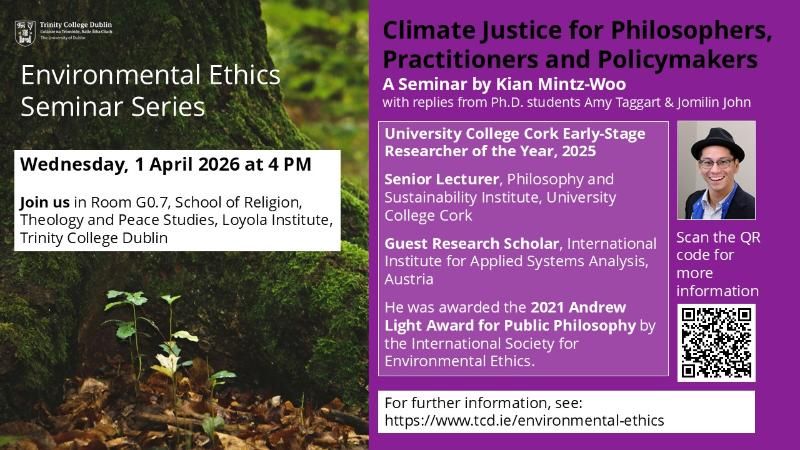
Climate researchers and policymakers are increasingly demanding justice--or at least an adequate understanding of what "justice" means. This presentation lays out a philosophical account of some of the most important forms of justice: distributional, procedural, recognitional, corrective and transitional. Most of these take philosophical concepts and expand or adapt them for climate researchers and policymakers (the key exception is transitional justice, which is a new meta-form of justice may be especially important for just transition research). My hope is that this framework draws attention to the variety of justice assumptions one can make so that people are more explicit about the assumptions they are adopting and that they test robustness to alternative assumptions.