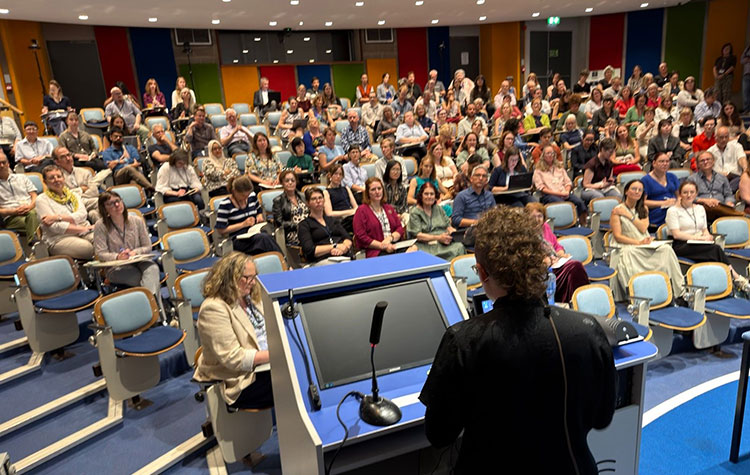
 Image: Professor Katherine Bode (Australian National University) giving the Wolff lecture, Moving Types: Irishness, Migration, and Machine Learning in Digital Periodical Studies.
From 23–25 July 2026, Trinity College Dublin hosted the annual conference of the Research Society for Victorian Periodicals (RSVP), an international scholarly society founded over 60 years ago to promote the study of nineteenth-century newspapers, magazines and print culture.
The conference, which alternates annually between North America and Europe/the UK, was held in Ireland for the first time in the Society’s history. It was also the largest conference in RSVP’s 60-year history, bringing together 193 delegates from across Ireland, the UK, continental Europe, North America, India and Australia.
This year, the theme of the RSVP Conference was ‘Movements and Migrations in the nineteenth-century periodical press’. The nineteenth century was marked by unprecedented migration as people moved to urban centres; were forcibly or semi-forcibly relocated; and emigrated to escape war, famine, economic instability, or other crises. As people moved, they created new networks of communication and political alliances. The conference discussed some of the many movements and migrations as they appeared in and were formative of periodicals, periodical cultures, mores, personnel, and circulation.
Over three days, the conference featured more than 80 research papers presented across parallel panel sessions, alongside workshops, society meetings, two keynote events and two evening receptions in some of Trinity’s most iconic historic spaces, the Dining Hall and the Museum Building. The conference featured the Colby Prize Keynote Conversation, Authority, Politics, and the Nineteenth-Century Press: New Directions, with Andrew Lewis and Teja Varma Pusapati (Shiv Nadar University), in conversation with Caroline Sumpter (Queen’s University Belfast). The Wolff Lecture was delivered by Professor Katherine Bode (Australian National University) on Moving Types: Irishness, Migration, and Machine Learning in Digital Periodical Studies.
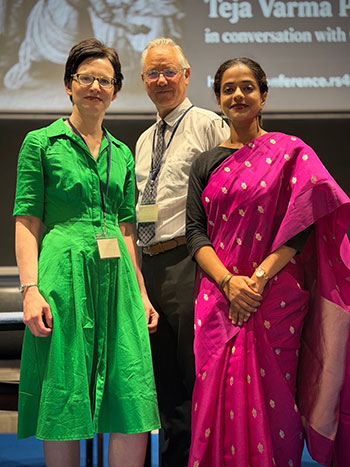
Image: The Colby Keynote Panel: Dr Caroline Sumpter (QUB), Andrew Lewis (Tower Hamlets Library), and Dr Teja Varma Pusapati (Shiv Nadar University).
Hosted by the School of English at Trinity College Dublin, the conference was organised by Clare Clarke, Associate Professor in English, with the support of colleagues from across the University. Delegates consistently praised the warmth of the welcome, the professionalism and friendliness of Trinity staff, and the exceptional setting provided by Trinity’s historic campus. The conference highlighted Trinity’s international reputation as a centre for humanities research while showcasing both its academic community and its remarkable historic estate to visitors from around the world.
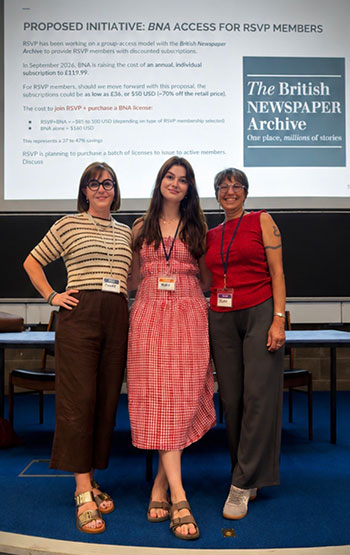
Image left to right: Dr Clare Clarke (TCD), local host of RSVP 2026; Marion Tempest Grant (York University, Canada), Operations Manager RSVP; Professor Priti Joshi (University of Puget Sound), President of RSVP.
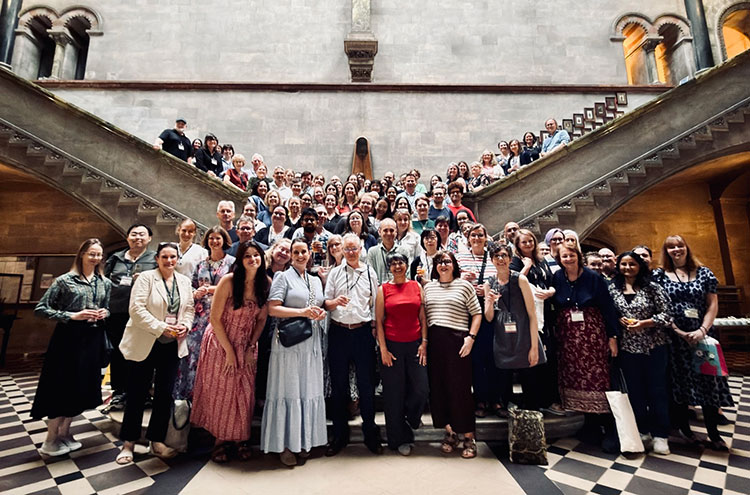
Image: All RSVP Conference delegates at the closing reception in the Museum Building, Trinity College Dublin.
Further details on the conference are available on the Conference website here.
Further information is available by emailing Dr Clare Clarke at Clare.Clarke@tcd.ie.
This conference was partially funded by the generosity of the Trinity College Dublin Arts and Social Sciences Benefactions Fund, the Trinity Trust, and Fáilte Ireland.