Honorary Degrees 2025-2026
On Friday 17 April 2026 honorary degrees of the University of Dublin were conferred on David Little, Corinna Salvadori Lonergan, Hans-Christian Oeser and Eda Sagarra at a Commencements Ceremony in the Public Theatre. See Orations here.
David Little (Litt.D.)
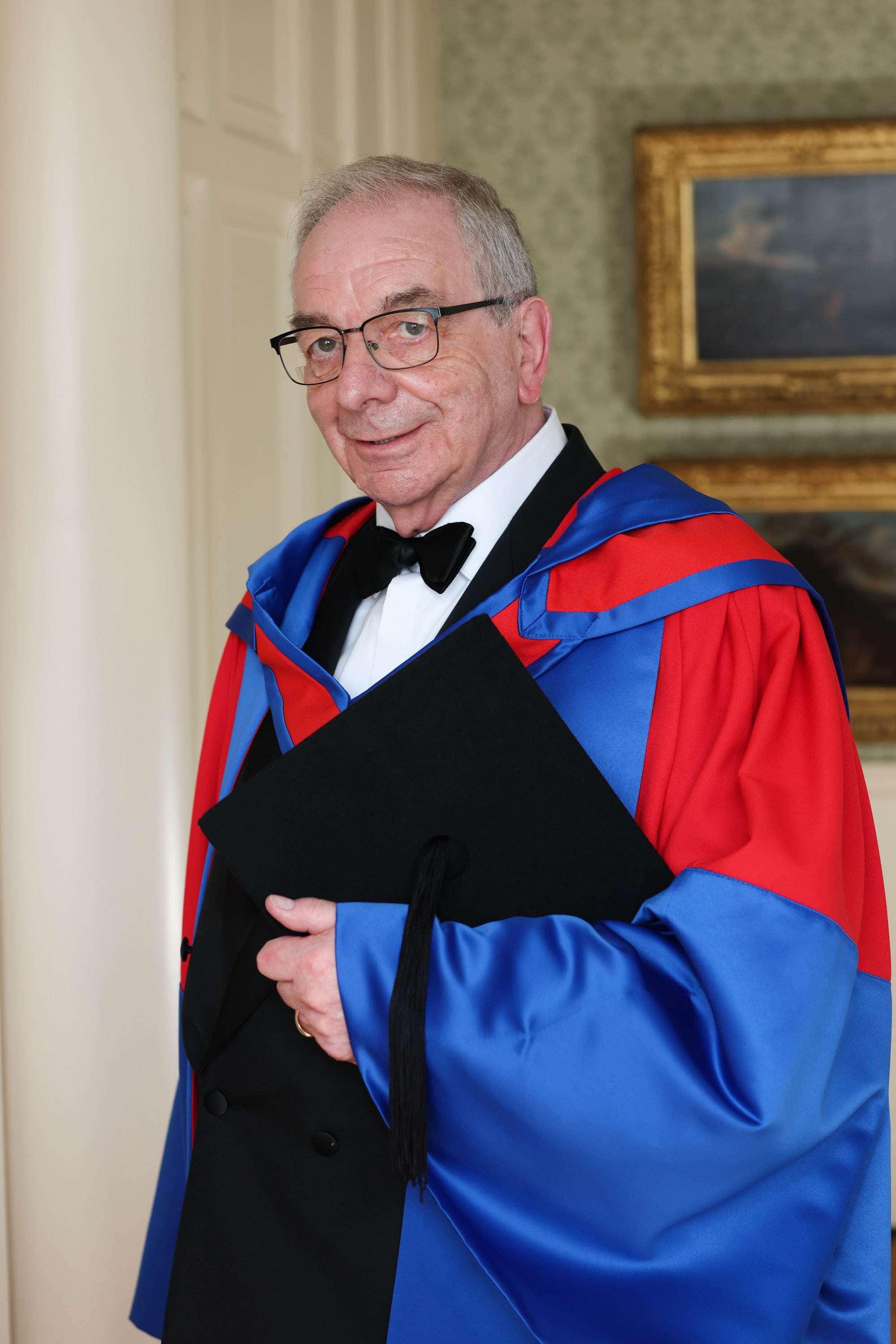
David Little is a distinguished and internationally renowned scholar in applied linguistics and language education whose work has had a profound and lasting impact on language teaching, educational policy, and the inclusion of linguistically diverse learners in Ireland, across Europe and beyond at all levels of language learning. His leadership, research, and public engagement have reshaped the field of language education in Ireland and across the world. In 1979 he founded the Centre for Language and Communication Studies (CLCS) at Trinity College Dublin and later served as Director of CLCS and as Head of the School of Linguistic, Speech and Communication Sciences, guiding the School’s academic development until his retirement in 2008. Nationally he has chaired, convened, contributed—and, indeed, continues to contribute— to multiple committees which have (re)shaped language teaching and learning in Ireland at all levels. He was a founder member and chairman of Institiúid Teangeolaíochta Éireann’s Modern Languages Project 1978-1983, Chairman of the Royal Irish Academy’s National Commission for the Teaching of Modern Continental Languages between 1981-1983; he represented TCD on the Department of Education’s Syllabus Committee for Leaving Certificate German between 1983-1985; and he has been Director of Integrate Ireland Language and Training. Beyond Ireland, he is one of the leading interpreters of the Common European Framework of Reference for Languages (CEFR) and he has played a leading role in the development and implementation of the European Language Portfolio (ELP) at both national and European levels. He was President of CercleS (European Association of Language Centres in Higher Education) from 1995 to 2000; he acted as a consultant to the Council of Europe’s European Language Portfolio Validation Committee until 2011 and he was Academic Coordinator of the Council of Europe’s Romani–Plurilingual Policy Experimentation from 2022 to 2025. He continues to contribute to the Council of Europe’s Modern Languages Projects. He has played a truly unique role in shaping a more equitable and linguistically diverse educational landscape in Ireland. From 2000 to 2008, he served as non-stipendiary Director of Integrate Ireland Language and Training, and subsequently directed the Trinity Immigration Initiative’s English Language Support Programme, which developed materials designed to support the educational inclusion of post-primary students from immigrant families. From 2006 to 2017 he was a member of the Council of Europe’s expert group on the linguistic inclusion of adult migrants. In 2010, he authored the Council of Europe’s influential concept paper, The Linguistic and Educational Integration of Children and Adolescents from Migrant Backgrounds. He has also made a significant contribution to Deaf education and teaching Irish Sign Language (ISL) and helped to embed Deaf studies within higher education in Ireland: in this context, he was instrumental in the establishment of the Centre for Deaf Studies at Trinity College Dublin in 2002. His research has been both intellectually influential and practically transformative. He is the author of some 176 peer-reviewed publications and is internationally recognised for his pioneering work on the theory and practice of learner autonomy in second and foreign language education, the management of linguistic diversity in schools, and the use of the curriculum design, and language assessment, areas in which his work continues to inform policy and classroom practice. His career stands as an exemplar of scholarship that unites rigorous research, educational innovation, and a deep commitment to equity and inclusion.
Corinna Salvadori Lonergan (Litt.D.)
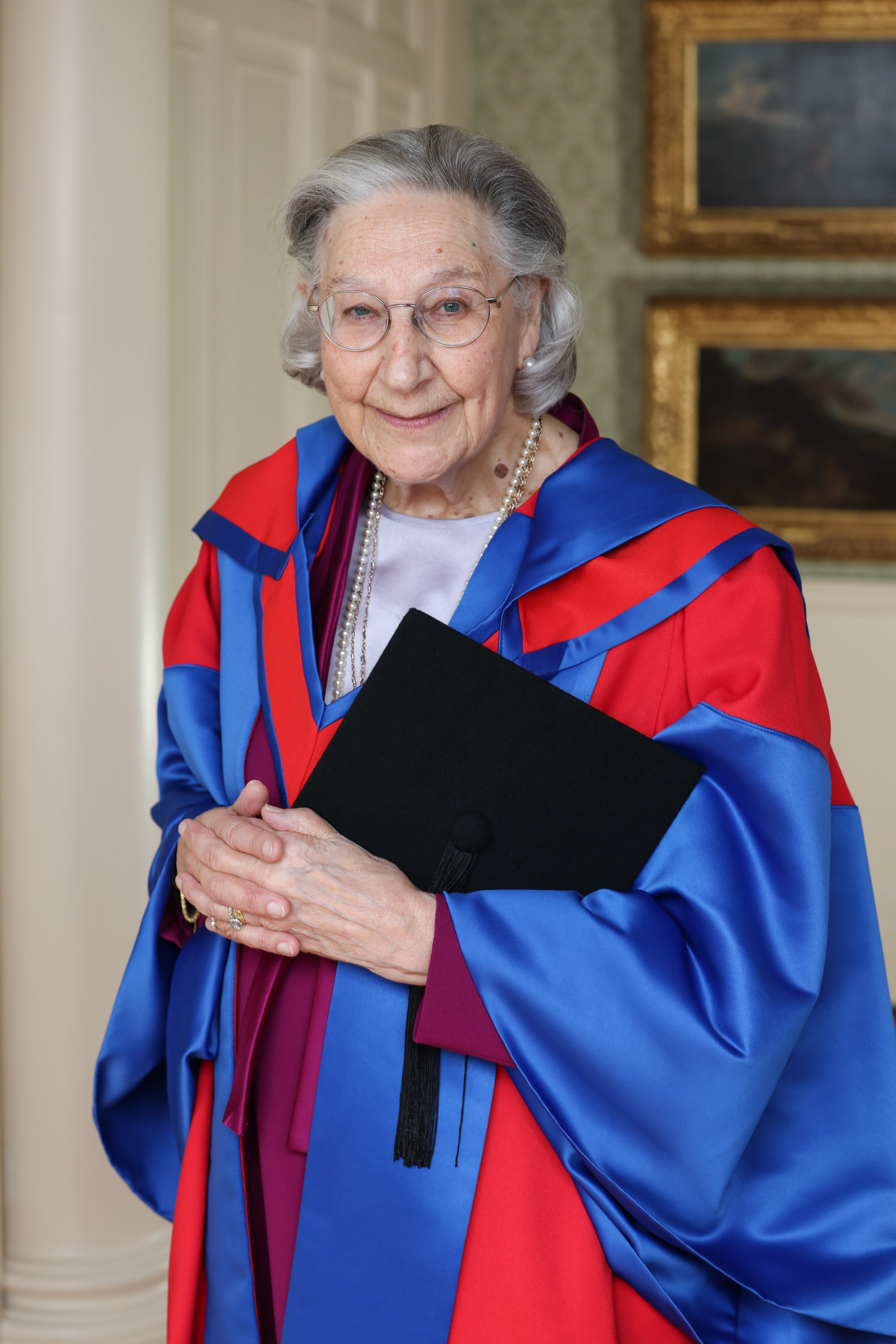
Corinna Salvadori Lonergan is the child of classical musicians who, after harsh wartime experiences, came from Florence to Dublin to play in the Radio Éireann Symphony Orchestra. Her Master’s thesis on Yeats and Castiglione was published as a monograph by Allen Figgis in 1965, while she was still in her twenties and it gave a taste of the passion, erudition and intellectual rigour that came to characterize her scholarship ever since. She was appointed to a lectureship in Trinity in 1961 as a Junior Lecturer. Until her “retirement” in 2001 she then led, with energy and integrity, and without sabbatical leave for some decades, a short-staffed and sometimes precarious department that, through thick and thin, made a strong contribution to Modern Languages. Her teaching commitments continued after “retirement”; for many years she has offered specialist options for Italianists as well as supervising postgraduate students on recently developed MPhil degrees. Students continue to praise her academic rigour, vast knowledge and warmth. Fittingly, when the Provost’s teaching awards were first introduced, she was given a lifetime award for her contribution to teaching. She has, for 65 years epitomised the teaching of Modern Languages in Trinity. She was instrumental in strengthening and developing the infrastructure of modern language study not just in these islands but also further afield. Indeed, the Society for Italian Studies awarded her life membership, in recognition of her outstanding presence within the discipline, and the International Association of Italian Professors (AIPI) appointed her Honorary President of the Association at the end of her presidency. Again fittingly, the Italian Government conferred her with the title of Commendatore in the “Ordine al Merito della Repubblica Italiana”, Italy’s most prestigious honour. Her research has been prolific focusing on Castiglione, Dante Alighieri and Lorenzo de’ Medici. The apparatus accompanying her seminal centenary edition of Lorenzo’s Selected writings (1992) includes over 100 pages of introductory analysis and annotation, together with lively English verse translations of poetry and drama. Other verse translations include Angelo Poliziano’s Orfeo (2013). Her first involvement in a Dante project dates from 1963; the latest is in press. She has published on the poetry of Michelangelo and Ariosto, and (from several angles) on the complex entanglements of Dante and Beckett. She is co-editor of Italian Culture: Interactions, Transpositions, Translations (2006), co-ordinating editor of the AIPI collection Insularità e cultura mediterranea nella lingua e nella letteratura italiana (645 pages, 2012) and co-editor of Medieval Studies, Translation, Creativity (2022). Beyond her extraordinary contribution to Modern Languages in Trinity College Corinna Lonergan has been and continues to be the epitome of what a ‘good citizen’ is in Trinity and, she is consequently a stellar representative of the discipline of Modern Languages. With boundless energy, she continues to teach, advise, organize events and propose new initiatives and through her grace and kindness she continues to inspire and mentor many, many young and emerging academics. She has been an inspiration and a role model for generations of, in particular, female students and colleagues and today embodies what is best about Trinity and its traditions.
Hans-Christian Oeser (Litt.D.)
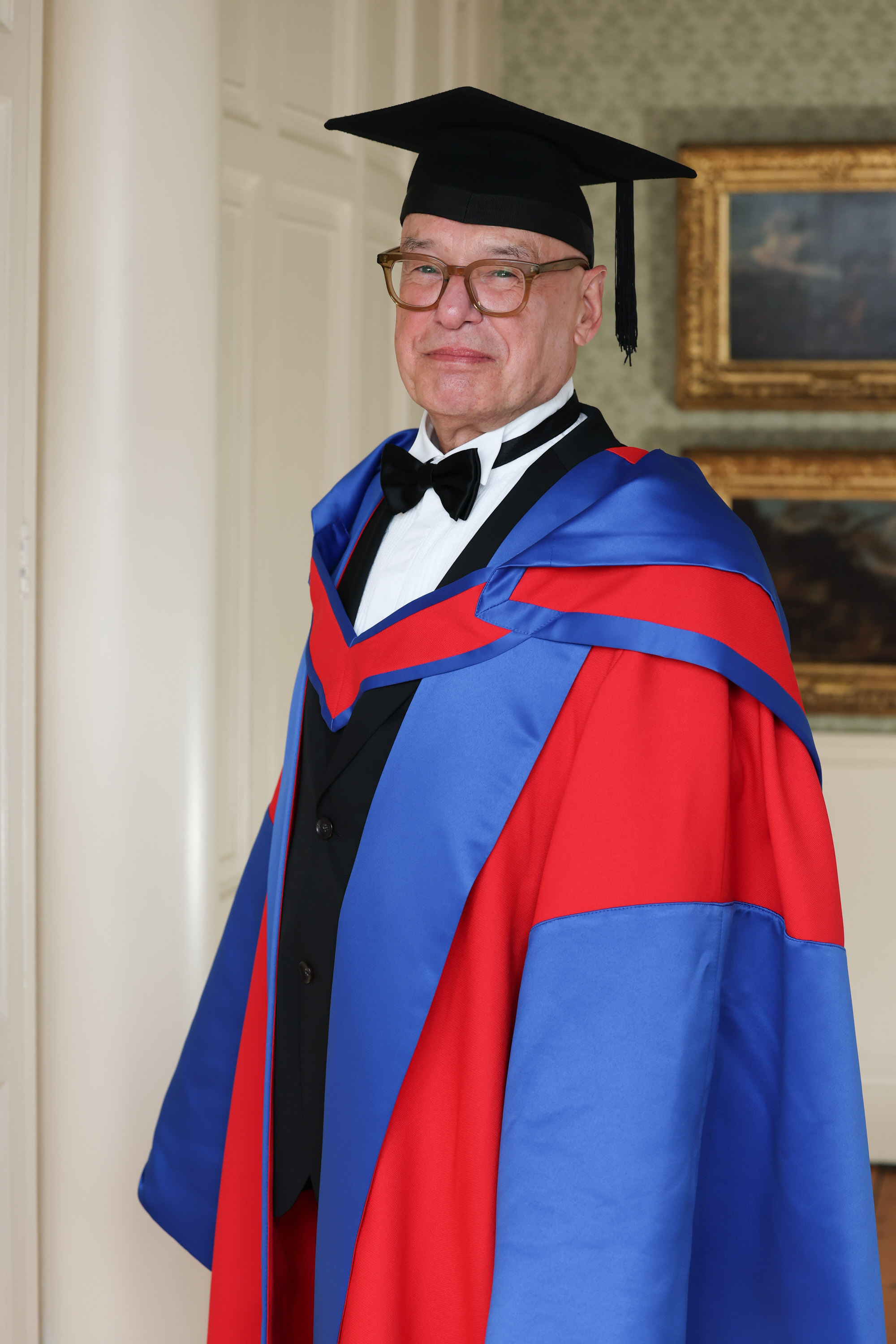
Hans-Christian Oeser is the most well-known, prolific and important literary translator on this island. He was a founder member of the Irish Translators’ and Interpreters’ Association (ITIA, now ATII) and also served on the Commission for Literary Translation of FIT, the worldwide Fédération Internationale des Traducteurs. From 1995 to 1999 he was a Board member of Ireland Literature Exchange (ILE, now Literature Ireland) and is currently a Board member of the Trinity Centre for Literary and Cultural Translation. He has translated literary works by a pantheon of Trinity alumni - Oscar Wilde, William Trevor, Jennifer Johnston, Derek Mahon, Sebastian Barry, Anne Enright, Eoin McNamee – and twenty-seven other Irish writers ranging from long established literary figures to important new voices. Publications which have carried his commentary include the Irish University Review, Éire-Ireland, The Stinging Fly, The Irish Times, Poetry Ireland Review, Translation Ireland. Apart from appraisals of new work, topics addressed include political change, misinformation, censorship and the ontology of translation. He has also worked for freedom of expression through PEN International. He has organized, hosted and moderated, or participated as invited speaker or panel member in, countless high-profile events on Irish literature, its cross-cultural significance, and on literary translation generally. His 1997 Aristeion Prize, a Europe-wide award (one of the most financially valuable in the world at that time) is one among countless recognitions, bursaries, fellowships and prizes conferred by his peers and other cultural authorities, including the Rowohlt Prize for lifetime achievement (2010), and the Straelener Übersetzerpreis der Kunststiftung NRW (2020). His eleven-month residency (2024–2025) at the Internationales Künstlerhaus Villa Concordia, Bamberg is a singular endorsement placing his work on a par with other artists in literature, visual arts and music composition. Given his stellar reputation, he gets asked to take on new works by authors he has already translated, which is by no means a foregone conclusion in the pressurized, last-minute world of publishing. Thus, he is the German voice of Sebastian Barry in eight novels. The range of his related activities further demonstrates his boundless energy, his passionate commitment to the world of letters, his profound expertise and the astounding breadth of his cultural interests. He is joint author of books on James Joyce and Oscar Wilde, and author of travel books, literary guides, and political works on Ireland. Among his editorial projects, his 450-page anthology, Irische Short Stories des 20. Jahrhundert (1999), together with his English-language anthology, Contemporary Irish Short Stories (1989), present many more Irish writers including Elizabeth Bowen, Maeve Kelly, Ita Daly, Pádraic Ó Conaire, Liam O’Flaherty, Sean O’Faolain, Anne Devlin, Mary Lavin, Claire Boylan, Máirtín Ó Cadhain. To date he has translated, authored and edited 250 works overall, and all of those to the absolute highest standard of his trade.
Eda Sagarra (Litt.D.)
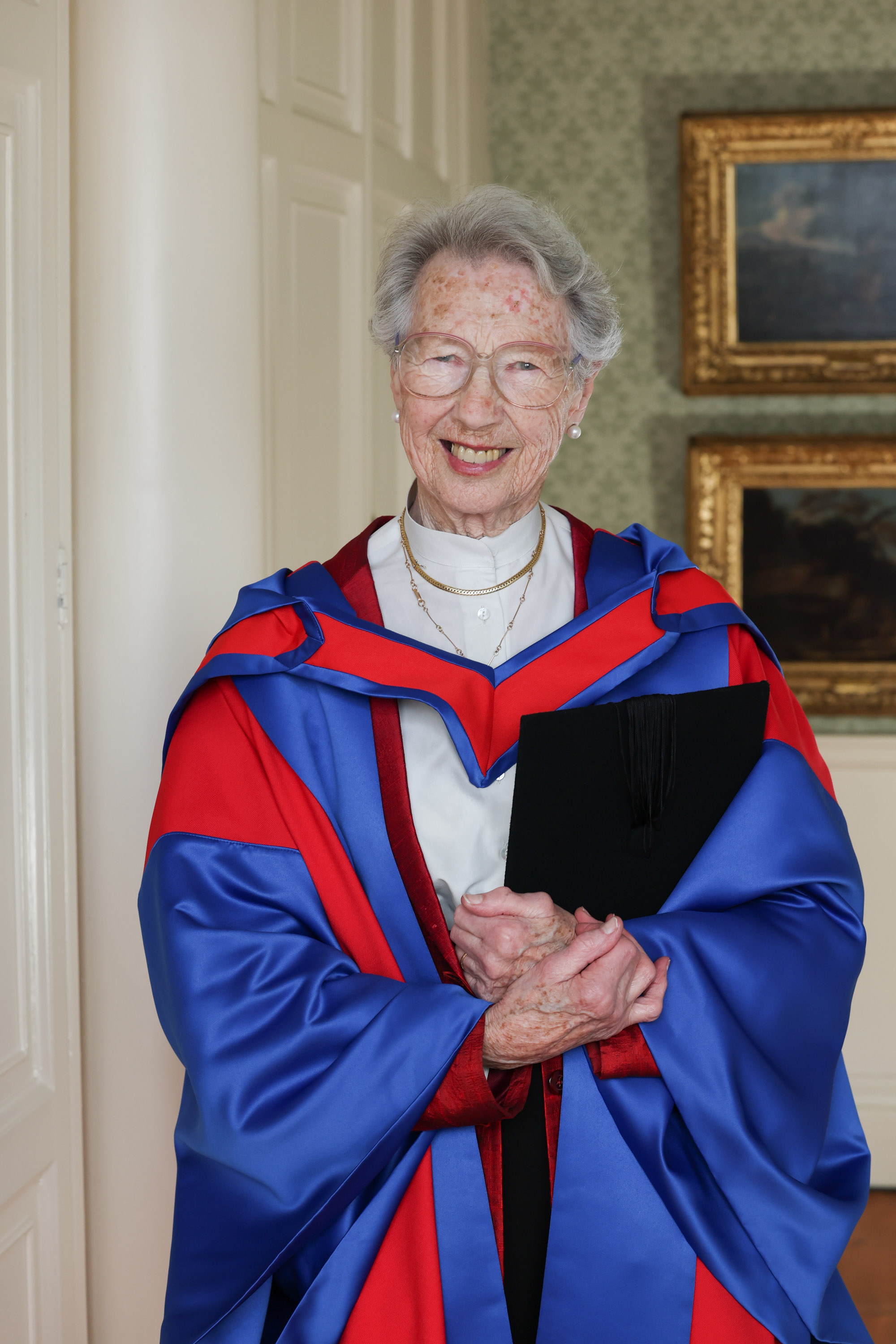
From 1975 until 1998 Eda Sagarra was the first female holder of the Chair of German (1776) at TCD. Her time as Chair of German and Head of Department was absolutely transformational for her discipline, for Modern Languages more broadly, and for the position of women in College and, more generally, in academia. In 1979 she became Dean for International Students and on becoming Registrar in 1981 she was the first woman in the history of the College to hold a statutory officership. From 2000 to 2008 she served as Pro-Chancellor of the University of Dublin. Beyond Trinity, she was Secretary of the Royal Irish Academy and after her retirement she was for five years the Founding Chair of the Irish Research Council of the Humanities and Social Sciences (IRCHSS) – a body whose existence owes a great deal to her vision and energy. In acknowledgment of her work, Research Ireland annually award the Eda Sagarra Medal of Excellence to the top-ranked PG researcher in the Humanities and Social Sciences. Her academic work has been extremely influential in German Studies. Ten volumes and over 120 peer reviewed articles and chapters in books are testament to her enormous erudition and boundless intellectual curiosity. Eda Sagarra is considered one of the founders of the social history of literature in German Studies. All of her monographs are magisterial, much quoted standard works. On the European front, she was a powerful advocate for the Humanities and an influential ambassador of Irish academia. She served on many influential commissions of the European Science Foundation and the Deutsche Forschungs Gemeinschaft and other institutions. Within Trinity, and with inexhaustible energy, enthusiasm and persuasive power she was the driving force between the design and implementation of multiple new degree courses such as European Studies, Business and a Language, Law and a Language and Computer Science, Linguistics and a Language, all with a mandatory year abroad, making maximum use of the opportunities the new Erasmus-programs offered. The high international reputation that Modern Languages at Trinity enjoy today has its foundation in the work of Eda Sagarra and her colleagues. For over 50 years she has been a much-admired inspirational role model for women in academia breaking multiple glass ceilings. As her 2022 memoir, Living with my Century, shows, she had to face many forms of gender-based discrimination, many subtle and some not so subtle, which today seem outrageous, but which she confronted with skill and aplomb. Her exceptional achievements have been recognized on many fronts: she is holder of the German Order of Merit, the Bundesverdienstkreuz, the Austrian Ehrenkreuz for Science and Art and she was awarded the Goethe Medal of the Goethe-Institut in 1990. In 1995 she was the recipient of the Grimm Preis for German Studies Abroad and was elected a Corresponding Member of the Austrian Academy of Sciences in 1996. In 2022 she was awarded the Fontane-Wissenschaftspreis for her academic work on the 19th century novelist Theodor Fontane.
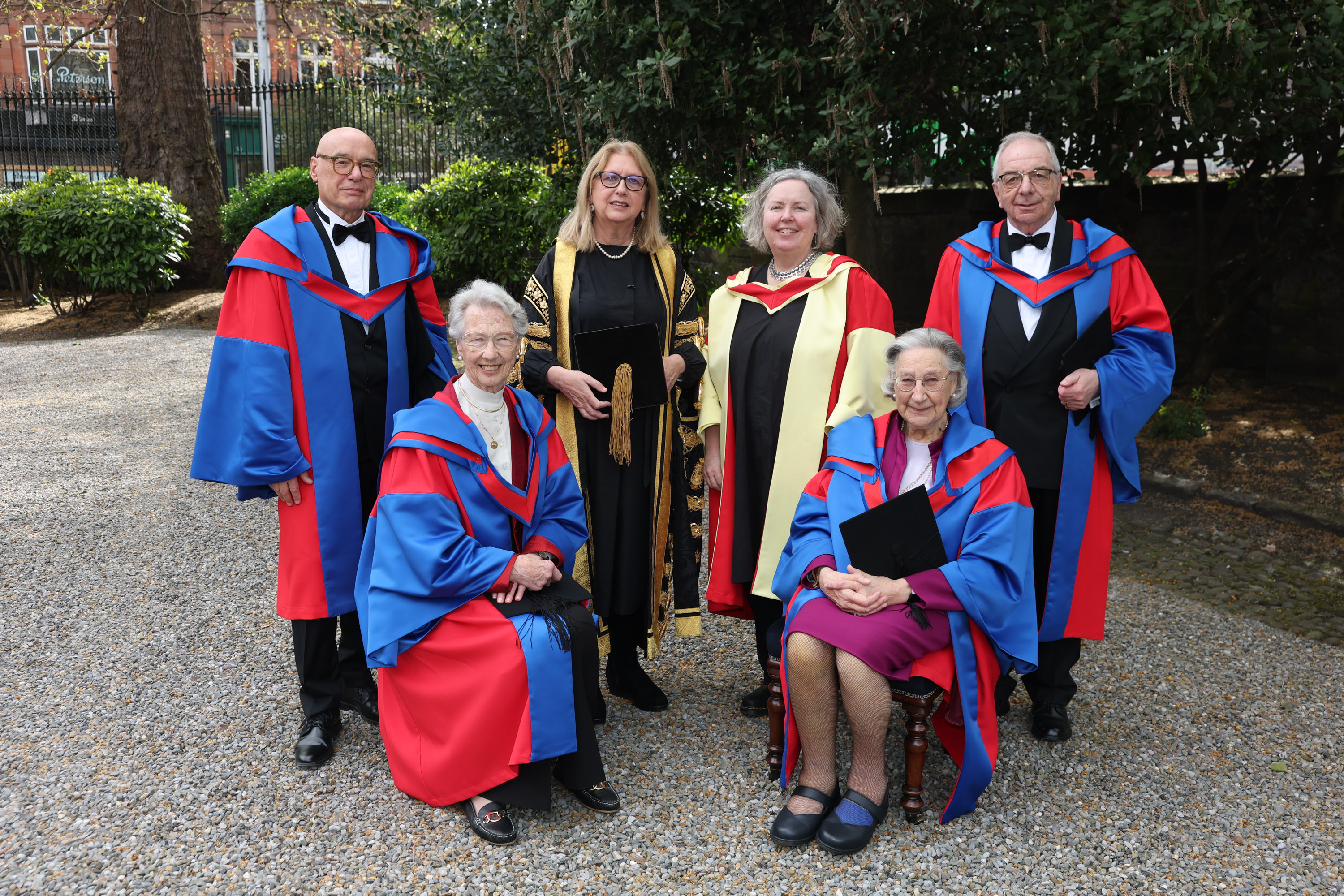
On Friday 28 November 2025 honorary degrees of the University of Dublin were conferred on Pietro Perona, Kathy Prendergast, Ifrah Ahmed and Mei Lin Yap at a Commencements Ceremony in the Public Theatre. See Orations here.
Pietro Perona (Sc.D.)

Pietro Perona is the Allen E. Puckett Professor of Electrical Engineering and of Computation and Neural Systems at the California Institute of Technology. A pioneer in the field of computer vision, Professor Perona has made foundational contributions to the ability of computers to perceive and recognize the visual world—discoveries that form the scientific basis of many contemporary applications of artificial intelligence. Beyond his technical achievements, Professor Perona has demonstrated a commitment to using science for the public good. Working with his collaborators, and in partnership with the Cornell Lab of Ornithology and the iNaturalist Foundation, he led the creation of the free smartphone apps Merlin Bird ID, iNaturalist. These tools employ advanced computer vision to identify over 100,000 species of plants and animals from photographs—and, for birds, from their songs—allowing anyone, anywhere, to explore nature and contribute directly to biodiversity research. Through these innovations, Professor Perona has empowered millions of citizens worldwide to take part in ecological observation and conservation. With an h-index exceeding 125 and over 186,000 citations, his scholarship ranks among the most influential in computer science. His work has been recognized with the Koenderink Prize (2010) and the Longuet-Higgins Prize (2013) for fundamental contributions to computer vision, and has been featured in The New York Times, The New Yorker, and The Los Angeles Times. A thinker of remarkable breadth, he has also brought art and science together through the co-organization of a NeuroArt exhibition exploring creativity and neuromorphic design. By honouring Professor Perona, Trinity affirms its commitment to scientific excellence, environmental stewardship, and the responsible use of artificial intelligence in the service of humanity and the natural world.
Kathy Prendergast (Litt.D.)
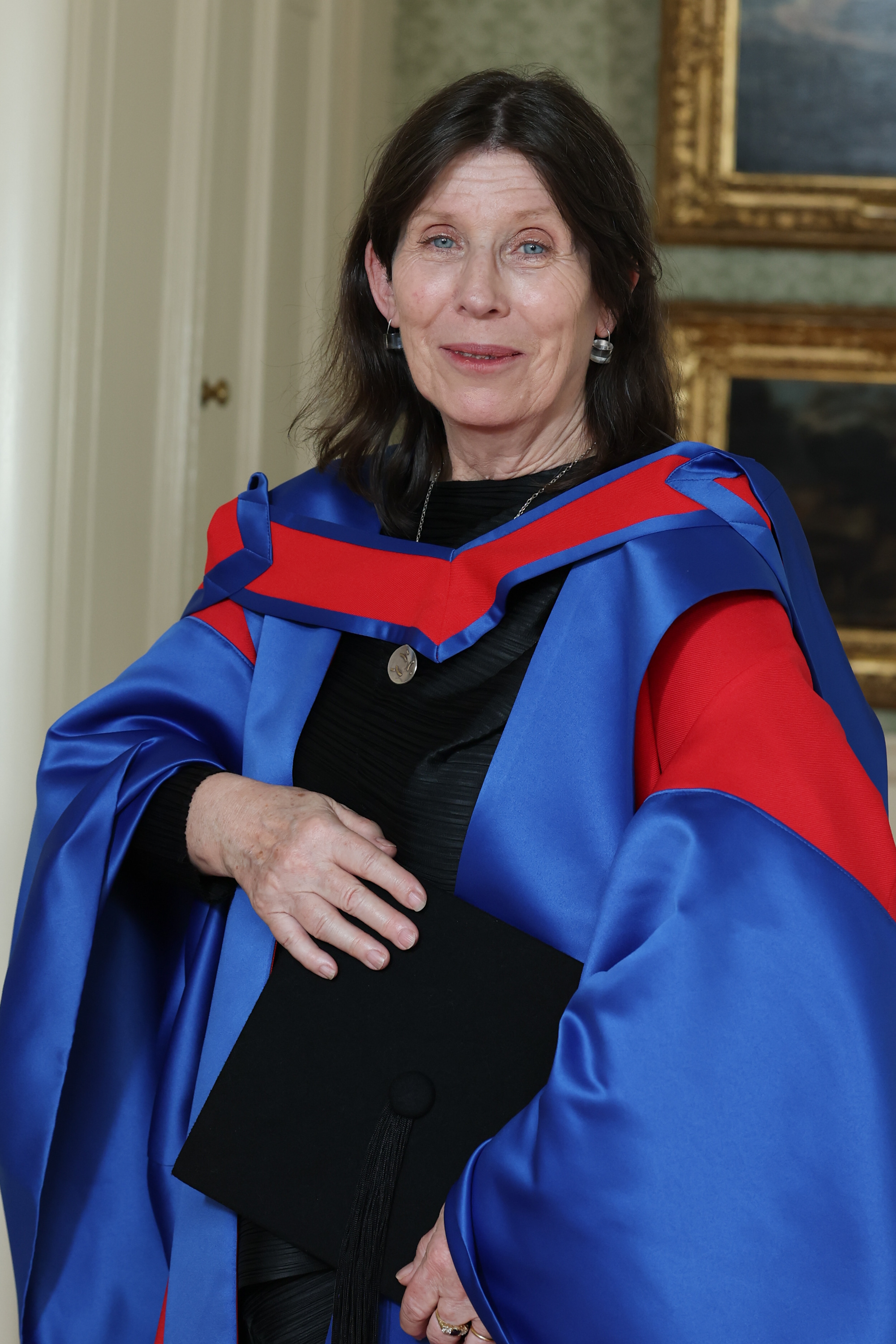
Kathy Prendergast is one of Ireland’s foremost living artists. Her work addresses various dimensions of identity, for example, it reflects the condition of being Irish within a local, national, and global environment, from intimate domestic observations to conditions of migration, both in the past (and the heritage it infers), and the present, and of participation in a wider world culture. While her work includes factors relevant to being Irish, this is just one aspect of several criteria for identity, including gender, inter/cross-generation connection, heritage, colonisation, experience, to name a few. Her work is deeply personal and empathetic, though not sentimental, and engenders a response from a range of observers, regardless of gender, age, and ethnicity, as it essentially reflects universal aspects of the human condition. Her work is represented in every major art collection devoted to practitioners deemed Irish (though not confined to those), including public national and civic collections in Ireland, such as the Irish Museum of Modern Art (IMMA), the National Gallery of Ireland, Crawford Gallery Cork, Dublin City/the Hugh Lane Gallery, Office of Public Works, the art collections in universities (including Trinity College), as well as in significant collections, both corporate and private, at state, semi-state, and a private level. She represented Ireland at the Venice Biennale in 1995 and was awarded the Premio 2000 best young artist award for her sensitive celebrated city drawings series which were shown in other prestigious venues including the Tate Gallery, London and IMMA in Dublin. Her artwork has featured significantly in several solo and group exhibitions in Trinity art galleries, in particular the Douglas Hyde Gallery, such as the Black Maps exhibition (2017), and Land (2024–25). Her work has been included in undergraduate and post-graduate degrees, in modules on Irish- based modern and contemporary art, and has also been the subject of a range of research theses in various third-level institutions. Her work was also reproduced as the frontispiece in a major text edited by two Trinity alumni and former lecturers in art history, Catherine Marshall (who was subsequently invited to take on the role of Curator of the Collections, at the Irish Museum of Modern Art, soon after its inception) and Dr Yvonne Scott (founding Director of the Irish Art Research Centre, former Associate Professor of Art History in the Department of the History of Art, and Fellow Emeritus at the University). The book was published by the Royal Hibernian Academy, and launched by the current Provost of Trinity College Dublin, Linda Doyle, in recognition of its relevance to Irish culture. Kathy Prendergast is a member of Aosdana.
Ifrah Ahmed (LL.D.)
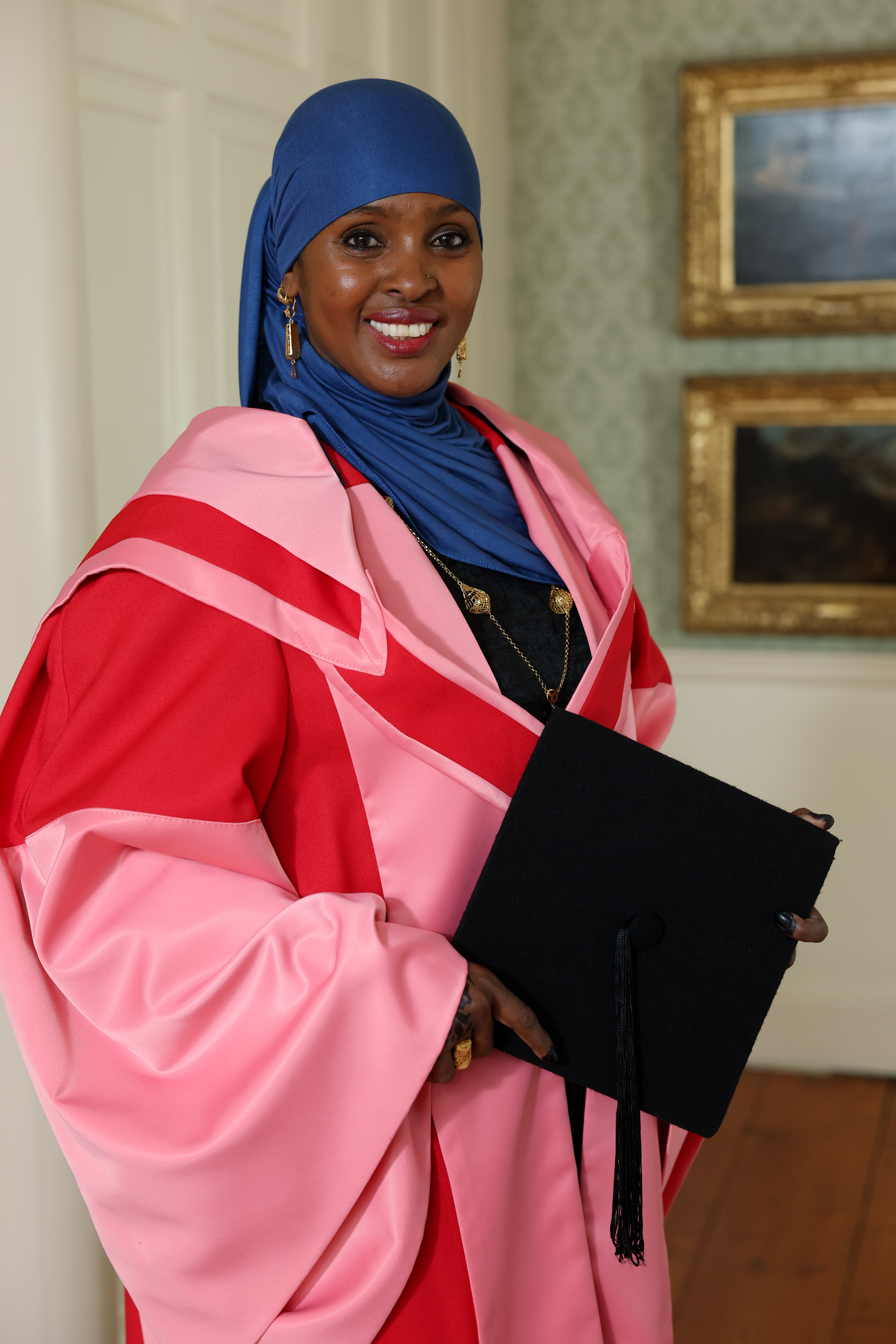
Ifrah Ahmed is a Somali-Irish activist, educator, and social entrepreneur who has dedicated her life to eradicating Female Genital Mutilation/Cutting (FGM/C), a form of Gender Based Violence (GBV) which she personally survived as a young girl. FGM/C is a violation of the human rights of women and girls. More than 200 million women and girls alive today have experienced FGM/C, and in Somalia, the prevalence rate of FGM/C is 98%. Having fled the Somali civil war, Ifrah Ahmed landed in Dublin, Ireland in 2006. Ifrah quickly found traction in social activism, fighting for the rights of new communities in Ireland. In her early days of community mobilisation, Ifrah worked as an independent advocate engaging policy makers, rights groups and mainstream organizations. She demonstrated her ability to work as a highly motivated social and community activist involved in many community projects and non-governmental organisations and, working with key political figures, was instrumental in the passing of the legislation banning FGM in Ireland which came into effect in 2012. Since 2014, Ifrah also works in Somalia and has developed a range of programmes tackling Gender Based Violence and FGM/C through her foundation, the Ifrah Foundation. In September 2021, the Ifrah Foundation launched their ambitious and innovative Dear Daughter Campaign in Somalia, in partnership with UNFPA Somalia. This campaign takes a multifaceted approach to end FGM, culminating in pledges from parents and carers to protect their daughters. The Dear Daughter Campaign is building strong partnerships with others including UN Women, to ensure FGM is eradicated from Somalia by 2030. The campaign has thus far, surpassed 100,000 pledges. For Ifrah the fight against FGM/C is both personal and public. She has overcome unimaginable adversity and turned it into a force for good, dedicating herself to work to protect others from what she survived. She was the first woman to publicly share her testimony of FGM/C with the world in 2010; having been invited to address the United Nations in New York. This was a groundbreaking moment, as it was incredibly rare for survivors of FGM/C to speak out publicly due to the stigma and fear surrounding the practice. Through its work, the Foundation has trained over 665 community activists who are now champions against FGM/C in their communities. These individuals include religious and community leaders, youth activists, journalists and health care providers, all chosen as they have influence within their communities. Following training, they go back into their communities and share their learning with community members, guiding them away from submitting their daughters to FGM/C and supporting them in sustaining that decision. Another element of that same campaign focusses on inviting individual citizens to pledge to protect their daughters and to bear witness to that promise.
Mei Lin Yap (LL.D.)
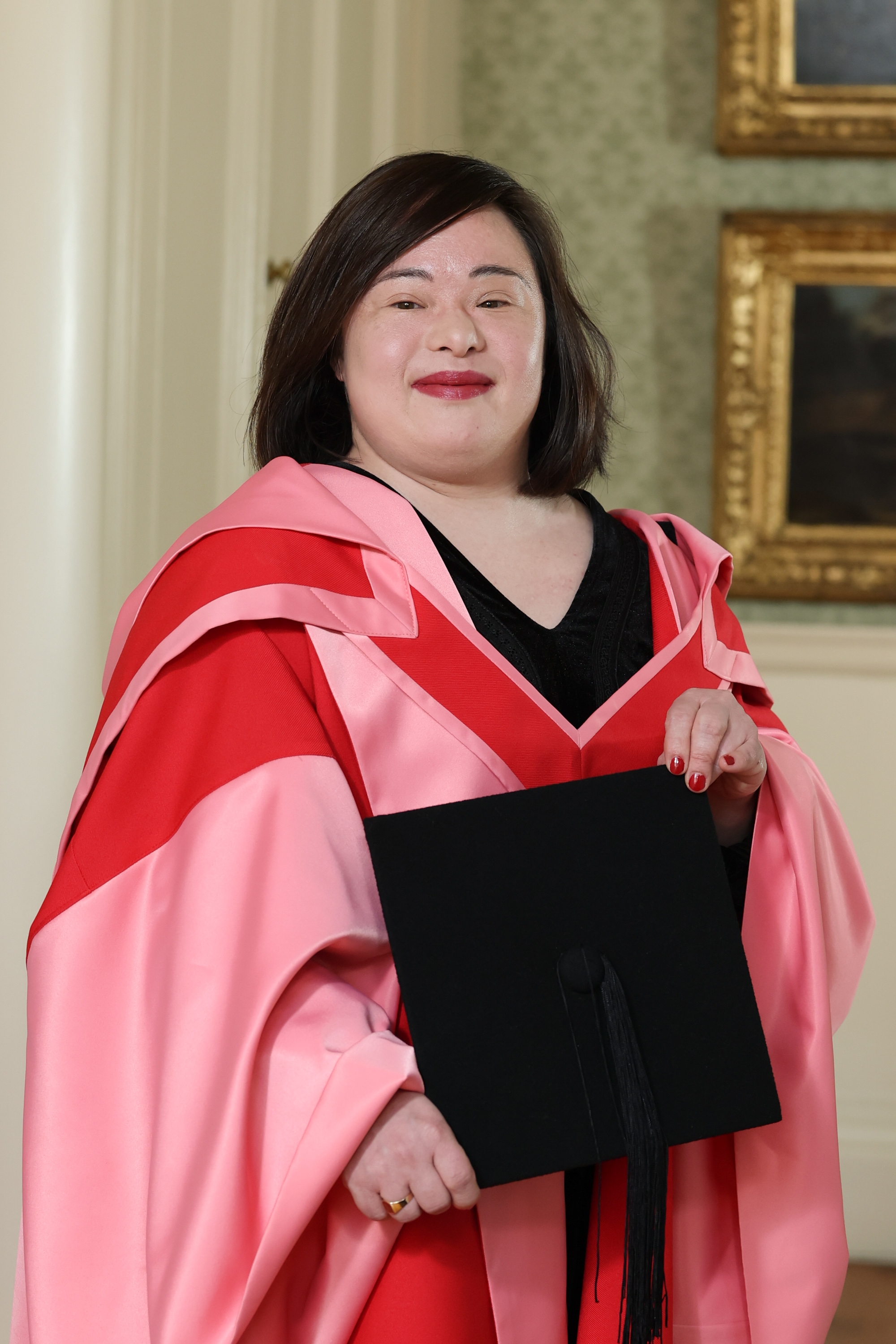
Mei Lin Yap is, perhaps, not a name that will be familiar to many people outside of Trinity, although she is well known in disability circles. She is Ambassador Liaison Officer with the Trinity Centre for Ageing and Intellectual Disability (TCAID) at the School of Nursing and Midwifery, Trinity College Dublin, and People Experience Administrator at Cpl Recruitment Agency. She also has Down’s Syndrome. Her employment in both roles is significant because it demonstrates that individuals with disabilities can thrive in professional positions, contributing meaningfully to their fields. Her dual roles not only challenge societal barriers but also inspire broader efforts toward improving employment outcomes for people with intellectual disabilities. Mei Lin Yap is a proud Dublin-born woman who has dedicated herself to championing inclusivity and breaking barriers for people with intellectual disabilities in sports, advocacy, and public speaking. From an early age, Mei Lin’s passion for sport, and her involvement with disability swimming in particular has been both personal and profound: not only has she competed in Special Olympics, she has represented Ireland at international and world level swimming, through the Irish Down Syndrome Sporting Organisation (IDSSO), participating in many countries across the globe but she has also given back as a volunteer, embodying the spirit of Irish camaraderie and perseverance. In her role as Ambassador Liaison Officer at the Trinity Centre for Ageing and Intellectual Disability (TCAID), Mei Lin continues to be a passionate voice for Irish people with intellectual disabilities. Her impactful talks at conferences, such as the 16th International Dementia Conference, and her work to promote brain health and “Ageing with Pride” exemplify her dedication to enhancing life opportunities and challenging stereotypes in Ireland. Mei Lin in representing Ireland on various platforms, emphasises the importance of human rights, equality, and employment opportunities for people with disabilities. In 2018, she was the narrator and a key contributor in “Ageing with Pride,” a documentary showcasing the lived experiences and resilience of older Irish adults with intellectual disabilities. As a public speaker, athlete, and leader, she continues to inspire and advocate for a more inclusive and equitable Ireland. In championing inclusivity and accessibility at every level, she has created lasting change by leading public and patient involvement panels to ensure the voices of individuals with intellectual disabilities shape critical research and by advocating for workplace diversity and inclusion within her HR responsibilities. Her work directly confronts and reshapes systemic challenges, from enhancing employment opportunities to improving health and digital literacy for people with intellectual disabilities. Through her advocacy, athleticism, public speaking, and inclusive initiatives, she is an exemplar of what can be achieved when there is genuine Patient Public Involvement in Research and is proof of what is possible when people with intellectual disabilities are given equal opportunities to thrive and lead.
